Login
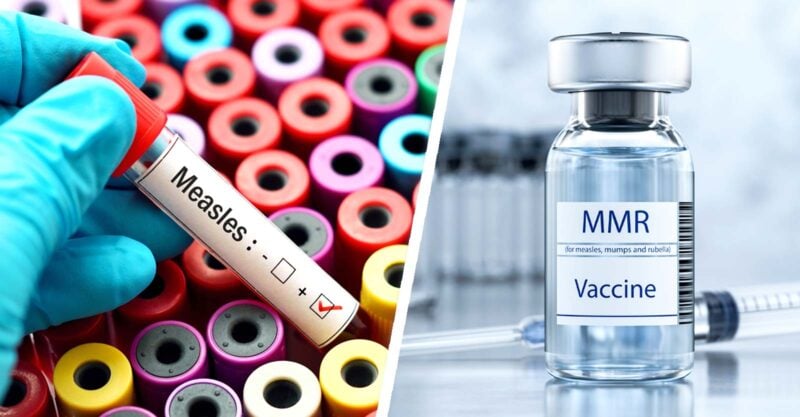


The loss of measles elimination status in the U.S., after 26 years, could fuel new vaccination campaigns and expanded vaccine requirements, researchers say, as health officials push to regain the designation through increased immunization.
The Pan American Health Organization (PAHO) today announced that the U.S., Mexico and Bolivia had lost their measles elimination status after the virus circulated within their borders for at least 12 months. So far this year, the U.S. has reported 5,412 measles cases.
Public health officials say higher vaccination coverage is the path to regaining the status. Critics of vaccine mandates expect today’s announcement to fuel new pressure to eliminate exemptions and push for adults to get the measles-mumps-rubella (MMR) vaccine.
PAHO: Same strain circulated for at least a year
PAHO determined that the U.S. lost its measles elimination status after investigators found that a single chain of transmission, beginning Jan. 20, 2025, had continued for more than a year.
In a letter to U.S. Health Secretary Robert F. Kennedy Jr., PAHO said the findings provided “sufficient evidence to conclude that the United States has re-established endemic measles transmission, despite the government’s efforts to interrupt transmission.”
The decision follows similar losses of elimination status in Venezuela, Brazil and Canada, although Venezuela and Brazil subsequently regained their designations.
The declaration carries few practical implications and is largely symbolic, The Associated Press reported. It gives PAHO no authority to impose vaccine requirements in the U.S. Those decisions remain subject to federal and state law.
A country keeps elimination status as long as no single chain of measles transmission spreads uninterrupted for a year or more. Imported cases and isolated outbreaks can occur without a country losing the designation, which the U.S. first achieved in 2000.
Mexico’s loss followed a large outbreak in the state of Chihuahua, according to the AP. Canada lost its status last year.
CDC says response will not change
Dr. Erica Schwartz, director of the Centers for Disease Control and Prevention (CDC), said losing the designation would not change the agency’s approach.
“The measles elimination designation is not what protects Americans,” Schwartz said in a statement to The Defender. “Vaccination does. We know where transmission is occurring, and we’ve invested $100 million in state and local health departments to reach those communities. Losing a designation doesn’t mean we abandon an evidence-based approach. It means we remain focused on stopping outbreaks.”
The CDC recommends two routine MMR doses for children and vaccination for adults without evidence of immunity.
PAHO Director Jarbas Barbosa said in a statement that he commended the “significant efforts undertaken by the United States to manage the measles outbreak through strengthened surveillance, timely case detection and response, targeted vaccination activities, and coordination across the public health system.”
Researchers fear push for adult mandates, limits on exemptions
In a Substack post, researcher James Lyons-Weiler, Ph.D., warned that officials may use the designation to promote measles vaccination among adults.
“They will use this to push mandates of MMR in adults,” Lyons-Weiler wrote.
He also pointed to research suggesting vaccine-derived immunity can wane over time, potentially leaving some adults susceptible.
John D. Coyle, an attorney with Coyle Law Group, said he anticipates the decision to be used as a pretext to “strip rights away with respect to vaccination” in classrooms.
“I am expecting governmental action to try and remove religious exemptions for students,” Coyle said, adding that he expects officials to blame people “abusing” exemptions.
Dr. Paul Thomas, author of “Vax Facts: What to Consider Before Vaccinating at All Ages & Stages of Life,” questioned whether reported measles deaths were caused by the virus and claimed MMR vaccine risks outweigh its benefits.
“Choosing not to vaccinate against measles is a science-based decision with merit,” he said. “We must honor informed consent.”
No federal official has proposed a universal adult MMR mandate. In August, President Donald Trump signed an executive order calling for separating the MMR vaccine into three single-disease vaccines administered at separate medical visits.
Death counts vary between states and the CDC
Meanwhile, the number of U.S. measles deaths this year depends on who is counting. The CDC has confirmed six deaths, while state officials in Pennsylvania, Wisconsin and New York have reported a combined 10 deaths.
Brian Hooker, Ph.D., chief scientific officer of Children’s Health Defense, said the discrepancy stems from how deaths are reported.
“This has been a moving target unfortunately, which you can tell by states and the CDC going back and forth over this,” Hooker said.
The Defender is 100% reader-supported. No corporate sponsors. No paywalls. Our writers and editors rely on you to fund stories like this that mainstream media won’t write. 

This article was funded by critical thinkers like you.
A recent KFF analysis found that the CDC changed its method for counting measles deaths after Kennedy challenged Pennsylvania’s reported fatalities, calling them “premature” and suggesting they “may even have been altogether fabricated.”
Kennedy subsequently asked the CDC to remove the deaths from its website.
Under the new policy, the CDC counts deaths only when federal mortality records identify measles as the underlying cause. The agency no longer relies on preliminary state reports.
KFF called the change a “departure from historical norms” and warned that official death records can take months to process, potentially delaying the federal death count.
Related articles in The Defender
- Pennsylvania Reports Another ‘Measles-Associated’ Death, But Says Previous Death Didn’t Meet Criteria
- Coroner Confirms 7-Month-Old Is New York’s ‘Measles-Associated’ Death — Health Officials Mum on Details
- New York Declares Measles State of Emergency — Reports 108 Cases So Far This Year
- CDC Officially Lists One Measles Death, as Agency Works to Create Standard Definition
- CDC Revamps System for Counting Measles Deaths, as Pennsylvania Reports Fourth ‘Measles-Associated’ Death
- 6-Week-Old Amish Infant With Fatal Genetic Condition Died From Measles, Coroner Confirms