Login
Login
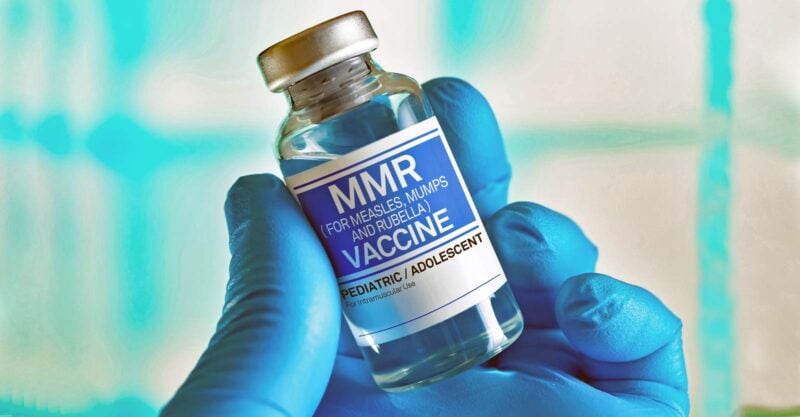


President Donald Trump’s executive order on vaccine policy, released Monday, called for separating the measles, mumps, rubella (MMR) vaccine into three single-disease vaccines administered at separate medical visits.
The change would represent a long-overdue step in the right direction, but it could take years, doctors, scientists and medical freedom advocates told The Defender.
The executive order stated that the combined MMR vaccine “should be administered in three separate single-disease shots once such products are domestically available.”
The order also stated that, “to the maximum extent feasible, all childhood immunizations should be administered at separate medical visits.”
According to a White House fact sheet, splitting the MMR shot is about increasing parents’ choice over the timing and frequency of the vaccinations.
Neither the fact sheet nor the executive order cited specific safety concerns with the MMR vaccine or evidence suggesting that separate shots for measles, mumps and rubella would be safer.
Still, many experts told The Defender they believe splitting up the vaccine would reduce children’s risk of injury.
According to Dr. Robert Malone, it “allows pediatricians and parents to decide for themselves whether or not it is in the best interest of a child, particularly a young child, to space out” the vaccines.
Spacing out the shots over separate visits reduces the amount of vaccine and adjuvant that a child’s immune system has to handle in a given time, which can reduce the child’s risk of vaccine-induced inflammation, particularly cerebral inflammation, Malone said.
Malone was one of the new members that U.S. Health Secretary Robert F. Kennedy Jr. appointed in June 2025 to the Centers for Disease Control and Prevention’s (CDC) Advisory Committee on Immunization Practices. He said:
“Secretary Kennedy has repeatedly made it clear that in his opinion, the measles vaccine is the best option available for protecting children against measles. This gives parents the option to both accept a measles vaccine and to accept a booster because it’s increasingly clear that the vaccine does not provide the durability of protection associated with a natural infection.”
Daniel O’Connor, founder and CEO of TrialSite News, said that breaking up the MMR vaccine could “provide greater flexibility and allow researchers to examine whether formulation or timing affects particular safety outcomes.”
But there could be downsides, O’Connor said, including challenges in scheduling and paying for extra medical appointments.
O’Connor said he was also concerned that separating the MMR into different shots given at different medical visits would mean children would be unprotected against the diseases if their parents choose to delay vaccination.
Trump’s order charged the U.S. Department of Health and Human Services Task Force on Safer Childhood Vaccines with developing options, within the next 90 days, for administering core childhood vaccines — beginning with the MMR vaccine — as individual vaccines rather than as combination products or doses.
Combination vaccines are to remain available.

Order comes 28 years after Andy Wakefield flagged MMR safety risk
Dr. Ben Edwards, an integrative medicine and family practitioner in Lubbock, Texas, who successfully treated children during the 2025 measles outbreak in West Texas, said splitting up the MMR vaccine was “a positive move.”
U.S. childhood vaccines, including the MMR, are given “too much and too often,” Edwards said.
He said he started researching vaccine adverse events after mothers in his medical practice who felt their kids had been vaccine-injured began asking him questions.
“In that research, I obviously ran into Dr. Andy Wakefield‘s work,” Edwards said.
Wakefield, a former U.K. gastroenterologist, was lead author on a 1998 study published in The Lancet — which later retracted the study — on a novel inflammatory bowel disease in children with autistic regression and gastrointestinal distress.
In the majority of children, the onset of symptoms followed MMR vaccination, Wakefield told The Defender.
Wakefield said he had thoroughly reviewed all published studies on measles-containing vaccines, including the monovalent measles vaccine. “I came to the conclusion that such studies were inadequate to qualify the safety of [the] MMR vaccine.”
“Moreover, independent studies identified ‘interference’ between the measles and mumps components that altered the anti-viral immune response,” Wakefield said. “The implications of this ‘interference’ for safety were completely unknown.”
Wakefield began recommending that parents opt for a monovalent measles vaccine — which at the time were available in the U.K. and U.S. — rather than the MMR vaccine.
Six months later, the U.K. withdrew the importation license for the monovalent measles vaccine. “It was MMR or nothing.”
Wakefield asked Elizabeth Miller, then-head of Public Health England, the U.K. equivalent of the CDC, why the U.K. government stopped importing the monovalent measles vaccine. “If the government’s principal concern was preventing measles, why withdraw one option for parents to do this?” he asked.
Miller told him, “Allowing parents the choice of a single measles vaccine would destroy our MMR program.” She was more concerned about protecting the government’s MMR vaccine program than protecting children, he added.
A monovalent measles vaccine hasn’t been available in the U.S. since 2009. “So here we are, 28 years later,” after The Lancet study was published, with the MMR shot still being used in the U.S. and the U.K., Wakefield said.
The cost to children’s health has been “unquantifiable,” Wakefield told Polly Tommey, CHD.TV program director, on “Good Morning, CHD.”
He pointed out that a May 2026 comprehensive review of 300 studies on possible causes of autism identified vaccination as the leading “modifiable risk factor” for the condition.
Wakefield praised Trump and Kennedy for finally addressing what he called “the bloated and inadequately tested U.S. childhood vaccine schedule.”
Tommey, whose son, Billy, regressed into autism following a routine MMR vaccine, told The Defender the executive order “validates Billy’s story and so many others around the world.”
“Parents know what happened to their child,” Tommey said. “We lived it. Our beautiful children — destroyed by one shot we were assured was safe and effective.”
Tommey told The Defender she’s worked with Wakefield for the last 25 years, trying to get people’s attention about the dangers of the MMR vaccine.
“If he had been taken seriously all those years ago, just think how many children would have been saved,” Tommey said.
MMR a ‘crap shoot’ when it comes to safety
At Monday’s signing of the executive order, Trump and Kennedy both mentioned a possible link between vaccines and increased autism rates in the U.S.
The University of Minnesota’s Center for Infectious Disease Research and Policy (CIDRAP) reported that there is no link.
In response to Trump’s executive order, CIDRAP quoted Dr. Amesh Adlaja, a senior scholar at the Johns Hopkins Center for Health Security, who wrote on Bluesky, “None of this is reality-based. It is all just nihilistic pandering to the anti-vaccine movement and will do nothing but lower standards of living for everyone.”
But O’Connor said that revisiting U.S. childhood vaccine policy “should not automatically be characterized as anti-vaccine.”
Brian Hooker, Ph.D., chief scientific officer at Children’s Health Defense (CHD), said, “Putting the M, M, and R in separate shots would allow manufacturers to use lower doses of live viruses in each shot, to avoid virus interference.”
Hooker, whose son regressed into autism following routine vaccinations at age 15 months, added, “As far as safety is concerned, the MMR is a crap shoot and has been since 1999.”


This article was funded by critical thinkers like you.
The Defender is 100% reader-supported. No corporate sponsors. No paywalls. Our writers and editors rely on you to fund stories like this that mainstream media won’t write.
It could take years before separate shots become available
For years, the MMR vaccine has been linked to a high number of adverse events. As of June 26, there were 95,296 adverse event reports filed since 1990 in the Vaccine Adverse Event Reporting System (VAERS) following MMR vaccination, including 500 deaths, according to OpenVAERS.
Historically, fewer than 1% of adverse events have ever been reported to VAERS.
The federal vaccine court in 2010 awarded over $1.5 million to the family of Hannah Poling, who regressed into autism within days of receiving the MMR shot and four other vaccines at age 19 months. The court concluded that Hannah had an underlying cellular disorder that was aggravated by the vaccines, resulting in brain damage with features of autism.
The CDC currently recommends that all children receive two doses of MMR, with the first dose given at 12-15 months and the second dose given between ages 4 and 6.
According to the CDC, two MMR vaccines are available in the U.S. — one made by Merck and the other by GSK.
Since 1971, the U.S. has primarily used a combined MMR vaccine, according to T. Joseph Mattingly II, Ph.D., an associate professor and vice chair of research in the Department of Pharmacotherapy at the University of Utah College of Pharmacy.
Merck used to make monovalent measles vaccines for the U.S. market but discontinued the single shots in 2008 due to manufacturing constraints, said Karl Jablonowski, Ph.D., CHD senior research scientist.
It’s been nearly 20 years since Merck’s monovalent measles shots went through the U.S. Food and Drug Administration’s approval process.
That means the company would likely have to start from scratch to get a monovalent measles shot approved, Jablonowski said. “That may take several years and a lot of effort by Merck.”
And since Merck dominates the U.S. market for MMR vaccines, the company may not have sufficient incentives to do that work, he added.
O’Connor agreed that developing separate licensed products will require manufacturing and regulatory work. “I would be very cautious about predicting when they could become available,” he said.
Trump’s executive order is not the first time the vaccine manufacturers have been asked to make shots targeting the single diseases.
In October 2025, acting CDC Director Jim O’Neill called on vaccine manufacturers to develop separate shots for measles, mumps and rubella.
Merck and GSK did not immediately respond when asked if they had begun developing separate shots for measles, mumps and rubella.
Related articles in The Defender
- Trump Signs Executive Order Aimed at Reducing Number of Childhood Vaccines
- ‘Reckless’: Virginia Recommends MMR Vaccine for Infants as Young as 6 Months
- Breaking: Appeals Court Dismisses Whistleblower Lawsuit Against Merck Over MMR Vaccine
- MedPage Today Admits Mumps Vaccine Doesn’t Work, Shrugs Off RFK Jr.’s Concerns by Blaming His Law Career
- ‘Highly Confidential’: Former FDA Chief Details Fraud in Merck’s Testing, Marketing of Mumps Vaccine