Login
Login
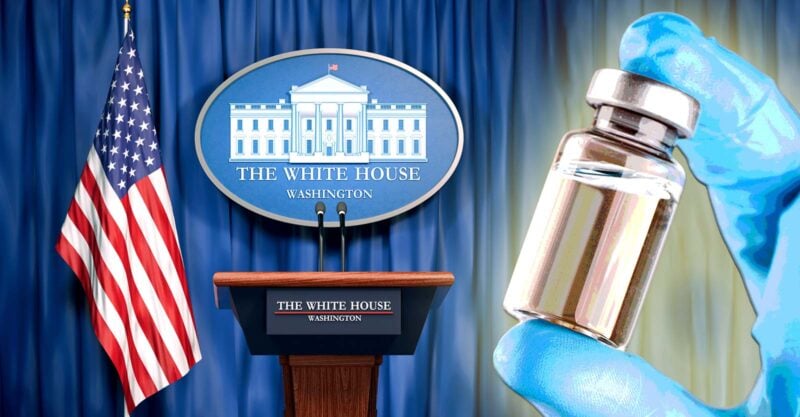


President Donald Trump today signed an executive order calling for sweeping changes to U.S. vaccine policy, including reducing the number of diseases for which kids receive routine childhood vaccines from 18 to 11.
The executive order, first revealed by the Daily Caller earlier today in advance of Trump’s announcement, also recommends splitting the measles, mumps and rubella (MMR) vaccine into three shots, delivered separately over 18 months.
The executive order recognizes “gold standard childhood vaccine recommendations for only 11 core vaccinations against the most serious and dangerous diseases, along with the MMR, which hopefully will be split up,” Trump said today during a signing ceremony at the White House, where he was joined by U.S. Health Secretary Robert F. Kennedy Jr.
The executive order also ends administration of the birth dose of the hepatitis B shot, matching a recommendation made last year by a CDC advisory committee.
Vaccinations no longer recommended for children are now subject to a recommendation for shared clinical decision-making between physicians and caregivers.
🚨 NOW: President Trump is in the Oval Office with RFK Jr. announcing an executive order giving FLEXIBILITY in the childhood vaccination schedule
Children should NOT have 72 jabs into their arms. Especially given we now know “scientists” like Fauci lie about them being “safe and… pic.twitter.com/uD8OM12PiD
— Nick Sortor (@nicksortor) August 10, 2026
Trump said that the Centers for Disease Control and Prevention’s (CDC) childhood vaccination schedule recommends “more childhood vaccines than any peer nation, and even twice as many doses as some European countries.”
“We’re reducing them, we’re changing it to visits over the period of a year, a year and a half, so they get 20% of what they would have gotten in one big shot,” Trump said.
The order also:
- Requires the U.S. Department of Health and Human Services’ (HHS) long-dormant Task Force on Safer Childhood Vaccines to draft a report within 90 days on how to implement the executive order. The Task Force was reinstated in August 2025 after attorney Ray Flores sued HHS. Children’s Health Defense (CHD) funded the lawsuit.
- Calls on states to harmonize their policies with an HHS study showing that the current 18-disease childhood vaccination schedule requires more vaccinations than other high-income countries in Europe and Asia. States are asked to consider updating their school vaccination laws to reflect the new recommendations.
- Advises federal agencies to advance the recommendations based on their respective authorities, to ensure the public has the best scientific information.
- Directs the U.S. Department of Justice to investigate states that may be violating parental rights and religious freedom, including disability accommodations, and religious and medical exemptions for childhood vaccinations.
NEW: Trump announces vaccines for hepatitis B, COVID-19 and influenza, among others, will no longer be recommended for all children.
“In addition, this executive order directs the attorney general to advance legal challenges against states that violate children’s rights to… pic.twitter.com/FcMWlxK62y
— Fox News (@FoxNews) August 10, 2026
Executive order may help lower infant mortality rates
Brian Hooker, Ph.D., CHD’s chief scientific officer, called the order “a step in the right direction.”
“By eliminating the birth Hep B and the new RSV jab from the ‘recommended’ schedule, vaccination is delayed to 2 months of age, rather than the first day of life. Infant deaths in the U.S. peak during the first week of life and anything that can be done to address that will help drive mortality rates lower,” Hooker said.
Karl Jablonowski, Ph.D., CHD’s senior research scientist, said the “real shakeup” comes from aligning U.S. childhood vaccination policy with the findings of the HHS report and “placing it’s upkeep with Kennedy, through the HHS Task Force on Safer Childhood Vaccines.”
“The executive order is a direction to elevate the recommendation responsibility to the HHS Task Force (made up of senior leadership from NIH, FDA, and CDC) and the Secretary himself,” Jablonowski said.
‘This is going to establish essentially a new vaccine schedule’
On Substack, pediatrician Dr. Joel “Gator” Walsh questioned whether the executive order could produce tangible changes to U.S. vaccination policy.
“I do not understand how this is supposed to work,” Walsh wrote. “The childhood vaccine schedule is not ordinarily created because the president sits in the Oval Office and announces how many vaccines children should receive.”
Hooker said the executive order still leaves some key issues for vaccine safety advocates unaddressed. He said:
“I would have liked to see the actual schedule of these shots addressed as well. Unfortunately, very little impact has been made to the multiplicity of shots children will receive at 2-month, 4-month, 6-month, and 12-month check-ups.
“These shots have not been tested in combination in controlled trials, so each infant in the U.S. is a science experiment with a sample size of 1.”
But according to Dr. Robert Malone, who was one of the new members Kennedy appointed in June 2025 to CDC’s Advisory Committee on Immunization Practices, the executive order will likely result in broader changes to the schedule.
“This is going to establish essentially a new vaccine schedule that is fully informed by the research and data that we have from HHS and NIH and other aspects of the government,” Malone wrote in a Substack post.


This article was funded by critical thinkers like you.
The Defender is 100% reader-supported. No corporate sponsors. No paywalls. Our writers and editors rely on you to fund stories like this that mainstream media won’t write.
Trump ‘fixated on connecting autism to vaccines’
According to The Associated Press, public health experts are concerned that spacing out shots may lead to “an increased risk that children become infected with a vaccine-preventable disease before returning for another visit.”
The AP suggested that despite such concerns, Trump is “fixated on connecting autism to vaccines.”
Reuters reported last month that Kennedy has prioritized federal research examining a possible link between vaccines and autism, and that he meets regularly with Trump to discuss vaccine-related policies and the possible link between vaccines and autism.
Last month, anonymous sources told The Wall Street Journal that the president has been pushing Kennedy to do more to investigate a possible link between vaccines and autism.
Kennedy was reportedly taken aback, given that White House advisers had asked him to tone down his work around vaccine safety in advance of the midterm elections, the WSJ said.
Trump also reportedly told Kennedy he wanted him to do more to reduce the number of childhood vaccine recommendations, and that he wants to see autism rates go down, the WSJ said.
Kennedy defended research examining a possible vaccine-autism link and the administration’s vaccine policies during a contentious CNN interview last week.
Related articles in The Defender
- Trump Reportedly Weighing Executive Order on Vaccines, Autism
- RFK Jr. Lets Loose on CNN, Sportscaster Apologizes for Vilifying Unvaccinated — Is a COVID Reckoning on the Horizon?
- Exclusive: ‘Unqualified’ Judge to Blame for ‘Highly Politicized’ Ruling Against RFK Jr.’s Vaccine Advisers
- RFK Jr.’s ‘Clean Sweep’ of CDC Vaccine Advisers Draws Mix of High Praise, Harsh Criticism
- Breaking: Federal Court Blocks ACIP Meeting, Changes to Childhood Vaccine Schedule
- Trump Signs Executive Order Backing HHS on Childhood Vaccine Reform — Will It Matter?