Login
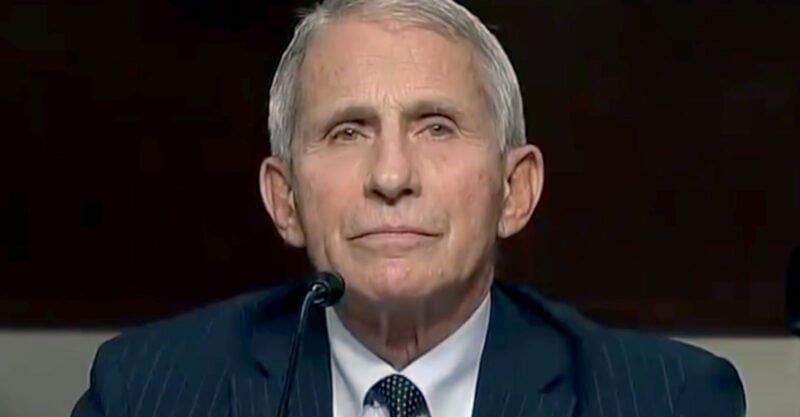


The National Institutes of Health (NIH) is asking the editors of Nature Medicine to investigate whether Dr. Anthony Fauci and other key public health figures secretly helped write an influential 2020 scientific paper that dismissed the possibility that COVID-19 leaked from a laboratory, Politico reported Wednesday.
In a letter sent Wednesday and cited by Politico, NIH Director Jay Bhattacharya questioned the authorship of “The proximal origin of SARS-CoV-2.” The March 2020 paper, widely known as “Proximal Origin,” concluded that a lab leak was an implausible explanation for how the virus emerged.
Bhattacharya asked the journal to investigate whether the paper’s five listed authors accurately disclosed everyone who contributed to writing, editing or publishing the article. He also asked the editors to consider retracting or correcting the paper.
“The NIH is presenting the question of whether the byline and acknowledgements accurately reflect the individuals who contributed substantively to the conception, drafting, revision, or publication of the manuscript,” Bhattacharya wrote.
The letter cited congressional investigations that found key public health officials — including Fauci, then director of the National Institute of Allergy and Infectious Diseases (NIAID) — played a key role in drafting the paper.
The letter also named Dr. Francis Collins, then director of the NIH, and biologist Jeremy Farrar, Ph.D., then-president of the Wellcome Trust, who also advised the British government during the COVID-19 pandemic.
Bhattacharya asked Nature Medicine to respond within 30 days with a plan for reviewing the allegations and a timetable for completing its investigation.
Rutgers University molecular biologist Richard Ebright, Ph.D., told The Defender that evidence suggests that “Proximal Origin” is the product of “extraordinarily egregious misconduct” and “fraud.” In light of these revelations, Ebright said it is “appropriate” for the NIH to “expose this misconduct and to seek accountability.”
“At bare minimum, Nature needs to explain what happened with this corrupt publication,” said investigative journalist Paul D. Thacker, publisher of The Disinformation Chronicle. He called the paper “a blot on scientific integrity.”
Polls indicate that most Americans believe a lab leak was the likely origin of the COVID-19 pandemic. Over 6,000 researchers have signed a petition calling upon Nature Medicine to retract “Proximal Origin.”

Ghostwriting may violate Nature Medicine policies, federal law
After its publication, “Proximal Origin” became the most influential scientific study published in 2020. It is Nature Medicine’s most-cited paper of all time.
Scientists, media and government officials used the paper to discredit anyone who suggested that COVID-19 was the result of a lab leak, characterizing some as conspiracy theorists.
In a post on Twitter — now X — Nature Medicine editor João Monteiro wrote, “Let’s put conspiracy theories about the origin of #SARSCoV2 to rest and help stop the spread of misinformation.” The Trump administration is now investigating Monteiro for corruption involving the publication of “Proximal Origin.”
However, the NIH letter raises questions about ghostwriting — the practice of making substantial contributions to a scientific paper without being listed as an author.
Ebright said “it is a matter of public record” that Fauci, Collins and Farrar prompted and oversaw drafting, submission and publication of the “Proximal Origin” paper, even though they weren’t listed as authors or acknowledged in the paper. “As such, the paper also is, provably, a product of funder ‘ghostwriting,’” Ebright said.
But Fauci, Farrar and Collins aren’t listed among the five co-authors of “Proximal Origin.” The paper merely acknowledged funding from the NIH and Wellcome Trust.
According to The Disinformation Chronicle, this omission may violate Nature Medicine’s editorial policy, which states that a “specific role for the funder in the conceptualization, design, data collection, analysis, decision to publish, or preparation of the manuscript, should be disclosed.”
A 2011 Nature article called for ghostwriting to be treated as “misconduct.”
Thacker cited a 2011 letter Collins sent him, stating that ghostwriting involving NIH-funded researchers could constitute plagiarism under federal research misconduct rules.
“A case of ghostwriting involving NIH-funded researchers may be appropriate for consideration as a case of plagiarism; i.e. the appropriation of another person’s idea, processes, results, or words without giving appropriate credit,” Collins wrote.
According to Collins, such violations can lead to the suspension or termination of research grants and exclusion from federal funding programs.


This article was funded by critical thinkers like you.
The Defender is 100% reader-supported. No corporate sponsors. No paywalls. Our writers and editors rely on you to fund stories like this that mainstream media won’t write.
Questions about authorship surfaced as early as 2022
Questions about the authorship of “Proximal Origin” surfaced as early as 2022, when emails released through Freedom of Information Act requests and congressional inquiries showed that Fauci and Collins helped draft the paper.
In 2023, a report and supporting evidence, released by Democrats in the U.S. House of Representatives, documented Farrar’s involvement, even as Democrats rejected Republican allegations that Fauci and Collins improperly influenced its conclusions.
In one email, Robert Garry, Ph.D., a co-author of “Proximal Origin,” wrote that “Dr. Farrar has been an amazing leader,” suggesting that he “Should be author.” Garry later confirmed this statement during a House deposition.
Other emails showed the paper’s lead author, Kristian Andersen, Ph.D., sent drafts and a final version of the paper to Fauci and Farrar for pre-publication input.
Other documents suggest that Farrar played an even more significant role by circulating drafts, making substantive edits and facilitating publication of the paper.
In 2024, Fauci told the House that Andersen sent him drafts of “Proximal Origin” but that he didn’t edit it. That year, the NIH under the Biden administration stated that Collins was not an author of “Proximal Origin” and did not influence its content.
Other documents released by congressional investigators show that some of the paper’s authors initially considered a COVID-19 lab leak plausible.
However, the authors were reportedly pressured by figures like Fauci to dismiss such conclusions, allegedly in exchange for future federal research grants.
Related articles in The Defender
- Trump Administration Investigating Publisher of COVID Origins Paper for Corruption, Citing Influence by Fauci
- CIA Whistleblower: Fauci Led Multi-Agency Cover-Up of COVID Lab Leak Evidence
- Congress Asked Fauci at Least 111 Questions — Fauci Refused to Answer at Least 111 Times
- Biden Grants Fauci a ‘Preemptive Pardon.’ Could He Still Face Legal Challenges?
- Smoking Gun? Documents Suggest Fauci Knew COVID Was Created in Wuhan Lab, and mRNA Vaccines Wouldn’t Work
- Fauci Knew NIH Funded Gain-of-Function Research at Wuhan Lab, Pressured Scientists to Push ‘Natural’ COVID Origins, Leaked Messages Reveal