Login
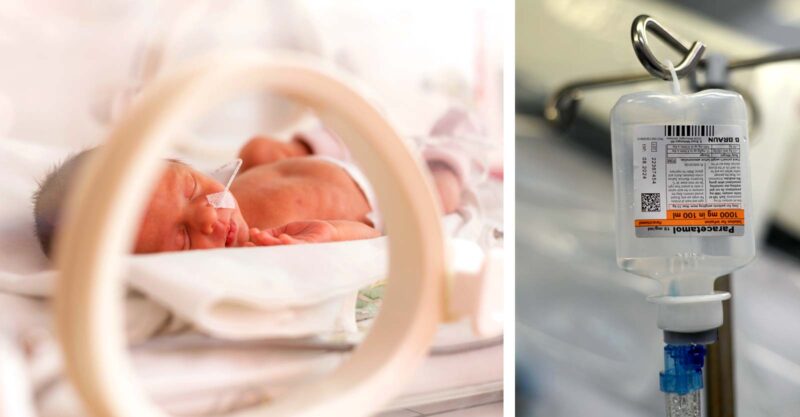


Acetaminophen, the active ingredient in Tylenol, harms the brains of newborn rats far more than the brains of fetal rats because the fetuses are protected by the mother’s liver, according to the authors of a new study.
The study is the first ever to measure acetaminophen toxicity in the fetal and neonatal brains of animals, the authors wrote in their report, published Nov. 14 on SSRN, Elsevier’s open-access preprint server.
The authors not only found that newborns were far more at risk than fetuses, but that the drug was toxic to newborns at doses smaller than those sometimes given to human babies.
William Parker, Ph.D., a senior author on the study, told The Defender, “We tested the toxicity directly in the brain of these laboratory animals all the way down to 30 milligrams per kilogram of acetaminophen, and we still found toxicity.”
Some babies — particularly newborns in neonatal intensive care units — are given acetaminophen suppositories at doses of up to 40 milligrams per kilogram of body weight, said Parker.
Parker, who has researched acetaminophen risks for over a decade, is a visiting scholar in the psychology and neuroscience department at the University of North Carolina, Chapel Hill. He is also CEO of WPLab, a nonprofit that focuses on research and education about acetaminophen’s impact on the developing brain.
Parker and his co-authors are considering where to submit the study for peer review, Parker said.
The study comes amid an ongoing debate over whether Tylenol use in pregnant women, babies and young children may cause autism.
In July, a federal appeals court allowed more than 500 lawsuits to move forward alleging Tylenol maker Kenvue failed to warn consumers that taking the pain reliever during pregnancy could increase the risk of autism and attention-deficit/hyperactivity disorder (ADHD) in children.
Acetaminophen’s possible link to autism made national news in September 2025 when President Donald Trump and U.S. Health Secretary Robert F. Kennedy Jr. announced that federal health agencies would undertake extensive research into all possible causes of autism, including vaccines.
At the same White House event, officials also announced that the U.S. Food and Drug Administration (FDA) would add warnings to Tylenol and other acetaminophen-containing products advising pregnant women of a possible link between prenatal acetaminophen exposure and autism.
Parker said there are mechanisms by which acetaminophen could harm a fetus during pregnancy — but that the risk of harm is much higher when newborns and young children take the drug.
That’s because the mother’s liver protects the fetus by processing much of the drug’s toxicity. But as soon as the umbilical cord is cut, the infant has to process the drug on its own, Parker said.
‘Infants and young children should not be exposed to baby Tylenol’
Acetaminophen itself isn’t toxic — but the body processes it in a way that can be toxic in genetically susceptible babies and children, Parker said.
“Basically, what happens is you convert it into a toxic chemical, and then that toxic chemical sticks onto — we call it a covalent bond — a protein, and that causes damage,” he said.
Parker and his team were able to measure how much the toxic chemical sticks to the protein. “That’s a direct measure of acetaminophen toxicity in the tissue,” he explained.
People who aren’t genetically susceptible can process acetaminophen without it becoming toxic. “I always say autism is 100% genetic and it’s 100% environmental. It’s got both of those,” Parker said.
Parker also said the drug is even more dangerous when taken by someone who is sick or was recently vaccinated. “The way that acetaminophen works is that anything that stresses your immune system is going to make acetaminophen more toxic,” he said.
Children’s Health Defense (CHD) Chief Scientific Officer Brian Hooker praised the study. “This is sufficient evidence for the precautionary principle to apply. Infants and young children should not be exposed to baby Tylenol.”
Parker agreed. He suggested that acetaminophen not be given to children under 6, and that children who take it should be monitored for cognitive impairment.
Acetaminophen is not the only environmental exposure that can trigger autism, Hooker said. “We still need to fully investigate vaccines and vaccine components, pesticides and herbicides and other medicines for the environmental stressors that can and do lead to autistic regression.”

Study shows newborns are especially vulnerable
Parker’s team gave newborn rats four doses of acetaminophen over two days, then examined their brain and liver tissue for signs of toxicity.
They tested doses of 30, 60 and 150 milligrams per kilogram of body weight and compared the results with rats that received saline injections.
They also gave acetaminophen to pregnant rats to compare its effects on unborn and newborn animals.
The authors found that acetaminophen exposure produced signs of toxicity in the brains of newborn rats — even at doses that did not cause obvious liver damage.
At the lowest dose tested, they detected chemical compounds that form when the body breaks down acetaminophen into a potentially toxic substance. At the two higher doses, they also found significantly more evidence of brain cell death than in untreated animals.
The American Academy of Pediatrics generally recommends 10-15 milligrams of acetaminophen per kilogram of body weight, given every four to six hours, to reduce fever in children, with a maximum daily dose of 90 milligrams per kilogram.
The authors also found that newborn rats had approximately five times more of these potentially harmful compounds in their brains than unborn rats exposed to the same dose through their mothers.
The findings suggest that the mother’s liver and placenta may help protect the developing fetus from acetaminophen toxicity, while newborns may be more vulnerable after birth.
‘This is our most popular drug and nobody’s done a toxicology screen’
The study authors concluded that the newborn rat brain may be particularly vulnerable to acetaminophen-related toxicity, even at doses below those typically associated with liver damage.
Parker said a full toxicology screen for acetaminophen in newborns that looks at how the drug affects all organs “desperately” needs to be done. “This is our most popular drug and nobody’s done a toxicology screen,” he said.
The U.S. Department of Health and Human Services (HHS) did not immediately respond when asked about plans to do a toxicology screening for acetaminophen, or which HHS agency would do such a task.
The National Institutes of Health usually conducts new science — not standard toxicology screenings of drugs that have already been licensed by the FDA.
The FDA did not respond by the deadline when asked if the agency plans to revisit its safety analysis of acetaminophen.
The Defender is 100% reader-supported. No corporate sponsors. No paywalls. Our writers and editors rely on you to fund stories like this that mainstream media won’t write. 

This article was funded by critical thinkers like you.
Acetaminophen a significant contributor to autism in young children
In addition to Parker, authors include researchers at the University of North Carolina, Chapel Hill, and the Health Research Institute, an accredited independent lab in Iowa that tested the animal tissue samples.
Private donations to WPLab provided most of the study’s funding. However, CHD paid for the testing. According to Parker, the researchers might not have been able to conduct the study without CHD’s help.
When planning the study, Parker knew his team could run the animal experiments, but he did not know of a lab that could be trusted to analyze the tissue samples.
Parker contacted Hooker, who connected him with John Fagan, co-founder, CEO and chief scientist at the Health Research Institute.
Fagan had conducted pesticide and heavy metal testing of school lunches without being swayed by industry influences and could be trusted to run the acetaminophen tests, Hooker told Parker.
According to Parker, Hooker said, “We know somebody. We can get this test up and running — and we’ll pay for it.”
The new study adds to a mountain of evidence suggesting that acetaminophen can harm the brains of babies and young children. For example, a 2022 peer-reviewed study found that acetaminophen use in infants and children was never shown to be safe for neurodevelopment.
In 2024, Parker and colleagues published a review of studies on acetaminophen and neurodevelopmental injury in young kids in the peer-reviewed journal Clinical and Experimental Pediatrics.
They concluded that “there is no valid rationale for controversy” regarding the conclusion that early life exposure to acetaminophen “causes neurodevelopmental injury in susceptible babies and small children.”
Fagan said the new study “puts the final nail in the coffin” by providing definitive evidence that acetaminophen toxicity is a “significant contributor to autism in young children.”
Related articles in The Defender
- 500 Tylenol-Autism Lawsuits Get New Life After Ruling by Federal Appeals Court
- Tylenol, FDA Knew About Autism Risk For Years, Newly Surfaced Emails Show
- Texas AG Sues Tylenol Makers for Hiding Autism Risks, Misleading Pregnant Women
- ‘Uncompromising and Relentless’: HHS to Study All Possible Causes of Autism, Including Vaccines
- HHS Will Link Autism to Tylenol Use During Pregnancy, Wall Street Journal Reports