

 Login
Login
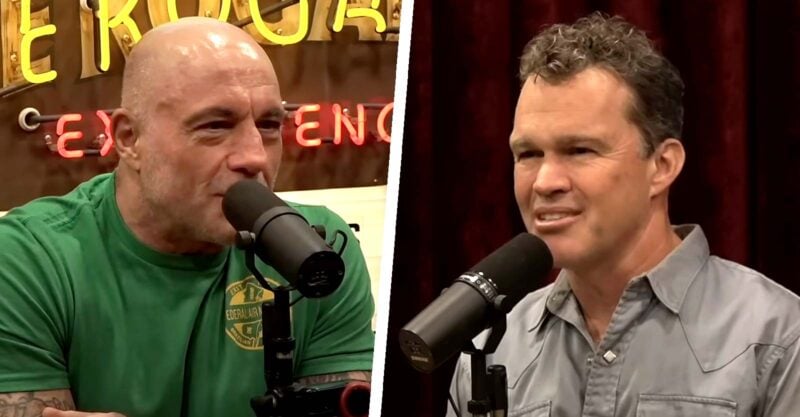


The key to understanding modern health and disease begins with the “disruptive” realization that “everything is perfect,” physician and regenerative agriculture advocate Dr. Zach Bush said this week on “The Joe Rogan Experience.”
During a wide-ranging interview, Bush argued that chronic disease, artificial intelligence (AI), environmental degradation and other modern crises are not signs humanity is failing but “a perfect manifestation of a maturation of a species.”
That idea shaped nearly every topic the two discussed, from medicine and money to glyphosate and AI.
Bush, who specializes in internal medicine, endocrinology and hospice care, founded the nonprofit Farmer’s Footprint after concluding that human health is inseparable from soil health and agricultural practices.
Modern society mistakenly treats health as something people acquire through medicine, technology or wealth, but “health was never something we possessed. It was always something we participated in,” his website states.
Bush explores that philosophy in his recent book, “Biological Elegance: Unwitting the Devil,” which argues that health emerges through relationships among people, microbes, ecosystems and the natural world.
He said that while researching the human gut microbiome, he realized the biology of health extended far beyond the body. “The microbiome pointed to food. Food pointed to farms. Farms pointed to soil. Soil pointed to the vast intelligence of living systems,” according to the site.
Recognizing that relationship represents one of humanity’s next great advances, Bush told Rogan. “We’re going to stop demonizing anything nature’s provided, and we’re going to start looking at our relationship to it instead.”
‘We put ourselves in opposition to nature’
Bush repeatedly returned to what he called humanity’s greatest mistake: believing people exist apart from nature.
Dictionary definitions describe nature as everything except “humans or human creations,” he said. Modern culture pits people against other living things.
“Not only do we write ourselves out of nature, we put ourselves in opposition to nature,” Bush said.
Biology has always evolved by adapting to challenges, rather than viewing natural toxins, microbes and stresses as enemies, he said.
“The planet’s been making horrible toxins forever,” he said, citing sulfuric acid pools as an example. Yet life continually moves through cycles of “iteration, repair, regeneration,” becoming more diverse and resilient over time.
“The result of stress when connected to nature is more life force, more intelligence, more beauty,” Bush said.
Modern science often overlooks that resilience because it studies the body as a collection of separate parts rather than an interconnected living network. “You’re not an isolated system,” he said.
As an example, Bush said even something as commonplace as coffee can either support or undermine health depending on its relationship to the body’s broader biological systems.
“If coffee is part of a complex ecosystem of your microbiome, the soil systems of your body, then it’s going to supercharge you into health,” he said. But “if coffee sits there as a drug that is bypassing the felt sense of being human,” it instead becomes “a distraction to life.”
‘There’s no way a machine ever wins this game’
Humanity’s growing reliance on AI stems from losing its relationship with nature, Bush said. But living systems possess qualities machines never can. “Feeling is the only relevant thing to a human body,” he said.
Bush criticized modern education and workplaces for conditioning people to think and behave like machines instead of cultivating creativity and lived experience.
“We’ve been for 150 years training children to sit in chairs, answer multiple-choice tests, be programmed with education rather than have experiential learning,” he said. “We don’t thrive in that space. Our health declines, our productivity declines. Anytime you put somebody in a cubicle, they’re on a downward spiral.”
Bush also rejected predictions that AI will eventually replace human purpose. Meaning comes from participating in living systems rather than simply processing information, he said.
He contrasted biological intelligence with AI, saying machines rely on external energy, while living organisms continually repair, regenerate and evolve.
“There’s no way a machine ever wins this game,” he said. “There is only one pathway forward for humanity now, and it’s biological, not technological. … If it’s not a living system, it loses ultimately.”

Food, shelter and livelihoods ‘come from nature, not money’
Bush argued that money is not the cause of society’s problems but a symptom of humanity’s separation from the natural world.
“The moment money comes in as a metric and a value system that’s not connected to life, you fracture that system,” he said. People often view money as the source of security, when their most basic needs ultimately depend on nature.
“Our food, our shelter, our livelihoods are going to come from nature, not money,” he said.
When Rogan suggested aristocrats historically may have appeared healthier because their wealth gave them greater access to food, Bush argued that wealth can instead distance people from the natural world that sustains health.
“They’re the most separated from nature,” he said. “They’re the ones not touching the soil. They’re the ones not making the bricks. They’re the ones not building the houses.”
Prosperity by itself cannot create either happiness or life, Bush said. “Money has never birthed anything. Women birth life. Money does not.”
Medical systems ‘are actually chronic disease management systems’
Bush challenged conventional explanations for chronic disease, arguing that modern medicine has focused on attacking germs rather than restoring the body’s interconnected biological systems.
He traced that approach to Louis Pasteur’s germ theory, the 1910 Flexner Report and the rise of chemical agriculture and pharmaceuticals, which he said encouraged people to view nature as something to sterilize and control.
According to Bush, that mindset led medicine to treat chronic illnesses as separate diseases rather than different manifestations of the same underlying metabolic dysfunction.
“We have medical systems that are actually chronic disease management systems that are bankrupting the world now,” he said. “Five trillion dollars in a year spent on disease management in the U.S. alone.”
Bush said that same reductionist thinking also limits scientific research by encouraging scientists to study biology one component at a time instead of as an interconnected living system.
As one example, Bush argued that cancer has long been understood as a symptom of broader biological dysfunction rather than a disease that independently attacks healthy tissue.
“We knew that cancer was a symptom of metabolic collapse 100 years ago,” he said.
Yet “here we are, 100 years later, still thinking … cancer’s coming out of the woodwork and attacking healthy human bodies.”
For the same reason, Bush argued that “everything that we call ‘trust the science’ these days is an aberration” because living systems cannot be understood by examining isolated parts.
“It’s a symbol of life. It is not life itself,” Bush said. “It’s ‘there’s a bacteria, there’s a mitochondria, there’s a human cell.’ And we think of those as three different things. No, it is life lifing.”
The Defender is 100% reader-supported. No corporate sponsors. No paywalls. Our writers and editors rely on you to fund stories like this that mainstream media won’t write. 

This article was funded by critical thinkers like you.
‘We don’t have gluten sensitivity, we have a metabolic collapse’
Bush and Rogan also criticized the modern food system’s dependence on chemical interventions and the health consequences that have followed.
Rogan said banning glyphosate “would have a devastating impact on our society, on our economy because all these businesses … would lose billions and billions of dollars. Think of that. Think of where we are right now, where our food supply relies on poison to function. … If we take away the poison, we’ll fall apart.”
Bush agreed that society is dependent on glyphosate but argued that the greater dependence lies in healthcare, not in agriculture. He said modern medicine is built around managing the chronic illnesses that widespread chemical exposure has fueled.
“It’s not actually the food system that’s about to fall apart,” Bush said. “It’s the medical system.”
He said decades of antibiotics, herbicides and pesticides have steadily reduced biological diversity inside the body, weakening metabolism and resilience.
Citing research on adenosine triphosphate (ATP) — the molecule that stores and transfers cellular energy — Bush suggested glyphosate rapidly suppresses mitochondrial energy production, reducing the body’s available biological energy.
Within 30 minutes of exposure to the amounts of glyphosate typically found in chemically farmed foods, “you see a sudden collapse of the ATP production,” he said.
According to Bush, that loss of cellular energy has contributed to a broader decline in metabolic health since glyphosate became widely used in the 1970s.
He described a progression from reduced cellular energy to obesity, diabetes, allergies, autoimmune disease — when “your own immune system … can’t tell it’s you” — neurological disorders, infertility and cancer.
“We don’t have gluten sensitivity,” Bush said. “We have a metabolic collapse. That’s called glyphosate poisoning.”
Why Bush calls everything ‘perfect’
Throughout the interview, Bush returned to the “disruptive” idea that opened the conversation.
Drawing on his years caring for hospice patients, he said he repeatedly watched people abandon conventional measures of success in their final moments of life.
“I was blessed to sit by thousands of death beds,” Bush said. “Not a single person ever told me a day of their life in an office.”
Instead, Bush said many patients came to see that even their greatest hardships had meaning because they were part of a fully lived human experience.
“The whole thing was poetically perfect,” Bush said, describing what he believes many patients experience near death. Rather than judging their lives by careers, money or accomplishments, they recognized “it had to do with the experience of feeling everything a human being is capable of.”
“They realize, ‘All of the heartbreak, all of the estrangement, all of the disappointment, all the insecurity. I did that for the experience, and I felt everything. I felt everything a human can feel,’” Bush said.
For Bush, that perspective also explains why today’s environmental, medical and societal crises are not evidence that humanity is failing, but part of a larger biological process of growth.
“The victory is no longer staying alive longer,” Bush said. “It’s integrating everything that’s happened.”
Watch Bush on ‘The Joe Rogan Experience’ here:
Related articles in The Defender
- ‘The Advantage Is Real’: Regenerative Agriculture Pays Off, Indiana Farmer Tells RFK Jr.
- Watch: Tennessee Teen Drenched in Glyphosate Spent Next 7 Years Fighting ‘Massive Alien’ Tumor
- ‘We’ve Addicted Our Farmers’ to Glyphosate, RFK Jr. Tells Joe Rogan
- Dr. Zach Bush on Humans and Germs: ‘It’s Not Us Versus Them’
- Dr. Zach Bush Tells RFK Jr.: ‘By Deleting the Alphabet of Human Biology, We Ended Up With a Chronic Disease Epidemic on a Grand Scale’
- Cheating the System: How AI Data Centers Bypass Water and Air Pollution Laws and Permits
