Login
Login
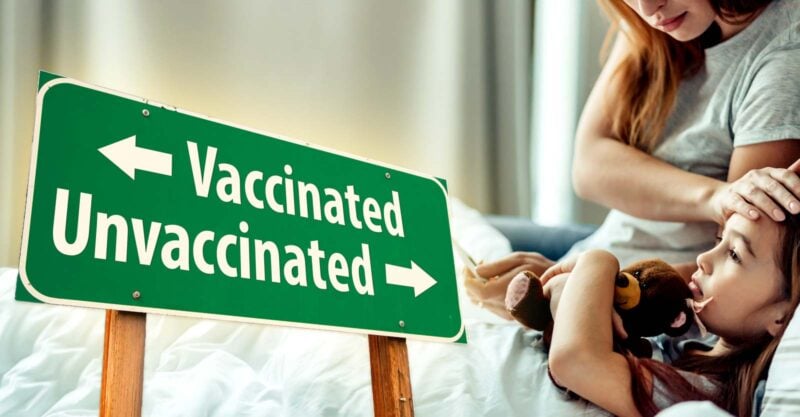


Early childhood vaccination is associated with significantly higher odds of multiple acute and chronic health conditions in children, according to a new study comparing the health outcomes of vaccinated and unvaccinated children.
The study, published last week on the preprint server Zenodo, is co-authored by members of the Children’s Health Defense (CHD) Science Department.
Brian Hooker, Ph.D., CHD’s chief scientific officer and co-author, said the study — which involved the “largest collection of unvaccinated children studied in this context” — found the health outcomes of unvaccinated kids surpassed those of vaccinated children across multiple measures.
“Children were 60% more likely to suffer recurrent respiratory disease with at least double the risk of recurrent ear and strep infections,” Hooker said. “In general, the risk increased in the vaccinated group based on increasing number of vaccines.”
The study’s key findings include:
- Vaccination before 13 months was linked to “significantly elevated odds” of strep throat (130% higher odds), ear infection (100%), rhinitis (80%) and respiratory disease (60%) compared to unvaccinated children.
- Strep infection showed “a clear dose-response gradient” — with odds of contracting the condition rising by as much as 240% as the number of vaccine doses the children received increased.
- Developmental delay did not increase significantly in the overall cohort, but “was significantly elevated in the highest vaccine quartile,” which received over 10 vaccine doses. Members of this group had 40% higher odds of experiencing developmental delay.
Medical researcher Neil Z. Miller, who was not involved with the study, said its findings contribute to growing evidence suggesting that “unvaccinated children may experience better health outcomes than vaccinated children. He said the study’s findings also “provide important signals that warrant further investigation.”
Study examined over 6,000 children — including 3,825 unvaccinated kids
The study examined the records of 6,239 children — including 3,825 who were unvaccinated — from eight pediatric practices.
The researchers examined the children’s health outcomes based on the vaccines they received during their first year of life.
They looked at nine clinical conditions, tracking one-time diagnoses for developmental delay, rhinitis, abnormal breathing, nausea and vomiting, and recurring diagnoses — defined as three separate diagnoses over a 12-month period — for respiratory disease, strep throat, ear infection, skin rash and fever.
The children were divided into two groups: unvaccinated and vaccinated, defined as having received “at least one vaccine before 13 months” — a period during which the Centers for Disease Control and Prevention recommends at least 18 vaccine doses.
The study also recorded the number of shots each child received.
Higher vaccination linked to higher odds of onset of multiple conditions
According to the researchers, several of the study’s findings are significant — and provide evidence that vaccination may lead to risk factors for future chronic illnesses.
For example, vaccinated kids had more than double the odds of developing recurrent strep throat, “a finding with clinical significance given the need for repeated antibiotic treatment and the associated risks of antibiotic resistance, microbiome disruption, and rare but serious post-streptococcal sequelae” — a secondary condition or complication from a prior disease.”
The higher risk of ear infection faced by vaccinated children is also “a leading indication for antibiotic use, tympanostomy tube placement, and specialist referral in early childhood.”
The higher risk of respiratory disease for vaccinated kids “suggests that vaccinated children experience substantially greater respiratory morbidity than their unvaccinated peers.”
However, the findings of the study’s dose-response analysis — which looked at the onset of adverse health conditions in relation to the number of vaccine doses the children received — provided “compelling evidence” about potential vaccine risks.
The odds of recurrent strep infections were 50% higher in vaccinated children compared with kids who received between one and three vaccine doses, and 240% higher for kids who received between six and nine doses.
For children who received 10 or more vaccine doses, the odds of experiencing recurrent strep throat decreased somewhat compared to kids who received between six and nine doses, dropping to 170%.
According to the study’s authors, this “may reflect survivor bias — where conclusions are drawn from people who survived or remained in a study, while overlooking those participants who may have died or dropped out due to poor health.
Rhinitis showed a similar pattern, with odds of onset ranging from 30% for children who received between one and three doses, to 130% for kids who received between six and nine doses.
Vaccinated girls had 160% higher odds of strep throat compared with unvaccinated girls
The study found that girls were particularly susceptible to some of the conditions studied, including strep throat, which vaccinated girls had 160% higher odds of developing compared to their unvaccinated peers — representing “the strongest association observed in any sex-stratified analysis” in the study.
“The fact that kids who received at least one vaccine before 13 months were more often coded for several common infectious and respiratory diagnoses suggests an effect on the immune system,” said epidemiologist M. Nathaniel Mead, Ph.D., a McCullough Foundation scholar, who was not involved with this study.
Developmental delay wasn’t significantly linked with vaccination in the overall study, the analysis identified “significantly elevated odds” (40%) of developing such a condition among children who received between six and nine vaccine doses, compared to unvaccinated kids.
Hooker said these results may indicate the “healthy vaccinee” effect, “where parents of children developing more slowly, especially at younger ages, avoid vaccinations.”
The result for the most heavily vaccinated children “appears to be more in line” with past research showing that “higher risk was associated with increasing numbers of vaccines received.”
Recurring conditions may be sign of ‘innate immune suppression’
Hooker said the study provides several significant findings that expand existing knowledge of vaccine risks and can help inform future research.
A key feature of the study is that it directly compared health outcomes between vaccinated and unvaccinated children, rather than comparing differentially vaccinated groups of kids to each other — which Hooker said is “a methodological choice that systematically masks vaccine-associated morbidity.”
Few studies have previously examined recurring disease in children, or the link between such recurring conditions and vaccination.
“The primary thrust of the study: recurring disease in children has been studied only peripherally in the past, despite strong evidence that vaccines and vaccine components can negatively impact the immune system,” Hooker said.
According to Hooker, such recurring conditions may be a sign of “innate immune suppression.” He said the study’s findings “affirm this evidence as well as the need for additional study to understand the role of vaccines in recurrent infections and the extent that this is harming our population in the U.S.”
“The number of vaccine doses administered to infants and young children has increased dramatically since the early 1990s,” the study states. Yet, “rigorous long-term safety studies comparing fully vaccinated children to genuine unvaccinated controls remain exceedingly rare.”
Hooker said the study “affirms a significant body of literature” regarding the risks of vaccination even for “partially vaccinated children,” including a 2011 Institute of Medicine publication finding that there was not enough evidence to accept — or reject — a link between vaccines and a range of potential adverse events.
Hooker acknowledged certain methodological limitations of the study — including the convenience sample based on eight pediatric officers who were “willing to share deidentified medical data” and an inability to consider the timing of the onset of the conditions measured in relation to the administration of vaccine doses.
The study also does not indicate whether any specific childhood vaccines are linked to a higher risk of any of the conditions measured. Hooker said the current vaccination schedule broadly exposes children to “toxic levels of aluminum,” which the U.S. Department of Health and Human Services has classified as a neurotoxin.
“The current schedule includes significant exposure to toxic levels of aluminum, which we know can travel to multiple organs in the body, including the brain. In addition, live virus exposure via rotavirus, measles-mumps-rubella (MMR) and varicella vaccines occurs throughout the first year of life,” Hooker said.


This article was funded by critical thinkers like you.
The Defender is 100% reader-supported. No corporate sponsors. No paywalls. Our writers and editors rely on you to fund stories like this that mainstream media won’t write.
‘We need to better understand total health impacts of the current vaccine schedule’
Miller said that the study has some limitations, such as not being able to account for possible confounding variables, such as gestational age and birth weight but that overall, “the findings provide important signals that warrant further investigation.”
“Additional studies with larger populations and more robust methodology are needed before firm conclusions can be drawn,” Miller said.
Mead said the study is “timely,” because the National Institutes of Health (NIH) “recently announced plans for intensifying research on autism’s possible causes, without including vaccines as part of that focus.”
“Clearly we need to better understand the total health impacts of the current vaccine schedule,” Mead said.
Karl Jablonowski, Ph.D., CHD’s senior research scientist and one of the study’s co-authors, noted that a small group of scientists was able to conduct research that larger institutions, including the federal government, have neglected — namely, directly comparing vaccinated and unvaccinated children’s health outcomes.
“The largest such study was not conducted with millions of taxpayer dollars, HMO data and by decree from the NIH. It was done by a small, unyielding non-profit that had to stitch together medical databases,” he said, referring to CHD.
“Something is very wrong with our national priorities, and our children are suffering because of it.”
Related articles in The Defender
- Are Routine Childhood Vaccines Deadlier Than the Diseases they Target?
- Trump Says He Will Demand Drugmakers Split Some Routine Vaccines Into Five Doses
- New Poll: Americans’ Trust in MMR Vaccine Fades
- Trump Signs Executive Order Aimed at Reducing Number of Childhood Vaccines
- Dr. Paul Thomas: Why I Don’t Vaccinate Kids — and What Parents Should Know
- $50 Million NIH Autism Study Ignores Link to Vaccines, CHD Scientist Says