Login
Login
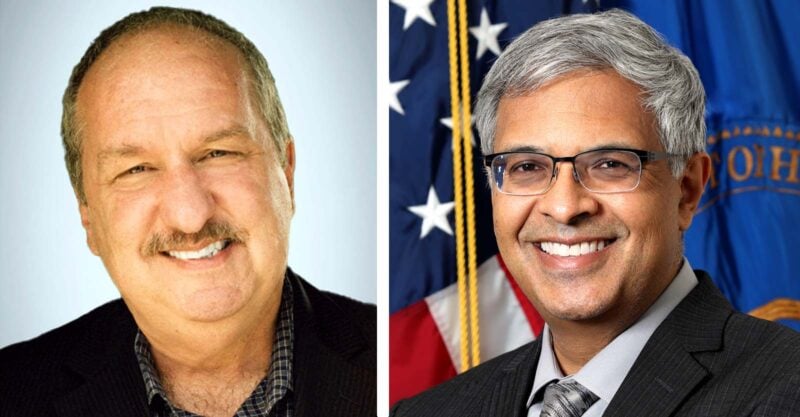


A $50 million federal research initiative examining the potential causes of autism is sidestepping any examination of a possible vaccine-autism link and is instead funding research by establishment scientists who have denied such a link, a new letter to National Institutes of Health (NIH) Director Jay Bhattacharya alleges.
The NIH announced the $50 million Autism Data Science Initiative (ADSI) last year. In his letter, Children’s Health Defense (CHD) Chief Scientific Officer Brian Hooker wrote that three projects funded by the initiative are led by scientists who “built their careers on explicit, public denial that vaccines could play any role in autism etiology.”
Hooker wrote that his review of the ADSI portfolio turned up no studies examining “vaccines or vaccine components.” The ADSI appears designed to come to a predetermined conclusion that vaccines are not linked to autism, Hooker alleged.
The NIH-funded research instead largely focuses on connecting autism to a range of genetic and environmental causes while ignoring a possible link to vaccines, Hooker said.
In an assessment accompanying his letter, Hooker called the ADSI, as currently structured, “not a search for the truth” but, instead, a “validation engine” for mainstream autism narratives.
Hooker told The Defender he was motivated to write the letter after the Aug. 19 ADSI update meeting and the Aug. 27 meeting of the federal Interagency Autism Coordinating Committee.
At the latter meeting, NIH Principal Deputy Director Matthew Memoli said the agency is “working toward more investigation of vaccines as a cause of autism,” according to Hooker’s original letter.
“Those are reassuring words. They are also, unfortunately, contradicted by the facts on the ground,” Hooker wrote. He told The Defender the ADSI instead “consists of a bunch of re-tread genetics projects that have been altered to look like gene-environmental interaction projects.”
Hooker’s allegations come despite recent reports that studying the vaccine-autism link is a priority for President Donald Trump and U.S. Health Secretary Robert F. Kennedy Jr.
In July, Reuters reported that Kennedy has prioritized federal research examining a possible link between vaccines and autism, and that he meets regularly with Trump to discuss the possible link.
That month, sources told The Wall Street Journal that Trump is pushing Kennedy to do more to investigate a possible link between vaccines and autism.
In May, The New York Times reported that Kennedy was leading an “intense” multi-agency study of childhood vaccine safety that was examining a link with autism.
Hooker calls on NIH to scrap 3 of 7 NIH projects
Chris Exley, Ph.D., an expert on the health effects of aluminum exposure, welcomed Hooker’s letter. He called the ADSI a “smokescreen” and said he raised similar concerns with Kennedy “almost immediately after this funding list was announced.”
“I pointed out that none of the NIH-funded research would address the fundamental issue of vaccination and autism, and specifically the role of aluminium adjuvants and profound autism,” Exley said.
Christopher A. Shaw, Ph.D., a neuroscientist and professor of medicine at the University of British Columbia, said the ADSI has adopted an “anything besides vaccines” strategy — one where “some of the proponents are still beating the genetic causality approach.”
“Although vaccination is by no means the only cause of autism, multiple vaccinations administered at the same time appear to play a major contributory role,” said researcher Dr. Anthony Mawson. “No stone can be left unturned, including the current vaccination schedule.”
Mawson said such findings would provide the NIH and Kennedy “the needed justification for introducing major changes in public health policy regarding the vaccination of mothers-to-be and infants.”
Hooker’s letter calls on the NIH and Bhattacharya to discontinue three of the seven projects funded by the ADSI. He also calls for a greater focus on profound autism and for the expansion of the ADSI’s scope to include research into the potential role of vaccines and vaccine components in the onset of autism.
The U.S. Department of Health and Human Services (HHS), NIH’s parent agency, did not respond to The Defender’s request for comment by press time.
Several NIH-funded autism studies led by ‘ideological gatekeepers’
Hooker’s letter singled out three of the seven principal investigators funded by the ADSI: Wendy Chung, M.D., Ph.D., chief of the Department of Pediatrics at Boston Children’s Hospital; Daniel Geschwind, M.D., Ph.D., director of the UCLA Center for Autism Research and Treatment; and Dr. Jonathan Sebat, director of the Sebat Lab at the University of California, San Diego.
Hooker characterized the researchers as “ideological gatekeepers” who have repeatedly denied a vaccine-autism link. “They will not permit a vaccine signal to emerge from their data because their institutional survival depends on preventing it.”
Instead, these scientists — described by Hooker in his assessment as “the ‘Big Three’ of autism genetics” — are likely to identify only “genetics and a handful of politically safe environmental factors” as contributors to autism.
“By arguing that the vast majority of autism is genetic, they have effectively paralyzed environmental research,” Hooker wrote in his assessment. “Their public advocacy against vaccine-autism research has been essential to their institutional success. They will not permit a vaccine signal to emerge from their Data.”
Hooker was also critical of the work of several other researchers whose projects are funded under the ADSI and whose focus is on environmental contributors to autism. He singled out Kristen Lyall, who holds a doctorate in epidemiology and is chair of Drexel University’s Department of Epidemiology; Douglas Walker, Ph.D., of Emory University; and Jason Stein, Ph.D., of the University of North Carolina.
In his assessment, Hooker wrote that while these researchers “are genuinely competent environmental epidemiologists and chemists,” they “are playing a ‘contained’ game.
He wrote:
“They are focused on environmental factors that are public-health-approved to blame (pesticides, air pollution, diet). By doing so, they maintain their funding and their ‘seat at the table.’ They are not looking for vaccine signals; they are looking for industrial signals that do not threaten the pharmaceutical status quo.”
In his letter, Hooker singled out Dr. Xiaobin Wang, director of the Center on the Early Life Origins of Disease at Johns Hopkins University, as the only ADSI-funded researcher who “has demonstrated the intellectual courage to cross the pharma-causation line, through her cord blood biomarker work on acetaminophen and neurodevelopment.”
Hooker described Wang’s acetaminophen research as “the single most significant piece of environmental autism research to come out of the establishment in years” — research that “forced a conversation that the NIH desperately wanted to avoid.”
Is pharma behind reluctance to study harms of aluminum adjuvants?
Hooker’s letter suggests that most of the ADSI-funded researchers will likely ignore the potential role of vaccine components, such as aluminum adjuvants — or preservatives commonly used in vaccines — in the onset of autism.
In a July interview with The Defender, physician and researcher Dr. Christian Bogner said aluminum adds a toxic burden to children’s bodies.
“Adjuvants work by deliberately amplifying immune activation, and aluminum is itself a detox burden,” Bogner said. “In a child who cannot clear metals, the adjuvant adds to total load.”
Studies denying a link between aluminum-based adjuvants in vaccines and autism have been found to contain significant flaws. Last month, CHD scientists called for the retraction of an influential paper claiming aluminum in vaccines is safe.
In his letter, Hooker wrote that the role of aluminum adjuvants is one of several possible mechanisms that may cause autism in children that hasn’t been sufficiently researched. He wrote:
“The CDC’s own website now acknowledges what families like mine have asserted for years: the claim that vaccines do not cause autism is not an evidence-based claim. The studies have not ruled out the possibility.
“The biologic mechanisms — aluminum adjuvant neurotoxicity, immune activation cascades, microglial priming, mitochondrial dysfunction triggered by multiple simultaneous antigenic challenges — have not been adequately investigated.
“And yet the ADSI, the NIH’s flagship autism etiology initiative, has not a single PI with a track record of investigating any of these mechanisms.”
Hooker wrote that this omission is not accidental. Shaw agreed.
“Aluminum, for all the evidence that it is neurotoxic, is scary to the pharmaceutical industry and thus to much of the academic establishment, simply because aluminum in the current adjuvant formulations inevitably link to vaccines,” Shaw said.
According to Shaw, the Advisory Committee on Immunization Practices (ACIP), which advises the Centers for Disease Control and Prevention (CDC) on vaccine policy, was slated to hear a presentation on the link between aluminum adjuvants and autism in December 2025 — but the presentation never took place.
“This presentation was canceled at the last moment and was to be rescheduled for a February 2026 meeting that never happened. Now with ACIP non-functional, it may never be presented,” Shaw said.
In March, a federal court ruling in a lawsuit filed by the American Academy of Pediatrics against Kennedy and HHS froze ACIP’s operations and several of Kennedy’s vaccine-related policies. An appeal is pending.


This article was funded by critical thinkers like you.
The Defender is 100% reader-supported. No corporate sponsors. No paywalls. Our writers and editors rely on you to fund stories like this that mainstream media won’t write.
Expert suggests Bhattacharya, NIH reluctant to study vaccine-autism link
Exley suggested that, despite Kennedy and Trump’s public pronouncements that a possible vaccine-autism link will be investigated, there are elements within the administration and the federal health agencies that are resistant to such research.
Exley said that when he expressed his concerns to Kennedy, “he asked me to detail exactly what we know and what we need to know in this area.”
“I did this on more than one occasion and many of the replies I received from Secretary Kennedy were copied to Jay Bhattacharya amongst others,” Exley said. “There was never any reply of any sort from Bhattacharya.”
Exley said the NIH received an application from researchers to study aluminum adjuvants and a possible link with autism — but the application “was rejected at the first hurdle with the main criticism being that the subject was of little interest.”
“When I pointed this out to Secretary Kennedy, he asked Bhattacharya for an explanation. None has been forthcoming, either to me or the author of the grant application,” Exley said. He suggested Kennedy is “exerting all of the pressure and influence available to him” — but to no avail.
In his letter, Hooker proposed the names of several scientists — including Exley, Mawson and Shaw — who could perform research examining the vaccine-autism link, but who have been “punished” for such research in the past.
Hooker cited several studies that identified a potential vaccine-autism link, including his own work and a 2025 study co-authored by Mawson, which found that vaccinated children have a 170% higher risk of autism.
In November 2025, the CDC revised its autism webpage to state there is “no evidence” to support the claim vaccines don’t cause autism.
Shaw said the reluctance to study vaccine-related links to autism is unsurprising.
“NIH and the other agencies really want to find a causal link to something leading to ASD [autism spectrum disorder] as long as it is not vaccines. It is simply a hot potato and thus too hazardous for any entity to pursue, hence the cancellation of the presentation to ACIP,” Shaw said.
Related articles in The Defender
- Study Claiming No Link Between Aluminum in Vaccines and Autism Riddled with Flaws, Critics Say
- Reuters Ran a Hit Piece on RFK Jr. — and Revealed How Hard He’s Worked to Reform Vaccine Policy
- Trump Signs Executive Order Aimed at Reducing Number of Childhood Vaccines
- ‘Parents Have Waited for 30 Years’: NIH to Study Causes of Autism
- Is a Federal Autism Committee Ignoring Vaccine-Autism Research?
- CDC Will Study Possible Link Between Vaccines and Autism, Pledges to ‘Leave No Stone Unturned’
- ‘Jaw-dropping’ Study Finds Vaccinated Children Have 170% Higher Risk of Autism