Login
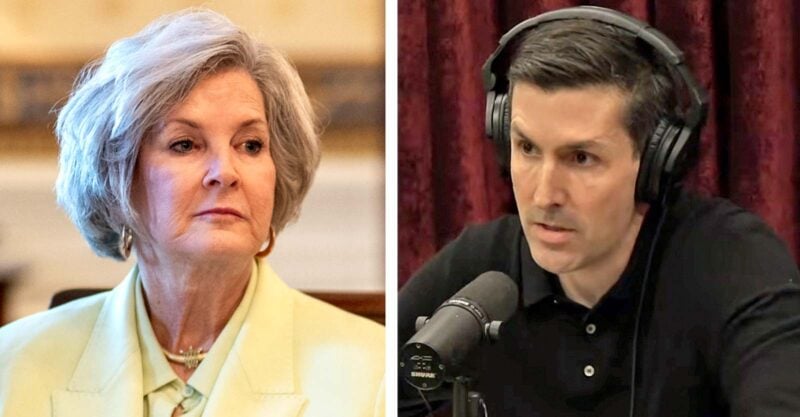


In a widely circulated interview on Friday, former White House senior adviser Calley Means told Joe Rogan that corporate influence in the Trump administration derailed key planks of the Make America Healthy Again (MAHA) agenda, including efforts to investigate vaccine safety, reduce glyphosate exposure and reform the food system.
Means, who appeared Nov. 6 on “The Joe Rogan Experience,” singled out former White House Chief of Staff Susie Wiles, a former lobbyist and political consultant for the pharmaceutical industry, the pesticide industry and Israeli Prime Minister Benjamin Netanyahu.
Means alleged that her career was built on “taking money from the industries and foreign governments who would pay her the most money.”
Wiles became “the most powerful chief of staff in modern American history,” exerting a “stranglehold” on public health policy, he said. He accused her of selling out Americans’ health to raise money for political campaigns.
He said she repeatedly told him, “We need money for the midterms.”
Means also named Wiles aides James Blair, Walker Barrett and Richard Walters, along with Tony Fabrizio — a top pollster for the administration — as members of a small circle of lobbyist-connected insiders who he said undermined the administration’s MAHA agenda.
“There is a very concentrated group of people in the Trump administration” who are antagonistic to the agenda voters supported, Means said.
According to Means, the group prioritized fundraising from pharmaceutical, pesticide, tobacco and food industry interests over public health reforms.
He accused them of blocking efforts to make children’s diets healthier, because, in Wiles’ words, “I need the sugar industry money.” He said they also pushed protections for glyphosate manufacturers, sought additional approvals for flavored e-cigarettes and blocked research on vaccine safety.
Means, who resigned from his position at the U.S. Department of Health and Human Services in late October, blamed the administration’s lobbyist-connected advisers for the policy failures, while defending President Donald Trump and U.S. Health Secretary Robert F. Kennedy Jr.


Intense industry pressure led to glyphosate protections, Means said
Means described the administration’s handling of glyphosate, the active ingredient in Bayer’s Roundup herbicide, as a prime example of corporate influence over MAHA policies.
He said the conflict began with the MAHA report, when industry representatives reacted with “almost violent” opposition to including glyphosate among the chemicals warranting further investigation.
“It was the greatest fight I’ve ever experienced up to that time in my life to have the word glyphosate in that report,” Means said.
The conflict escalated when the administration prepared an executive order designating glyphosate production as a national security priority. Means said a Wiles aide told him the order was final, nonnegotiable and that Kennedy should not contact Trump to challenge it.
Means alleged that military leaders did not consider glyphosate essential to national security and suggested that Bayer may have drafted the order.
He also said Courtney Nupp, a National Security Council staffer involved in the order, subsequently became CEO of a soybean industry organization that Means characterized as a glyphosate lobbying group.
Kennedy later supported the executive order, drawing criticism from MAHA supporters who opposed protections for the herbicide.
Means also claimed that Wiles involved outside legal advisers, including Sarah Harris, who he said is an attorney associated with Bayer’s law firm, in efforts to persuade the U.S. Department of Justice to support the company’s position in a U.S. Supreme Court glyphosate liability case.
The Supreme Court subsequently ruled in Bayer’s favor, a decision with potentially far-reaching implications for lawsuits alleging that exposure to Roundup caused cancer. The ruling could affect billions of dollars in claims against the company.
Means further alleged that Trump was unaware of the Supreme Court’s glyphosate decision.
Rogan and Means also discussed the extensive scientific research on the health impacts of glyphosate. Rogan highlighted the case of Arden Allison, a Tennessee teenager who developed Hodgkin lymphoma after being “completely doused” in glyphosate.
THE DEFENDER ON JOE ROGAN?
A story covered by The Defender is drawing attention on The Joe Rogan Experience
At 17, Arden Allison was drenched in glyphosate; Months later, he was diagnosed with cancer
His 7-year battle is a story worth hearing
@joerogan https://t.co/3jF7X9FW35
— CHD Defender (@CHD_TheDefender) November 6, 2026
Means also pointed to Iowa, where agricultural runoff has led to serious concerns over drinking water contamination linked to the state’s high cancer rates.
“Did Americans vote for this extremely, you know, not transparent process where we have immunity for pesticide makers be jammed down our throats with no public discussion?” he asked.
The Defender is 100% reader-supported. No corporate sponsors. No paywalls. Our writers and editors rely on you to fund stories like this that mainstream media won’t write. 

This article was funded by critical thinkers like you.
Fight over ultraprocessed foods was ‘last straw’
Means said the “last straw” leading to his resignation came when his efforts to get approval for a definition of ultraprocessed food were thwarted.
“Seventy percent of a child’s diet in the U.S. is ultraprocessed food and it’s 10% in Spain. That’s the problem,” he said. “The food companies don’t want people to know the truth.”
Means said that the proposed definition would not have imposed new regulations. Instead, it would have established a common standard to help consumers identify ultraprocessed foods.
He said food industry lobbyists openly warned that they would bypass him and appeal directly to Wiles and other senior officials to stop the proposal.
I spoke w/ 2 people who told me they met @calleymeans the day before he resigned and said he was furious the White House did not approve the definition for ultra-processed food.
This definition merely informs consumers. Most people don’t understand how OMB’s Russ Vought has hindered MAHA policies.
— Paul D. Thacker (@thackerpd) November 9, 2026
Means also accused White House insiders of blocking school meal reforms, despite months of work to build agreement among academic institutions, medical associations and government agencies to replace sugary breakfast foods with healthier, protein-rich options.
“Do you know what the No. 1 breakfast is for school children is in America?” Means said. “Donuts and sugary pastries. We have tens of millions of donuts and sugary pastries going government-funded to kids every day, destroying their metabolic health.”
Means said Wiles met with him and Kennedy, and told them there was no special interest influence and that they were “doing great.” He said she “lie[d] to us to our face.”
Means said the failure to advance the ultraprocessed food definition and school meal reforms ultimately convinced him to resign. He accused politically connected insiders of using their government positions to benefit themselves and their families rather than the American public.
Despite those setbacks, Means said he remained optimistic that the administration could change course and revive the MAHA agenda.
Watch Calley Means on ‘The Joe Rogan Experience’:
Related articles in The Defender
- ‘True Corruption’: Agency Capture Responsible for Chronic Disease Epidemic in U.S.
- IRS Cracks Down on Deductions for Healthy Food, Exercise as Childhood Chronic Disease Epidemic Explodes
- ‘Absolute Disaster’: Pharma Whistleblower Slams Popular Weight-Loss Drug
- Trump Directs USDA to Make More Glyphosate, Signals Liability Protection for Pesticide Makers
- RFK Jr.: MAHA Report a ‘Clarion Call’ to End the Chronic Disease Epidemic
- U.S. Supreme Court Sides with Pesticide Giant Bayer in Landmark Cancer Lawsuit
- RFK Jr. Says Mandatory Ultraprocessed Food Labels Are Coming