

 Login
Login
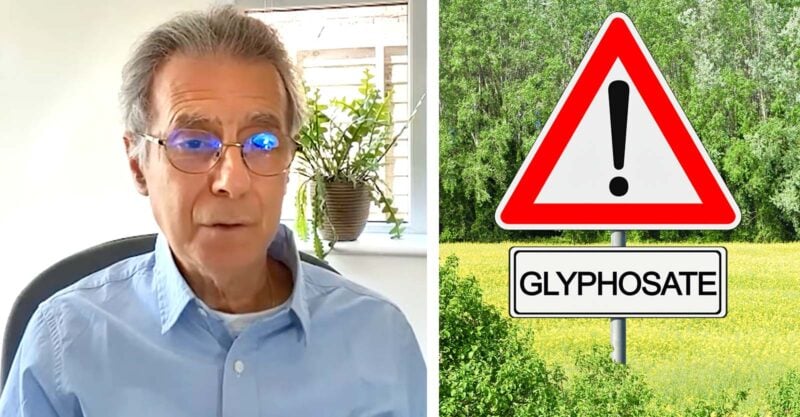


Glyphosate has remained one of the world’s most widely used herbicides not because the science supports its safety, but because industry has shaped nearly every step of the regulatory process, molecular geneticist and toxicologist Michael Antoniou, Ph.D., said this week.
In an interview on “The Corbett Report,” Antoniou outlined what he sees as the biggest failures that have kept the “deceptively toxic” herbicide on the market despite a growing body of independent research linking it to serious health risks.
Antoniou, professor emeritus at King’s College London, spent more than a decade leading pesticides research and building a group he described as “a world leader in glyphosate herbicide toxicology.”
He said industry’s influence extends from the studies regulators rely on and the products they test to the exposure limits they consider safe.
“That is not science,” he said. “That is really an act of deception.”
‘Massive act of negligence’ is ‘putting public health at risk’
One of the biggest flaws in glyphosate regulation is that agencies largely assess glyphosate by itself, in isolation — instead of testing the commercial products people are actually exposed to, Antoniou said.
Glyphosate alone can’t kill plants, he explained. Manufacturers add chemicals known as co-formulants that “basically punch holes in the plant cell walls,” so glyphosate can enter and destroy the plant.
Those additional ingredients make the products “far more toxic” than glyphosate on its own, Antoniou said.
Citing research by French scientist Robin Mesnage, Ph.D., Antoniou said commercial formulations can be “up to a thousand times more toxic than glyphosate alone.”
Yet regulators don’t require long-term toxicity testing of those complete formulations. Instead, “they pass regulations based on tests on glyphosate alone,” Antoniou said.
He called that approach “a massive act of negligence on behalf of the regulators anywhere in the world.”
He stressed that people are never exposed to pure glyphosate.
“When an applicator goes around spraying and they’re breathing it, they’re getting contact on their skin. It’s the whole formulation,” Antoniou said. The same formulations also end up in the food supply.
Evaluating only glyphosate means “the regulator isn’t doing their job properly” and is “putting public health at risk,” he said.

‘Industry hides behind confidentiality clauses’
The problem is compounded because manufacturers don’t disclose co-formulants on the labels of products such as Roundup, Antoniou said.
Instead, the additional ingredients are simply listed as “inert” because they aren’t considered the active herbicide, even though evidence suggests some are highly toxic in their own right.
“An industry hides behind confidentiality clauses,” and regulators don’t require full public disclosure, he said.
“At the end of the day, if you want to know what’s there, you have to do your own chemical, biochemical analysis,” Antoniou said.
His laboratory did exactly that.
“The only way we could find out” what the products contained was by conducting independent chemical analyses, he said.
If regulators evaluated the complete formulations instead of glyphosate alone, Antoniou said allowable exposure limits “would have to be drastically reduced,” and uses in homes, parks and other urban areas would likely be banned.
‘That is not science. That is really an act of deception’
Testing only glyphosate is just one example of how industry has shaped regulation, according to Antoniou.
He said regulatory agencies around the world rely heavily on industry-sponsored research when deciding whether glyphosate is safe. Because regulators often use the same industry data, they reach similar conclusions and cite one another as supporting evidence.
Antoniou pointed to a widely cited 2000 study in Regulatory Toxicology and Pharmacology that concluded glyphosate posed no significant safety concerns. Regulatory agencies relied on that paper for years.
Earlier this year, however, the paper was retracted after evidence showed its authors had undisclosed conflicts of interest. Even more troubling, Antoniou said, “they had solid evidence that actually this paper wasn’t even written by the authors. It was ghostwritten by Monsanto.”
According to Antoniou, the influence extends well beyond a single paper.
“Regulatory agencies rely on laboratory animal toxicity studies to set their so-called safe exposure limits,” he said. However, “the criteria by which a given animal toxicity study is eligible to be considered … were set by industry.”
As a result, independent studies often receive “little or no attention,” even when they “clearly have no conflicts of interest,” Antoniou said. “That’s how influential industry has been,” he said.
Safety testing doesn’t reflect ‘cocktails of pesticides’ people are exposed to
Even if regulators relied on stronger science, they would still be evaluating glyphosate under conditions that don’t match the real world, Antoniou said.
Safety assessments typically examine one pesticide at a time.
“But you and I, we’re all exposed to cocktails of pesticides on a daily basis,” he said. “Tens of different pesticides we can be exposed to on a daily basis through our food supply. Does the regulator take that into account? Not at all.”
That gap has become even more important as weeds have become resistant to glyphosate, and farmers increasingly spray chemical cocktails, including glyphosate, 2,4-D and dicamba, he said.
In one rat study, Antoniou’s team examined that combination at currently accepted exposure levels. “I mean, it was shockingly bad,” he said, describing severe damage to the animals’ gut structure and function.
“This is another reason why our regulators … are letting us down,” Antoniou said. “They’re not protecting us properly.”
He also criticized the growing use of glyphosate as a pre-harvest drying agent.
“And here, for me, is the most ridiculous and unbelievable use of glyphosate herbicide that has become popular in the last 20 years or so,” he said.
Manufacturers encourage farmers to spray wheat, barley, oats, rye and other crops just days before harvest so the grain dries more uniformly and can be harvested sooner.
The result is that glyphosate residues “are going straight into the humans’ food supply,” he said. “And if the glyphosate is there, so are the co-formulants.”
The Defender is 100% reader-supported. No corporate sponsors. No paywalls. Our writers and editors rely on you to fund stories like this that mainstream media won’t write. 

This article was funded by critical thinkers like you.
Regulators’ safety claims ‘clearly ignored’ critical piece of biology
According to Antoniou, industry has long defended glyphosate by arguing that it targets a biological pathway found in plants but not in humans.
But that argument overlooks a critical piece of biology, he said. The same pathway exists in many bacteria and fungi, including microorganisms that make up the human gut microbiome.
Research from Antoniou’s laboratory and others shows glyphosate can disrupt those microbial communities, contributing to gut imbalance and “the onset or the occurrence of leaky gut.”
The gut microbiome plays a vital role in digestion, immune function, cardiovascular health and nervous system signaling, Antoniou said.
“Monsanto clearly ignored” this mechanism of toxicity, he said.
Evidence from independent researchers also shows harmful effects can occur at doses regulators continue to describe as “absolutely safe,” Antoniou said. His laboratory has reported DNA damage and nonalcoholic fatty liver disease in animals exposed to extremely low concentrations of commercial glyphosate formulations.
In one study, animals developed liver disease after long-term exposure to glyphosate concentrations “125,000 times below the European Union safety limit and 250,000 times below the U.S. safety limit.”
“Even minuscule doses of glyphosate herbicides, given enough time, can result in serious disease,” Antoniou said.
He also pointed to a June 2025 study in which rats exposed from fetal development through adulthood developed cancers, particularly leukemia, even at the currently accepted daily intake.
“What this study tells us is clearly … first of all, glyphosate and glyphosate herbicides are definitely carcinogenic,” Antoniou said. “And also, clearly, the current acceptable daily intake … is clearly inaccurate or wrong.”
According to Antoniou, one reason glyphosate’s risks have been underestimated is that its effects often take years to appear.
“The effects can take time to manifest,” he said. As a result, “you’ll have trouble linking the two, the disease and the exposure. … They lull you into … a false sense of security,” he said.
‘Safest-ever pesticide’ paints a very dark picture for pesticides in general
After reviewing thousands of published studies, Antoniou said the evidence leaves little doubt that regulators need to rethink glyphosate safety.
“Regulators need to completely reassess their position,” Antoniou said. “They’ve relied so heavily on industry data, which has now been questioned as to its validity.”
Existing safety limits are nowhere near protective enough, he said.
“We cannot set an acceptable daily safe intake limit,” he said. “If I was to make an educated guess right now, I would say it would probably be in the order of about a thousand times lower than where we are at the moment.”
Antoniou also rejected the idea that farmers cannot transition off of glyphosate.
“There are alternatives,” he said. “All it takes is the political will to support these initiatives, to really move towards a sustainable, robust and safe agricultural system.”
Looking back at glyphosate’s history, Antoniou said the herbicide “was always touted by industry as the safest-ever pesticide of any sort ever invented. … If the … so-called safest pesticide … is this bad, deceptively toxic, what about all the rest?” he asked. “It really paints a very dark picture for pesticides in general.”
Watch Antoniou on ‘The Corbett Report’ here:
Related articles in The Defender
- Glyphosate Poses ‘Profound and Permanent’ Risks to Kids: Children’s Health Defense Urges U.S. Supreme Court to Rule Against Bayer
- Widely Used ‘Chemical Cocktails’ Tied to Gut Damage, Inflammation
- ‘The Advantage Is Real’: Regenerative Agriculture Pays Off, Indiana Farmer Tells RFK Jr.
- U.S. Supreme Court Sides with Pesticide Giant Bayer in Landmark Cancer Lawsuit
- Environmental Working Group Sues EPA Over Glyphosate in Oats, Citing Risk to Children’s Health
- ‘We’ve Addicted Our Farmers’ to Glyphosate, RFK Jr. Tells Joe Rogan
