Login
Login
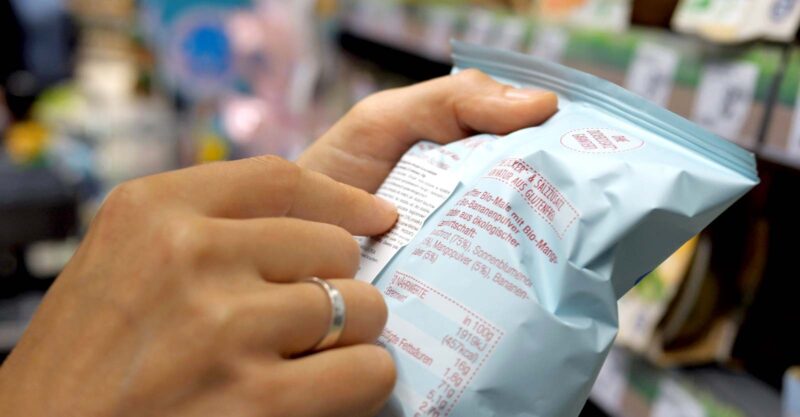


Federal health officials are close to defining exactly what makes a food “ultraprocessed” — and requiring manufacturers to label foods that meet the definition.
A spokesperson for the U.S. Department of Health and Human Services (HHS) confirmed for The Defender that a definition of ultraprocessed foods is almost ready:
“Defining the exact line of where ultraprocessed food begins is a nuanced process that has involved hundreds of meetings with scientists and stakeholders.
“Our aim is to produce a science-based, widely accepted definition that helps consumers make better choices — and we will.”
HHS and other federal agencies are working to finalize the definition, U.S. Health Secretary Robert F. Kennedy Jr. confirmed last week during a congressional hearing.
The rule will be enforced by “mandatory front-of-package labeling,” Kennedy told the U.S. House of Representatives Energy and Commerce Subcommittee.
Kennedy said that finalizing the definition is an “interagency process” involving the U.S. Department of Agriculture, the Department of Commerce and others.


Ultraprocessed foods contain ingredients ‘never found in a home kitchen’
Kennedy’s statements were the latest in a recent series of comments on potential federal action against ultraprocessed foods — a core component of his “Make America Healthy Again” (MAHA) agenda.
The U.S. Food and Drug Administration (FDA) does not have an official definition for ultraprocessed foods, but pediatrician Dr. Michelle Perro said such foods “are industrial formulations derived from fractionated food substances like protein isolates, industrial oils, and refined starches.”
Such foods are “assembled using chemicals and processes never found in a home kitchen,” Perro said.
According to a 2025 Centers for Disease Control and Prevention report, ultraprocessed foods now comprise roughly half of U.S. calories and about 60% of children’s diets.
A September 2025 White House MAHA Commission report cited poor diet as a key contributor to the chronic disease epidemic among U.S. children.
Robert F Kennedy announces new ultra processed food labels will soon be mandatory on all food products
The product will also have a color code to determine how toxic and unhealthy it is
This is a HUGE win!
RFK Jr to Joe Rogan “By April, we will have a federal definition of… pic.twitter.com/iLk2ayZ04y
— Wall Street Apes (@WallStreetApes) March 1, 2026
In February, Kennedy told podcaster Joe Rogan that a federal definition of ultraprocessed foods would be ready by late April.
Kennedy said on CBS’ “60 Minutes” that the FDA “does not know how many ingredients there are in American food.” He blamed the agency’s “Generally Recognized as Safe” (GRAS) guidelines — which allow food manufacturers to self-certify the safety of chemicals and additives included in food products.
In March 2025, shortly after his confirmation as HHS secretary, Kennedy said he would direct the FDA to “eliminate the self-affirmed GRAS pathway for new ingredients.”
In June 2025, HHS announced its intention to develop an official definition of ultraprocessed foods.
I am directing the FDA commissioner to start the process of changing the rules to eliminate the self-affirmed GRAS pathway for new ingredients. I am also calling on the @US_FDA and @NIH continue to conduct and improve post-market assessments of GRAS chemicals currently in our… pic.twitter.com/BWvunk6lpw
— Secretary Kennedy (@SecKennedy) March 13, 2025
Perro said that ultraprocessed foods and their ingredients most heavily affect children, whose “bodies and brains are in a delicate, vulnerable stage of development where they require high-quality micronutrients, not chemicals that disrupt the gut-brain axis and induce systemic inflammation.”
“Early, chronic exposure to these industrial formulations sets a trajectory for lifelong metabolic dysfunction, insulin resistance and cognitive degradation,” Perro said.
Earlier this month, Kennedy targeted two major coffee chains — Dunkin’ and Starbucks — over the high sugar content in some of their coffee beverages that are heavily marketed to younger consumers.
Mandatory labeling of ultraprocessed food products ‘nonnegotiable’
A New York Times report last year suggested that HHS has several options for developing its definition of ultraprocessed foods, including examining “the chemicals and additives put in foods, the number of ingredients in a product or its overall nutritional content.”
The FDA and other agencies would also have to consider the boundaries of an official definition — including whether to lump plant-based food products together with highly processed candy and soft drink products.
Analysts have suggested that a broad-based classification could end up classifying products such as fermented foods as “ultraprocessed.”
The FDA would open its newly developed definition of ultraprocessed foods to a public comment process, the Times reported.
Kyle Diamantas, deputy commissioner of the FDA’s food division, said last year that the FDA was looking at some “obvious areas” to include in its definition, including foods containing synthetic dyes, emulsifiers and preservatives.
In April 2025, HHS and the FDA announced they were taking steps to phase out all petroleum-based synthetic dyes from U.S. foods and medications.
However, this policy is largely based on voluntary compliance on the part of food manufacturers — some of whom have stepped up their lobbying to oppose Kennedy’s efforts on ultraprocessed foods in recent months.
The European Union requires a warning label for foods containing some synthetic dyes.
Perro said labeling is necessary and “nonnegotiable” — but must also provide clear information to consumers. She said:
“Effective labeling must move beyond the current obfuscation of ‘nutrition facts,’ and mandate a clear, front-of-package warning for ingredients that indicate industrial processing, such as synthetic dyes, nonsugar sweeteners and emulsifiers.
“The real consumer protection must also include labeling regarding genetically engineered organisms, now reidentified as ‘bioengineered,’ ‘synbio,’ or ‘precision fermentation.’”
Third-generation family farmer Howard Vlieger agreed. He said all food labels need to clearly state if the food item contains any ingredients from a genetically modified crop or ingredients created using synthetic biology.
Vlieger said such products can contain toxins, foreign proteins and chemical contaminants, and they’re low in nutrients — all of which contribute to the chronic disease epidemic in the U.S.
Perro said voluntary labeling rules would lead to “industry-written guidelines that allow corporations to continue prioritizing profit over public health while appearing to cooperate with regulators.”


This article was funded by critical thinkers like you.
The Defender is 100% reader-supported. No corporate sponsors. No paywalls. Our writers and editors rely on you to fund stories like this that mainstream media won’t write.
RFK Jr.’s food and nutrition policies ‘broadly popular’ among Americans
Earlier this month, a Politico poll found that Kennedy’s ideas about ultraprocessed food and improving Americans’ nutrition are “broadly popular” among voters — more so than his vaccine-related policies.
Last year, a peer-reviewed article in The Lancet identified three potential pathways through which ultraprocessed foods can result in health harms.
A study published last week in the journal Alzheimer’s & Dementia: Diagnosis, Assessment & Disease Monitoring found that increased consumption of ultraprocessed foods is linked to a measurable decrease in attention span.
Earlier this month, Radiology published a study that found excessive consumption of ultraprocessed food adversely impacts muscle health. And a study in Arteriosclerosis, Thrombosis, and Vascular Biology found that ultraprocessed food contributes to intramuscular fat deposits that place people at risk for knee osteoporosis.
A study published in the journal Clinical Nutrition in December 2025 found that reduced consumption of ultraprocessed foods by adults is linked to healthier aging and improved metabolism.
Perro blamed the health issues linked to ultraprocessed foods on the lack of safety testing on most ultraprocessed food ingredients.
“Many of these industrialized food-like products are made from completely new DNA constructs never seen in our biology,” she said. “Long-term health data? None.”
Perro said an official definition of ultraprocessed foods would be a positive step toward improving Americans’ health, but would not, on its own, be sufficient.
“Definitions and labels are merely a starting point and do not address the systemic issues of a food supply built on depleted, toxic soil and industrial monocultures,” she said.
“Real progress requires ending the revolving door between regulatory agencies and food conglomerates, incentivizing local and regenerative agricultural farms, and removing the subsidies that currently make toxic, ultraprocessed calories cheaper than real, whole foods.”
Related articles in The Defender
- ‘This Country Is Ill’: Former FDA Chief Who Took on Tobacco Now Targets Ultraprocessed Food
- Ultraprocessed Foods Make Up Over Half of Kids’ Diet, CDC Report Says
- ‘Always Listen to the Mom’: U.S. to Phase Out Artificial Dyes Used in Food Products
- Kennedy Takes Aim at FDA Loophole That Allows Unsafe Ingredients in Food
- MAHA Commission Outlines Sweeping Agenda to Target Chronic Disease
- ‘True Corruption’: Agency Capture Responsible for Chronic Disease Epidemic in U.S.