

 Login


The contemporary medical establishment and mainstream media love a neat narrative.
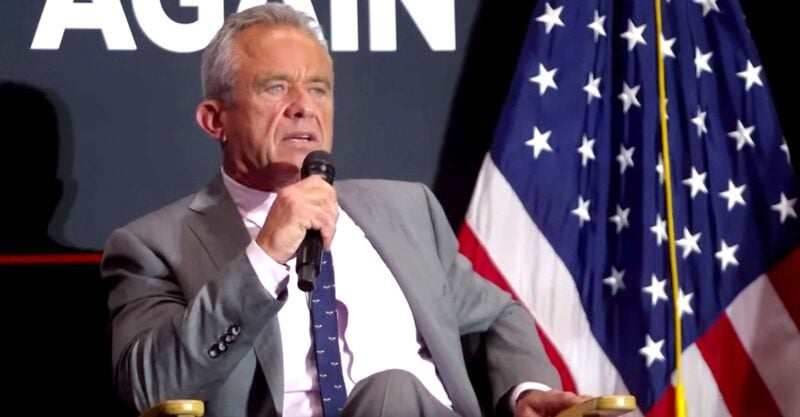
To hear them tell it, public skepticism toward vaccines — and the broader friction over public health mandates — is a brand-new, dangerous phenomenon birthed almost entirely in the political imagination of U.S. Health Secretary Robert F. Kennedy Jr.
In op-eds, television segments and institutional briefings, a modern clique of medical elites routinely tries to pin the entire surge of vaccine hesitancy directly on Kennedy, framing him as a solitary radical leading the American public astray from a previously untarnished history of medical compliance.
This narrative is not just misleading; it is historically illiterate. To lay centuries of cultural, political and philosophical resistance at the feet of one modern political figure is a convenient way for institutional authorities to avoid confronting their own systemic failures.
The truth — unvarnished by institutional PR — is that American vaccine hesitancy is nearly as old as the nation itself, driven by a deep-seated, cross-partisan American impulse that predates modern regulatory agencies by generations.
A tradition as old as the republic
To understand how wrong the medical elite are when they blame contemporary political actors, one must look at the historical record. As documented by historians of science and medicine, organized anti-vaccination movements emerged in the U.S. almost immediately after Edward Jenner introduced the smallpox vaccine in the late 1790s.
Long before modern cable news, social media algorithms or Kennedy’s public advocacy, Americans were deeply suspicious of mandatory medical interventions. In the 19th century, when local and state authorities first attempted to enforce compulsory vaccination laws, ordinary citizens organized massive resistance movements.
The primary drivers of this early dissent were rooted in realities that modern elites conveniently ignore:
- Legitimate safety hazards: Unlike modern synthetic or purified inoculations, 19th-century smallpox vaccines were harvested directly from the sores of infected animals (cowpox) or other humans.
- Because medical technology was primitive and sanitary standards were non-existent, these early vaccines frequently transmitted deadly contaminants, including syphilis and severe secondary infections. For early Americans, refusing a vaccine was often a rational calculation of survival against a sloppy, dangerous medical process.
- The civil liberties debate: The fierce defense of bodily autonomy is a foundational American trait. When local health boards began forcing compliance, citizens viewed it as a gross authoritarian overreach.
- Interestingly, the 19th-century anti-vaccine movement was not a fringe partisan monolith; it drew support from a diverse coalition that included civil libertarians, abolitionists and social reformers who mistrusted state power.

The 1905 legal battleground that predates modern politics
The friction between public health mandates and personal freedom reached a boiling point at the turn of the 20th century, culminating in the landmark 1905 U.S. Supreme Court case Jacobson v. Massachusetts. The high court ruled that states possessed the police power to mandate smallpox vaccinations during an epidemic.
Did this settle the matter? Far from it. The ruling galvanized anti-vaccine groups across the country, leading to intense legislative battles, the repeal of mandates in various states and decades of bitter public debate.
Public health officials for much of the 20th century recognized that heavy-handed coercion backfired, driving citizens into deep distrust. To pretend that public resistance only materialized in the 21st century is to willfully erase this vast historical ledger.
Shifting blame: How institutional hubris creates its own opposition
When modern medical elites attempt to pin contemporary vaccine hesitancy on Kennedy, they are committing a strategic deflection. They want the public to believe that if a single high-profile critic vanished tomorrow, public trust in medical institutions would magically restore itself to 100%.
This ignores the actual catalyst for modern skepticism: institutional overreach, shifting narratives and heavy-handed mandates during recent public health crises.
As historical analyses of public health policy show, the heavy-handed and often contradictory messaging deployed during recent global health events did more to erode public trust than any outside critic ever could.
When public health authorities made absolute proclamations that routinely shifted, oversold the capabilities of interventions and dismissed legitimate questions as heresy, they stoked a profound fire of institutional skepticism.
Furthermore, the modern medical establishment frequently lumps all hesitant individuals into a single derogatory category — dismissing concerned parents as “anti-science” or blaming political scapegoats. This elitist condescension only deepens the divide.
Parents asking probing questions about safety data, multi-dose schedules or corporate pharmaceutical influence are not blindly following a single politician; they are responding to a historical legacy of corporate pharmaceutical malfeasance and bureaucratic arrogance that has been documented for decades.
Conclusion
The attempt to brand vaccine hesitancy as a modern political invention tied to Kennedy is a narrative designed to protect institutional egos.
By refusing to acknowledge that skepticism is rooted in centuries-old debates over civil liberties, bodily autonomy and legitimate fears of state overreach, the medical elite repeat the exact mistakes of their 19th-century predecessors.
True public health confidence cannot be legislated, mandated or bullied into existence through scapegoating; it must be earned through radical transparency, honest acknowledgment of past mistakes and a profound respect for the citizens they are sworn to serve.
Originally published by TrialSite News.
