Login
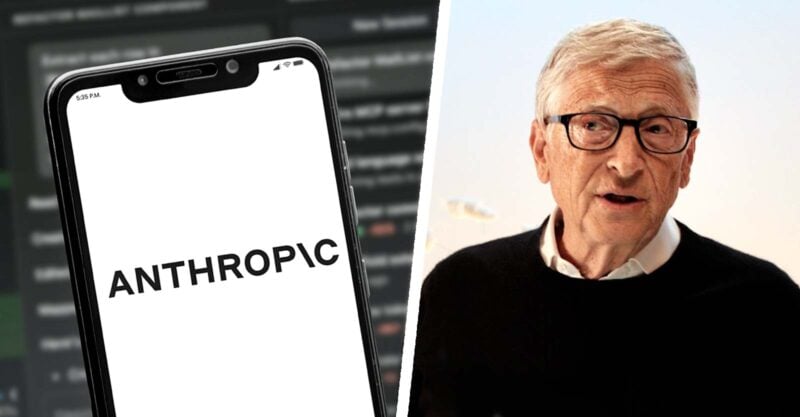


Anthropic last week raised a record $81 billion in its initial public offering (IPO). Hidden in the fine print of the artificial intelligence (AI) giant’s IPO documents is another corporate ambition: to partner with the Gates Foundation to develop and deploy AI for global public health, vaccine development and pandemic preparedness.
Anthropic’s federal filings reveal the company is devoting 5% of its equity to a public-benefit fund, dedicated to medicine, biosecurity and global health.
At the center of these efforts is Anthropic’s four-year, $200-million partnership with the Gates Foundation, signed in May.
Beyond that agreement lies a broader web of pharma- and vaccine-related initiatives, investments in vaccine passport technology, and a network of shared investors and executives with links to Bill Gates.
The revelations sparked concerns that the AI, Big Pharma and nonprofit worlds are converging, which could lead to growing scientific dependency on AI, loss of privacy and censorship of medical “misinformation.”
In 2024, OpenAI CEO Sam Altman told the World Economic Forum that AI can be trained to locate and deliver content from preferred sources.
Jeffrey Tucker, founder and president of the Brownstone Institute, said these revelations “help to make sense of why AI models are so incredibly unreliable on all matters of pharmaceuticals and vaccines in particular.”
“It is highly likely the growth of AI will entrench the disinformation that dominates mainstream media,” Tucker said.
The Gates Foundation has made significant investments in the AI space even though Gates recently delivered some of the starkest warnings about the technology. Gates, who called AI “more dangerous than nuclear weapons,” said the technology could potentially “cause a billion deaths” and make many jobs “disappear forever.”
Yet, his foundation is pressing ahead with plans to make AI central to healthcare, infectious-disease research and public-health decision-making.
In August, Gates wrote that the “good things we do with AI could be very, very good.” In January, Gates wrote that he is optimistic about “what innovation accelerated by artificial intelligence will bring.”
For Sayer Ji, chairman of the Global Wellness Forum and founder of GreenMedInfo, these seemingly contradictory positions are linked. “The central question is not simply whether AI is dangerous or useful. It is who gets to define the danger, write the rules and control access to the technology,” he said.


Multiple Gates Foundation alumni serve in key Anthropic posts
Health is the centerpiece of the Anthropic-Gates Foundation partnership, which includes commitments to work on global health, life sciences, agriculture, education and economic mobility.
Reuters reported that Anthropic’s share would principally take the form of technical staff and AI credits. The Gates Foundation would contribute funding and program expertise.
The partners said they will use Claude, the AI platform owned by Anthropic, to review large datasets, screen drug and vaccine candidates before testing and accelerate research on “high-burden and neglected diseases,” including HPV and polio.
Priorities include using AI to “screen potential vaccine candidates” and help governments use “health-intelligence data to support decision-making.”
Anthropic says it is working with the Gates Foundation to help health ministries with disease surveillance, and collaborating with the foundation’s Institute for Disease Modeling to improve forecasts used to determine when and where malaria and tuberculosis treatments are deployed.
Anthropic also states it will provide assistance for doctors in low-income countries and work with the International Rescue Committee to digitize and analyze children’s health records.
Personnel ties reinforce the Anthropic-Gates relationship. Anthropic’s IPO documents cite its Long-Term Benefit Trust, which elects a majority of the company’s directors. Several of these directors — and other key Anthropic health figures — are linked to Gates:
- Anne Stake, who heads global-health work within Anthropic’s Beneficial Deployments team, previously led AI product and portfolio work at the Gates Foundation. She previously worked with the Clinton Health Access Initiative.
- Vas Narasimhan, appointed to Anthropic’s board in April, is CEO of Novartis and co-chaired an industry consortium established with the Gates Foundation in 2020 to accelerate research on COVID-19 vaccines, diagnostics and treatments.
- Reed Hastings, an Anthropic board member since 2025, served on Microsoft’s board while Gates was the company’s chairman.
- Chris Liddell, who joined Anthropic’s board in February, previously served as Microsoft’s chief financial officer.
$1 billion earmarked for AI initiatives including healthcare, vaccine development
Anthropic’s SEC filing describes life sciences as a major growth market, anticipating that global pharmaceutical spending will exceed $2 trillion in 2026. The filing describes AI-assisted malaria modeling in Africa and the World Health Organization’s (WHO) use of Claude during this year’s Ebola outbreak in the Democratic Republic of Congo.
The company also said it works with biotechnology and pharma firms on research and drug discovery and is pursuing its own drug-discovery programs, including identifying a previously uncharacterized biological system similar to CRISPR — a technology that makes targeted changes to DNA. Anthropic said the finding can lead to a future gene-editing tool.
Basecamp Research has integrated AI tools for biological research in collaboration with Claude Science, including technology that helps identify proteins in pathogens that may be useful vaccine targets.
In turn, the Gates Foundation has also pursued other AI investments. In September, the foundation announced plans to spend at least $1 billion over two years on AI initiatives involving healthcare, vaccine development, agriculture and education.
In January, the foundation announced a $50 million deal with OpenAI to “advance AI capabilities for health” in Africa.
A second network connects AI companies to vaccine investors
The formal Anthropic-Gates agreement is only one example of how the company’s work intersects with the foundation’s initiatives.
In June, Anthropic and Gates were among the backers of the Intercept Fund, a $500 million initiative devoted to preventing respiratory infections. Intercept says it seeks to develop preventive products and air-cleaning technologies that could reduce the impact of future outbreaks.
Companies on Intercept’s customer advisory board include Anthropic, JPMorgan Chase, Meta, Mastercard and Stripe, while other Intercept investors include the OpenAI Foundation and Flu Lab.
Launched by Lucy Page Southworth, wife of Google co-founder Larry Page, Flu Lab has supported flu vaccine research, disease surveillance and infection-prevention technology.
Flu Lab has extensive ties to Gates. In 2018, it worked with the Gates Foundation on a $12 million universal flu vaccine initiative. And it participates in a consortium of universal flu-vaccine funders alongside the foundation, WHO, the Gates-funded Program for Appropriate Technology in Health (PATH) and the U.S. government’s Biomedical Advanced Research and Development Authority (BARDA), a funder of Moderna’s mRNA vaccine development.
In 2020, Flu Lab also contributed $10 million to the WHO’s COVID-19 response fund. Its leadership includes CEO Casey Wright, who previously developed a philanthropic program to increase flu vaccination among children, and Chief Technology Officer Julie Schafer, previously BARDA’s chief of staff.


This article was funded by critical thinkers like you.
The Defender is 100% reader-supported. No corporate sponsors. No paywalls. Our writers and editors rely on you to fund stories like this that mainstream media won’t write.
Anthropic, Gates Foundation with overlapping interests in digital ID
Anthropic and the Gates Foundation have overlapping interests in digital ID. The Gates Foundation has supported MOSIP, an open-source platform used by governments to build national digital ID systems.
MOSIP, modeled after Aadhaar — India’s nationwide digital ID platform and the largest such system in the world — incorporates Claude into its software-development and security processes.
Separately, the Gates Foundation issued a $3 million grant to the Asian Institute of Technology earlier this year for a three-year project developing AI tools for MOSIP.
Businesses also use Claude to process vaccination records. For example, Vaccio markets services that digitize and verify immunization histories, including records for school requirements, workplace needs and travel.
The company’s privacy policy identifies Anthropic as a third-party processor of vaccine-scan images using Claude technology.
In turn, VaxSuisse uses Claude to convert photos of paper vaccination records into digital records.
Ji said that concerns over the growing intersection of AI, health and nonprofits don’t imply that AI doesn’t have “legitimate medical uses, nor that its risks should be ignored.”
Instead, “It is that neither the promise of breakthroughs nor the language of safety should place powerful institutions beyond scrutiny. Public health can involve private companies. What it cannot afford is to confuse a vendor’s commercial success with a public-health outcome,” Ji said.
Related articles in The Defender
- Epstein Pitched JPMorgan Chase on Plan to Get Bill Gates ‘More Money for Vaccines’
- Did ‘Disinformation Dozen’ Authors Team Up With Gavi to Target RFK Jr.’s Presidential Run?
- Bill Gates Investing Heavily in mRNA Technology — Are Taxpayers Helping Him?
- ‘Megalomaniac Ambition for Total Control’: Governments Eye New Gates-Funded Biometric Digital ID System
- WEF Roundup: Digital IDs Can Track the Unvaccinated, AI Can Speed Up Development of New Vaccines
- ‘The Big Catch-up’: Chelsea Clinton Partners With WHO, Gates Foundation on ‘Largest Childhood Immunization Effort Ever’
- U.S. Developing Vaccine Passport System Using Complex Web of Big Tech Partnerships