




Miss a day, miss a lot. Subscribe to The Defender's Top News of the Day. It's free.
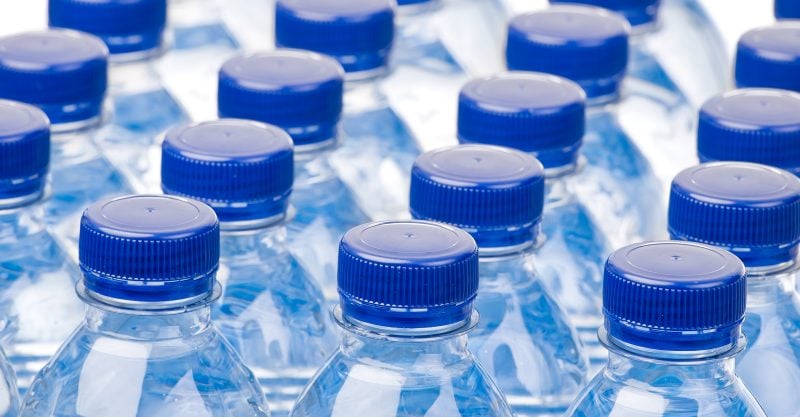
Scientists at Johns Hopkins University found per- and polyfluoroalkyl (PFAS) chemicals in 39 out of 100 samples of bottled water tested, prompting calls for regulators to set allowable limits for the “forever chemicals.”
The researchers did not disclose which brands were tested, but did say some of the samples had “levels deemed concerning by water quality experts,” according to Consumer Reports (CR) which reported on the study.
Bottled water labeled “purified” had “significantly less PFAS” compared to “spring” water, according to the study which was published in the journal Water Research. Scientists said this is due to purified water being filtered by reverse osmosis, which removes fluoride, lead, pesticides and other contaminants.
U.S. regulatory agencies slow to limit PFAS in drinking water
Kellogg Schwab, Ph.D., professor of public health at Johns Hopkins, director of the university’s Water Institute and the study’s co-author, said:
“Our findings support the need for regulatory testing of bottled water source waters, given the frequency of PFAS detection and the occasional detection of elevated levels of PFAS.”
The U.S. Food and Drug Administration has not set limits for PFAS in bottled water. The International Bottled Water Association, which tests its products for PFAS, is pressing the agency to set limits so bottled water companies can get “clarity” on the subject.
The Johns Hopkins researchers tested for 32 types of PFAS and found at least 15 of them, CR reported.
Researchers said 42% of the PFAS found were pentafluoropropionic acid (PFPrA), an ultrashort-chain compound labeled “hazardous” by the 2012 Occupational Safety and Health Administration.
“Short-chain” PFAS were designed to replace older and supposedly more toxic “long-chain” PFAS. Manufacturers say short-chain PFAS are safer and “practically non-toxic,” but emerging research shows the newer compounds are just as toxic and persistent in the environment.
Michael Hansen, senior scientist at CR said:
“This study shows that ultrashort-chain PFAS are quite abundant, relative to other PFAS, and should absolutely be tested for, so as to get a more accurate picture of total PFAS present.”
Humans exposed to PFAS in many everyday products
There are thousands of types of PFAS. The toxins, dubbed “forever chemicals,” due to their persistence in humans and in nature, are toxic to humans.
PFAS are linked to various health problems including kidney and testicular cancer, high cholesterol, high blood pressure, pre-eclampsia in pregnant women, low birth weights and decreased vaccine response in children. The chemicals may also cause thyroid disease, obesity, reduced fertility and hormone suppression.
PFAS are found in many everyday products including nonstick cookware, personal care products, cleaning products, pesticides, stain-resistant carpet, waterproof clothing, firefighting foam and more.
Scientists from the University of Notre Dame recently found high levels of PFAS in various types of cosmetics including concealers, foundation, lip products and eye and eyebrow makeup.
Scientists tested more than 200 cosmetics incl. concealers, foundations, eye + eyebrow products + various lip products + found approx. 50% contain high levels of fluorine, an indicator of #PFAS, also known as “forever chemicals” in them. #TheDefender https://t.co/q409WMgz1n
— Children’s Health Defense (@ChildrensHD) June 16, 2021
The chemicals have also turned up in “natural” fertilizers made from biosludge, pesticides used for mosquito control and human breast milk.