Login
Login
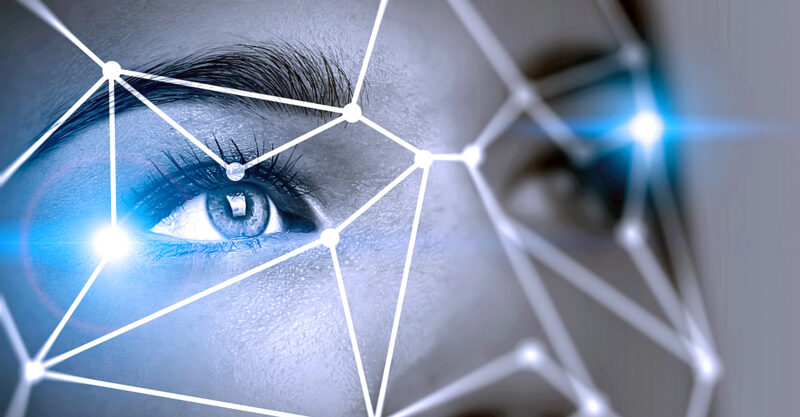


“What is important to you? What world do you want to live in? How do you want to exist? Is convenience what you prioritize above all else?”
Russell Brand suggested we should be asking ourselves these questions as corporations roll out biometric payment systems “for our convenience.”
In a recent video segment, “Oh No. You Were Right,” Brand looked at reports that Mastercard is implementing “smile-to-pay” technology that allows customers to pay with their faces using biometric data.
Mastercard announced in mid-May a pilot of the program in Brazil, saying in a statement that it would be introduced next in the Middle East and Asia.
With the technology — which interfaces with an app called Payface — “consumers can simply check the bill and smile into a camera or wave their hand over a reader to pay,” said the announcement.
“For merchants, the benefits are also considerable, from faster transaction times and shorter lines to greater hygiene and heightened security,” according to Mastercard.
Brand questioned the motives behind the innovation.


“Could capitalism be aligning with centralized state power to bring about situations where individual power is further diminished and reduced?” he asked. “Have you seen any examples of that over the last few years?”
Brand was referring to the early days of the COVID-19 pandemic when governments took measures — ostensibly for people’s “protection” — that financially exploited people.
“For a long time you’ve suspected that something was wrong, and you were right,” he told viewers, adding:
“The whole of this pandemic has been defined to some degree by stories of people being tracked; stories of data being hacked; concerns about how this new regulatory power will be used and potentially misused … all the while we’re continually distracted by cultural issues …
“It’s another example of how the coronavirus pandemic has been used to introduce powers and financial opportunities for already powerful institutions, corporations [and] states, all the while we’re told, ‘Oh this is for your health, it’s for your benefit, it’s for your convenience.’”
Brand warned against valuing convenience above all else. After all, he said, “The most ‘convenient’ thing … is to take you straight out of your mother and fling you into a grave.”
Brand shared news reports revealing not everyone is happy about the idea of using biometric data in facial recognition software.
Amos Toh, a senior researcher with Human Rights Watch, told Sky News:
“The uniqueness of our biometric identifiers presents unique harms. If they are being stolen as part of a data breach, or if they are compromised in any other way, it’s very difficult to recover that biometric identifier and to safely protect it again.”
U.K. solicitor Suzie Miles told The Guardian: “If biometric data is hacked, then the risk of fraudulent activity could be considerably higher than [with] current payment methods.”
While it is inconvenient to lose a physical bank card, Brand said, “imagine when it’s your biometric data that’s being stolen by the government.”
Efforts to introduce facial recognition software and biometric data have been less successful in the U.S. In May, a settlement banned the tech firm Clearview AI from sharing facial recognition data.
The decision followed a lawsuit that the American Civil Liberties Union and partners filed in 2020, arguing the company violated Illinois’ Biometric Information Privacy Act.
In February, the Internal Revenue Service announced it would end the use of facial recognition technology provided by the company ID.me to authenticate online users, Silicon Republic reported.
Watch the episode here: