Login
Login
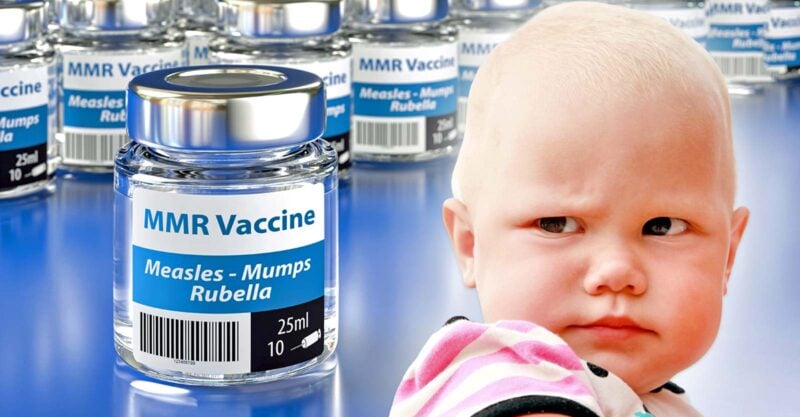


Americans’ trust in the measles-mumps-rubella (MMR) vaccine has declined in recent years, a new Reuters/Ipsos poll found — despite highly publicized measles outbreaks in three states and mainstream media messaging blaming the outbreaks on the unvaccinated.
Just over three-fourths, or 76%, of Americans said they believe the MMR vaccine is safe for children — dropping from 84%, according to a May 2020 Reuters/Ipsos poll.
The latest four-day poll, completed Monday, included responses from 1,143 U.S. adults and had a margin of error of 3 percentage points.
Just 19% of respondents said they approve of the Trump administration’s handling of the measles outbreaks in Pennsylvania, Utah and South Carolina, while 52% said they disapproved.
According to the poll, 45% of Americans are confident in the Democratic Party’s ability to respond to an infectious disease outbreak, compared to 25% who said the Republican Party would do a better job of responding to an outbreak.
According to Reuters, the decline in confidence in the MMR shot has occurred in parallel with a decline in MMR vaccination rates among U.S. kindergarteners.
Reuters cited data from the Centers for Disease Control and Prevention (CDC) showing MMR vaccine uptake among kindergarteners was 92.4% for the 2025-26 school year, a 0.1 percentage point decrease from 2024-25 (92.5%). For the 2019-20 school year, uptake reached 95.2%.
Greater awareness of vaccine injuries may be behind drop in confidence in MMR shot
Declining trust in the MMR vaccine occurred despite what Reuters called the “worst” measles outbreak in 35 years. As of Sept. 10, the CDC has recorded 3,294 measles cases in the U.S. this year.
There have been four “measles-associated” deaths in the U.S. in 2026. However, according to official CDC figures, there have been no deaths “that indicate measles is the underlying cause.”
Brian Hooker, Ph.D., chief scientific officer for Children’s Health Defense (CHD), suggested there are multiple reasons for the growing mistrust of MMR vaccines.
“The declining trust in the MMR vaccine is no surprise given the rise in attention to vaccines and autism and the numerous anecdotal reports ‘on the ground’ of families whose children were damaged by the shot,” he said.
Hooker added:
“The MMR vaccine in its current form has never been appropriately safety tested, and the upper limit of virus levels contained in the vaccine remains unknown since Merck started the practice of ‘overfilling’ the vials in 1999, due to the lack of shelf life for the mumps virus in the vaccine.”
For years, the MMR vaccine has been linked to a high number of adverse events. As of Aug. 28, there were 95,473 adverse events reported to the Vaccine Adverse Event Reporting System (VAERS) following MMR vaccination — and 500 deaths.
Historically, fewer than 1% of adverse events have ever been reported to VAERS.
The federal vaccine court in 2010 awarded over $1.5 million to the family of Hannah Poling, who regressed into autism within days of receiving the MMR shot and four other vaccines at age 19 months.
Karl Jablonowski, Ph.D., CHD senior research scientist, said that despite the decline in trust toward the MMR vaccine, the 76% figure in this month’s poll “is not a triumph of vaccine safety, but of a failure of medical communication messaging,” adding that continued support for the MMR shot is fear-based.
Jablonowski said:
“One of the most commonly iterated statistics on the dangers of measles is 1-3 deaths per 1,000. It is a scary number. That number, however, is derived from the 1950s and 1960s, before the discovery of powerful antibiotics, like azithromycin, for secondary infections.
“The estimated number of children who died from measles with 1950s and 1960s medicine was 1 in 6,000 to 1 in 8,000, comparable to an American’s risk of traffic fatality in any given year. Yet, legacy media bombards us with the idea that, in the advent of modern medicine, 1 in 1,000 to 1 in 300 of infected cases are fatal. That’s not a benign estimation error; it’s a communication of false risk to provoke an intended action.”
Despite executive order, monovalent measles shot may take years to develop
In a fiery CNN interview last month, U.S. Health Secretary Robert F. Kennedy Jr. strongly defended the Trump administration’s vaccine policies and rejected claims that the policies have helped fuel measles outbreaks.
Kennedy also questioned the safety of routine childhood vaccines and defended efforts to study all possible causes of autism, including vaccines.
A week later, President Donald Trump signed an executive order calling for sweeping changes to U.S. vaccine policy, including reducing the number of diseases for which kids receive routine childhood vaccines from 18 to 11.
The executive order also called for eliminating the combined MMR vaccine in favor of administering three separate single-disease shots once the products are made available in the U.S.
The CDC currently recommends that all children receive two doses of MMR, with the first dose given at 12-15 months and the second dose given between ages 4 and 6.
According to a White House fact sheet, splitting the MMR shot is about increasing parents’ choice over the timing and frequency of the vaccinations.
In an interview with The Defender last month, Hooker, whose son regressed into autism after routine vaccinations at 15 months, supported splitting the MMR shot into separate doses, as it “would allow manufacturers to use lower doses of live viruses in each shot, to avoid virus interference.”
Dr. Robert Malone, one of the new members Kennedy appointed in June 2025 to the CDC’s now-inactive Advisory Committee on Immunization Practices, told The Defender last month that spacing out the shots reduces the amount of adjuvant that a child’s immune system has to handle in a given time.
This can reduce the child’s risk of vaccine-induced inflammation, particularly cerebral inflammation, Malone said.
The Defender is 100% reader-supported. No corporate sponsors. No paywalls. Our writers and editors rely on you to fund stories like this that mainstream media won’t write. 

This article was funded by critical thinkers like you.
The U.S. has primarily used a combined MMR vaccine since 1971, according to T. Joseph Mattingly II, Ph.D., an associate professor and vice chair of research in the Department of Pharmacotherapy at the University of Utah College of Pharmacy.
According to the CDC, two MMR vaccines are available in the U.S. — one made by Merck and the other by GSK. Merck used to make monovalent measles vaccines for the U.S. market but discontinued the single shots in 2008 due to manufacturing constraints.
However, experts say that developing separate measles, mumps and rubella shots and getting them approved in the U.S. may take years.
It’s been nearly 20 years since Merck’s monovalent measles shots went through the U.S. Food and Drug Administration’s approval process. That means that Merck would likely have to start from scratch to get a monovalent measles shot approved, according to Jablonowski.
“That may take several years and a lot of effort by Merck,” he said.
Jablonowski added that Merck, as the U.S. market leader for MMR vaccines, may not have sufficient incentives to develop separate shots.
Hooker told The Defender today that currently, “the only countries that offer a separate measles vaccine are in Africa and the Middle East.”
“One would think that the most robust public health policy would be to offer a monovalent vaccine as an alternative to the MMR shot for those families who choose to spread out their children’s shots. This change needs to happen,” Hooker said.
Related articles in The Defender
- CDC Revamps System for Counting Measles Deaths, as Pennsylvania Reports Fourth ‘Measles-Associated’ Death
- Breaking Up MMR Vaccine Will Benefit Kids — But It Could Be Years Before Single Shots Are Available
- Trump Signs Executive Order Aimed at Reducing Number of Childhood Vaccines
- RFK Jr. Lets Loose on CNN, Sportscaster Apologizes for Vilifying Unvaccinated — Is a COVID Reckoning on the Horizon?
- ‘Highly Confidential’: Former FDA Chief Details Fraud in Merck’s Testing, Marketing of Mumps Vaccine