Login
Login
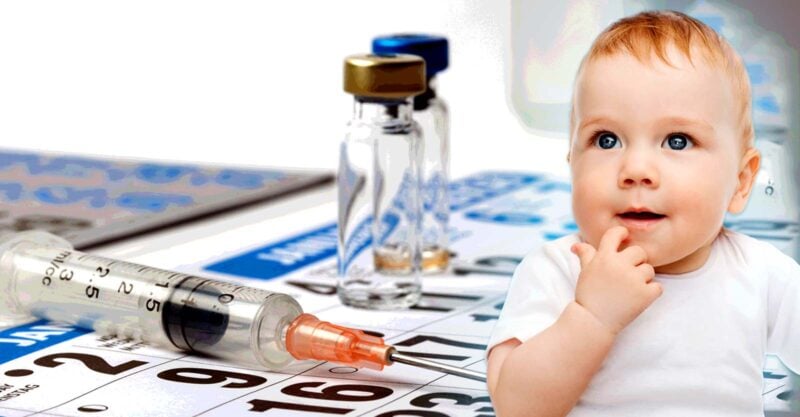


The U.S. Department of Health and Human Services (HHS) is asking the public to comment on whether the agency should change its vaccine recommendation categories.
The agency is also asking for input on how vaccine recommendations are set and how to rebuild public trust.
Comments are due by Sept. 20, 11:59 ET. The public can submit comments online or mail them to Cynthia Goss, 200 Independence Ave. SW, Washington, D.C., 20201. As of press time, 256 comments had been recorded.
In an Aug. 24 notice in the Federal Register, HHS Secretary Robert F. Kennedy Jr. listed 18 questions about vaccine recommendations for the public to answer.
People don’t have to answer all 18 questions, Kennedy wrote. Concrete examples are encouraged.
The call for public comments follows President Donald Trump’s Aug. 10 executive order calling for sweeping changes to U.S. vaccine policy, including reducing the number of diseases for which children receive routine vaccines from 18 to 11.
In his order, Trump charged the Task Force on Safer Childhood Vaccines with drafting a report to the White House within 90 days on how to improve vaccine safety and parental vaccine options.
The task force will use the public comments when evaluating whether the agency’s current recommendation framework adequately advances scientific rigor, informed choice and public trust, HHS said in its press release.
An HHS spokesperson told The Defender:
“Under the leadership of President Trump and Secretary Kennedy, HHS is committed to ensuring federal vaccine recommendations are grounded in gold-standard science and transparency to restore trust in our public health institutions.
“The public comment period gives American families, healthcare providers, and other stakeholders a meaningful opportunity to inform the Task Force’s evaluation of the current recommendation framework, and HHS will carefully consider the input received as that work moves forward.”
Dr. Elizabeth Mumper, a pediatrician with 45 years of experience who served 16 years on the University of Virginia’s clinical faculty, said that she was “delighted” that the federal government is soliciting the public’s input on vaccinations.
Mumper, one of the new members of the Interagency Autism Coordinating Committee appointed earlier this year by Kennedy, said parents in her practice often questioned a “one-size-fits-all” childhood vaccine schedule.
“Parents often had questions about the timing of vaccines for their child, especially if the child had recently been sick or on antibiotics,” Mumper said.
Dr. Shira Miller, founder and president of Physicians for Informed Consent, said, “We encourage parents, physicians, scientists, and those affected by vaccine mandates to share their experiences and concerns with HHS.”
Physicians for Informed Consent favors changes that increase physician and parental discretion and that reduce the likelihood that vaccine recommendations can be easily made into mandates for school attendance, Miller added.
Children’s Health Defense (CHD) Senior Research Scientist Karl Jablonowski said HHS’ call for comments “threatens the status quo” because it welcomes perspectives that have been “systematically suppressed,” including accounts from families of the vaccine-injured.
A ‘unprecedented opportunity’ for public to weigh in on vaccines
In August 2025, HHS reinstated the Task Force on Safer Childhood Vaccines after attorney Ray Flores sued the agency for violating the National Childhood Vaccine Injury Act of 1986. The act requires the HHS secretary to form a vaccine task force promoting vaccine safety and report on its progress to Congress every two years.
CHD funded the suit.
Federal law requires the task force to submit a report to Congress every two years. But Trump’s executive order “accelerated” the panel’s work by charging it to report back to the president in 90 days, Flores said on today’s episode of “Good Morning, CHD.”
Flores, a longtime vaccine safety advocate, told The Defender the call for public input is an “unprecedented opportunity that allows us to let the world, the HHS and ultimately the President know exactly how we feel.”
‘Shared Clinical Decision-Making’ category poorly understood
In particular, the agency wants to know whether the current three categories for U.S. vaccine recommendations are “adequate, clear, and well understood by clinicians, patients, and parents,” Kennedy wrote in the Federal Register.
The first two categories are “routine” — sometimes called universal — vaccinations recommended for everyone, and “risk-based” vaccinations that are recommended for those at heightened risk for a disease.
The third category, “shared clinical decision-making” or “individual-based decision-making,” is for vaccines that are recommended on an individual basis according to what the patient or parent and their doctor decide is best, according to the Centers for Disease Control and Prevention (CDC).
Shared clinical decision-making has been fraught with misunderstanding, according to Kennedy. He cited a 2018 study that found a majority of pediatric primary care providers didn’t know that vaccines in that category — which at the time was called “category B” — are covered by private insurance or the CDC’s Vaccines for Children Program.
All the current vaccine categories are up for questioning. The agency asked the public whether “additional or different” categories should be adopted.
For example, a category could be created for vaccines that are “recommended, but not during infancy” or “recommended with qualification.”
Such ideas might be worth exploring, according to Mumper. “I would like those who administer vaccines to have more freedom to alter the schedule, depending on the child’s current medical condition and past medical history,” she said.
Rethinking how vaccine recommendations are set
HHS also seeks input on how U.S. vaccine recommendations are set, including the kind of safety and efficacy data used to establish a recommendation.
Attorney Greg Glaser said he would like to see the government do more comparisons of long-term health outcomes of vaccinated versus unvaccinated individuals when deciding whether to recommend a vaccine.
He encouraged people to cite the book “Vax-Unvax: Let the Science Speak,” authored by Kennedy and CHD Chief Scientific Officer Brian Hooker, as an example of the kind of comparative studies HHS should use.
“The book explains over 100 peer-reviewed studies across multiple countries, providing a comprehensive look at the disparities in health outcomes between these two groups,” Glaser said.
None of the vaccines on the childhood recommended schedule were safety tested against a saline placebo group, retired pediatrician Dr. Paul Thomas told The Defender.
The safety studies used other vaccines or vaccine ingredients as the placebo, Thomas said.
“All vaccines should be ‘shared clinical decision-making’ with parents — not public health or doctors — having the ultimate say, as it is the parents who live with the harm caused by vaccines,” he added.


This article was funded by critical thinkers like you.
The Defender is 100% reader-supported. No corporate sponsors. No paywalls. Our writers and editors rely on you to fund stories like this that mainstream media won’t write.
How do we rebuild trust?
HHS also wants to know how trust in U.S. public health institutions can be rebuilt.
U.S. public trust in vaccines dropped during the COVID-19 pandemic, according to Kennedy. He wrote in the Federal Register:
“A substantial body of research indicates that top-down mandates and coercive measures can sow distrust and provoke psychological reactance, particularly among persons whose trust in government is already low.”
Trust is something that gets “built, and forfeited, over time through the conduct of institutions,” he wrote.
HHS needs a vaccine recommendation framework that “builds durable trust,” he added. The agency asked the public how to do that.
For instance, one question reads, “What communication practices should accompany vaccine recommendations so that they earn and keep public trust, and what lessons from COVID-19-era communication should inform them?”
Related articles in The Defender
- Trump’s Executive Order Gives Revived Task Force 90 Days to Produce Vaccine Safety Report
- HHS Reinstated Vaccine Safety Task Force After CHD Sued the Agency — ICAN Urges HHS to Take Next Steps
- Breaking: HHS Reinstates Task Force on Safer Childhood Vaccines in Response to Lawsuit Funded by Children’s Health Defense
- Lawsuit Targets HHS for Failing to Set Up Task Force on Childhood Vaccine Safety