Login
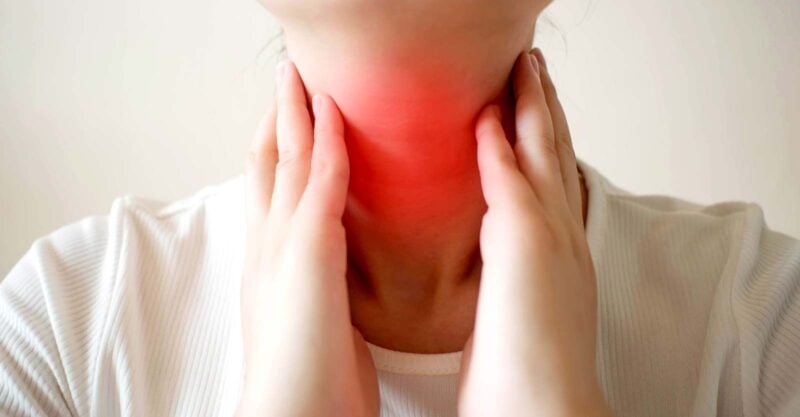


A study of environmental risk factors for differentiated thyroid cancer (DTC), published in Environment International, finds hundreds of environmental chemicals in human thyroid cancer tissues. The results suggest that certain compounds may contribute to thyroid cancer carcinogenesis.
The authors reported:
“This pilot study screened for and characterized environmental chemicals in DTC and non-cancer cadaver thyroid tissues, and explored differences in chemical profiles between tumor types …
“Overall, 442 environmental chemicals were annotated, including insecticides, herbicides, chemical synthesis intermediates, dye intermediates, flavoring or fragrance agents, plasticizers, solvents, combustion byproducts, fungicides, flame retardants, preservatives, polychlorinated biphenyls, lubricants, and per- and polyfluoroalkyl substances.
“Of these, 40% were potential endocrine-disrupting chemicals [EDCs].”
As the most prevalent human endocrine cancer, thyroid cancer affects many individuals. In the U.S., the American Cancer Society estimates that approximately 45,240 new cases of thyroid cancer will occur this year.
These findings highlight how the accumulation of environmental contaminants in humans, known as body burden, can influence carcinogenesis, specifically in the thyroid.
As the current study explained:
“Differentiated thyroid cancers (DTCs), which include papillary thyroid carcinoma (PTC), follicular thyroid carcinoma (FTC), and invasive encapsulated follicular variant of PTC (IEFVPTC), comprise most thyroid malignancies.
“PTC is the most frequent and accounts for ∼79–90% of all thyroid cancers, while FTC is less common and represents ∼11–13%.”


Methodology and results
While previous research has connected occupational exposure to chemicals with thyroid cancer risk, “few studies have examined the environmental chemical content of tumor tissues themselves,” the researchers note. (See here and here.)
This study utilizes ultra-high-resolution gas chromatography-mass spectrometry exposomics (the study of all non-genetic environmental, lifestyle and social exposures an individual experiences in their life) to measure hundreds of environmental chemicals in thyroid tumor samples and non-cancer cadaver thyroids.
In screening the samples for 709 environmental chemicals, a median of 302 annotated chemicals are found in individual samples, with 442 total environmental chemicals identified that include insecticides, herbicides and fungicides.
Also of note is that the two most annotated chemical classes are insecticides and herbicides, indicating how occupational, residential and dietary exposure may increase thyroid cancer risks.
The authors said:
“Our results provide evidence of extensive accumulation of environmental chemicals in thyroid tumors, with potential type-specific exposome signatures, suggesting a role for these compounds in the pathogenesis of DTC.”
This study highlights how environmental and occupational chemicals contribute to thyroid cancer, including chemicals that are known or potential carcinogens and those that have not been previously evaluated for carcinogenicity.
“The presence of a chemical in a tumor sample does not, by itself, imply causation; however, about 70% of the annotated chemicals do not appear to have undergone formal carcinogen classification by IARC [International Agency for Research on Cancer] or other agencies,” the researchers said.
“The present data suggest that these should be prioritized for carcinogenesis testing.”
Previous coverage
As covered in Daily News, “Thyroid Cancer Associated with Exposure to the Weed Killer 2,4-D, Study Finds” documents findings from a study of the herbicide 2,4-D and thyroid cancer in the U.S., noting that 2,4-D exposure is significantly associated with greater thyroid cancer incidence in rural counties.
Utilizing incidence rates for thyroid cancer for 2017-2021 through the Centers for Disease Control and Prevention (CDC) database and county-level 2,4-D use data from the U.S. Geological Survey.
This research, published in Endocrines, highlights a link between pesticide exposure — in areas where agricultural pesticide use is most concentrated — and disproportionate cancer risks.
A literature review in Current Opinion in Endocrine and Metabolic Research highlights research connecting pesticide exposure to thyroid hormone alterations and thyroid carcinogenesis (cancer).
Studies find that exposure to pesticides, whether through occupational, residential or dietary routes, can lead to endocrine disruption, thyroid dysfunction and neoplasia (tumor development).
“With agriculture playing an essential role in meeting worldwide demands for food and fuel, it is not only important to continue to study both acute and chronic effects of pesticide exposure on thyroid function, both environmental and occupational, but it is also important to explore the impact on multi-organ systems and transgenerational toxicity,” the authors, from the University of Colorado Anschutz Medical Campus, stated. (See more here.)
Another literature review, published in Ecotoxicology and Environmental Safety, finds a sex-specific relationship between pesticide exposure and thyroid cancer, with heightened risks for women.
“Thyroid cancer (TC) is one of the most common endocrine malignancies worldwide, yet the association between pesticide exposure and TC has not been systematically summarized,” the authors stated.
“This study aimed to elucidate the relationship between pesticide exposure and TC, focusing on insecticides, herbicides, and fungicides.” (See here.)
As covered in Daily News, “Study Links Endocrine-Disrupting Chemicals to Thyroid Dysfunction with Grave Health Effects,” researchers amassed hundreds of studies on EDCs that showcase adverse effects on growth, development, reproduction and metabolism.
The authors, a team of scientists and academics from Brazil, shed light on the link between EDC use and thyroid dysfunction, leading to increasingly prevalent illnesses and deadly diseases.
EDCs are any synthetic or natural compounds that hinder endocrine system functions and create harmful effects on organisms.
These chemicals can impact the thyroid gland, which is vital in producing hormones and plays a role in several body functions.
As the researchers stated:
“Several EDCs have been classified as thyroid disruptors, impairing thyroid hormone production, synthesis, metabolism, transport, and/or actions. Notably, thyroid disorders are the second most prevalent endocrine disease worldwide, with incidence increasing significantly in recent years.”
Originally published by Beyond Pesticides.