
 Login
Login
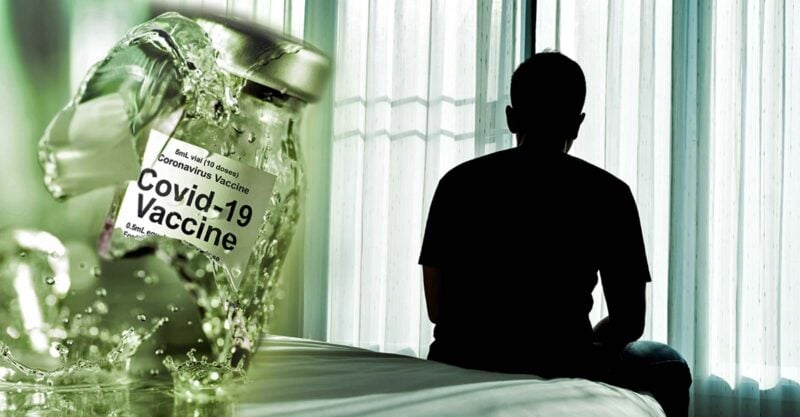


Dr. Aseem Malhotra, a recognized expert in cardiac health, is known for his public advocacy around medical and pharmaceutical ethics. He began questioning the safety of mRNA COVID-19 vaccines after his father died of a vaccine-induced heart attack in 2022, and later went public with his concerns.
But what most people don’t know is that before his father died, Malhotra himself was injured after receiving two doses of the Pfizer-BioNTech COVID-19 vaccine in 2020 and 2021.
“Within a few weeks of being vaccinated, I suffered inexplicable, significant clinical depression that was diagnosed by a psychiatrist and that lasted several months,” Malhotra told The Defender. “I needed psychotherapy to help me get better — and was 80% there when my father suffered a sudden cardiac arrest.”
Malhotra isn’t alone. Studies and V-safe data link COVID-19 vaccines to a host of mental health issues.
In some cases, victims and their family members attributed mental health issues directly to COVID-19 vaccines.
In others, people report that physical vaccine injuries led to mental health issues — in chronic pain with no access to treatment, they report struggling with daily life, professional obligations and strained relationships with loved ones.
Some people — including the family of a person who committed suicide — told The Defender their mental health suffered when federal health agencies refused to acknowledge the injuries they reported to V-safe and the Vaccine Adverse Event Reporting System (VAERS).
An analysis by The Defender of data reported to V-safe during the COVID-19 pandemic identified over 300 reports of severe psychiatric disorders, including reports of suicide and attempted suicide, triggered by the COVID-19 vaccine.
Those interviewed said the V-safe data reflect their own experiences or those of their injured family members. Some described being gaslit by their doctors.
Psychotherapist Joseph Sansone, Ph.D., author of “Psychopathic Authoritarianism: A Disease of the Soul,” said it’s not uncommon for physicians to dismiss the vaccine-injured and their struggles.
“Medical doctors, in many cases, told them to get the injections,” Sansone said. “Now, when the victims are suffering from chronic disease and illness, these same doctors gaslight the victims and not admitting the injuries and diseases are from the shots.” This often leads to feelings of “betrayal and violation” among the injured.
Following last week’s announcement that the National Institutes of Health (NIH) is launching a new clinic to study and treat vaccine injuries, people interviewed by The Defender called for more — and better — treatment of vaccine injuries and a stronger focus on the mental health struggles that often accompany these injuries.
Dan’s story: ‘Overwhelming medical gaslighting’ contributed to suicide
In early 2021, Dan Van Ackeren — a former state champion tennis player — was leading an active life, according to his wife, Brenda Van Ackeren. But after receiving two doses of the Pfizer-BioNTech COVID-19 vaccine, his health rapidly deteriorated.
“Hours after his second dose, we knew something was catastrophically wrong,” Brenda said. “He woke up screaming in excruciating pain, unable to sit or lie down comfortably. He developed severe drenching sweats, chills multiple times a day, persistent vomiting (four to five times a week) and a complete loss of proprioception” — the ability to sense one’s own body position and movements in space.
Dan required multiple hospitalizations, during which Brenda says medical staff subjected him to “overwhelming medical gaslighting” and “treated him with hostility.” They claimed Dan was “faking” symptoms or had merely “choked on a pill” and that his symptoms were “all in his head.”
A “compassionate” neurologist finally diagnosed Dan with multiple system atrophy, postural orthostatic tachycardia syndrome (POTS), dysautonomia, severe microclotting, alpha-synuclein pathology, and brain and ear canal tumors.
By 2025, Dan was fully disabled and bedridden 95% of the time. Emergency spinal surgery earlier this year failed. Dan couldn’t bear it any longer.
“The combination of relentless physical agony, progressive neurological decay, medical abandonment and the total loss of the life he loved profoundly broke his mental health,” Brenda said. “He expressed feelings of suicidal despair dozens of times over the years as his body failed him.”
Dan took his life in July. Brenda said he didn’t want to die — but he “simply could no longer endure the nonstop torture his body had become.”
Angelina’s story: ‘You lose that person that you were before you took the shot’
In early 2021, Angelia Desselle was an administrator at an outpatient surgery center. As an employee at a medical facility, she was encouraged to get vaccinated for COVID-19 “to show leadership within the organization.”
But four days after receiving the first dose of the Pfizer-BioNTech COVID-19 shot in January 2021, Desselle temporarily lost the use of her legs.
Despite severe pain, which included “hard convulsions” that made it difficult to perform basic tasks, Desselle was discharged from a hospital in a wheelchair and with a walker — and with many unanswered questions about her condition.
Doctors later diagnosed Desselle with lupus, stiff person syndrome and dysautonomia. By June 2021, she lost use of her legs again and needed the help of family members to eat, bathe and get dressed. She also lost her job.
That month, Desselle began having thoughts of suicide. “I didn’t want to be a burden on my family anymore,” she said. She recalled being moments away from attempting suicide — but was saved after her husband intervened.
“My husband happened to walk in when I was taking handfuls of pills. He stopped that and got me out of the house,” Deselle said. “We just went for a ride. Had he not walked in when he did, I probably wouldn’t be here today.”
“The mental anguish was something that I’d never experienced,” Desselle said. “It takes a mental toll. You lose that person that you were before you took the shot.”
Lori’s story: Thoughts of euthanasia, suicide followed severe COVID vaccine injuries
Lori Green, a former U.S. Army information technology specialist, said she believed in vaccines. But she expected “a functioning process” if something went wrong.
Green got two doses of the Pfizer-BioNTech COVID-19 shot in late 2020 and early 2021. She said she felt reassured that the federal government had vaccine injury surveillance systems such as V-safe and VAERS, and she had faith in the military’s healthcare system.
“What I did not understand was how difficult it would later become to determine what happened to the information after I reported it.”
Soon after her vaccination, Green developed tinnitus, migraines and severe dizziness. Increasingly severe conditions later followed.
“Over time, clinicians diagnosed conditions including dysautonomia, orthostatic blood-pressure abnormalities, vestibular migraine, chronic migraine and vertical heterophoria with convergence insufficiency,” Green said.
Green sought help from military doctors, but with little success. “What I could not find was someone with both the authority and willingness to say: ‘This is our incident,’” she said.
As “frustration with conventional medical pathways increased,” Green began having increasingly depressing thoughts.
“By late 2022, I had reached one of the darkest periods of my life. I had lost much of my independence. My career was disappearing. My memory was unreliable. I did not know whether I would recover,” Green said. “I repeatedly denied suicidal intent, suicide planning, attempts and self-harm.”
That year, Green considered euthanasia if she “could not obtain answers” or achieve “meaningful improvement” in her physical health. Thoughts of suicide or euthanasia stopped only after her memory, vision and overall health began improving, sometime in 2021.
Michael’s story: ‘I am shocked I am still here’
In early 2021, Michael C. Tokar was an Ironman athlete, marathon runner and construction executive. In April 2021, he received the Johnson & Johnson (Janssen) COVID-19 vaccine and immediately experienced reactions.
“In the weeks and months that followed, I experienced numerous health issues, multiple trips to the emergency room, and Bell’s palsy,” Tokar told The Defender.
The injuries occurred weeks after Tokar completed his 20th Ironman half-triathlon — a competition involving over 70 miles of swimming, biking and running. “I was the type of person who embraced physical challenges and rarely sat still,” Tokar said.
Eventually, Tokar was diagnosed with multiple sclerosis. Today, he faces chronic pain and debilitating health conditions, including burning sensations from the waist down, weakness and leg heaviness, balance problems, stiffness, spasticity, fatigue, bladder issues, trigeminal neuralgia, Lhermitte’s sign and worsening mobility limitations.
The injuries took a mental toll on Tokar, who said the “hardest part isn’t just the physical symptoms. It’s what those symptoms have taken from me.”
“When you spend years wondering what happened to your health, whether your condition will worsen and whether you will be able to continue supporting your family, it inevitably affects your mental health,” Tokar said.
These feelings include “a profound grief that comes with watching abilities you once took for granted gradually slip away,” Tokar said. “When I think of all the dark days I have had … I am shocked I am still here.”
Dedra’s story: Brain feels ‘forever changed’ after COVID vaccine injury
In 2021, Dedra Long was a surgical technician. But within weeks of getting the Pfizer-BioNTech shot in 2021, she experienced seizures and memory loss.
“I could memorize surgeries, instruments, all kinds of things,” Long said. “Now, on some days, I can’t remember what a hairbrush is or what other daily items are.”
These conditions led to mental health issues and thoughts of suicide. “I’d never had serious mental issues or truly considered taking my life until after I was affected by the Pfizer gene therapy they called a shot,” she said.
Long said she’s never had a moment in her life that she “couldn’t come back from,” but following her vaccination, her brain feels “forever changed.”
“This has hurt not only me but my family. Many times, I thought I was dying, and my family and husband didn’t know if he would come home to find me dead,” Long said.
The Defender is 100% reader-supported. No corporate sponsors. No paywalls. Our writers and editors rely on you to fund stories like this that mainstream media won’t write. 

This article was funded by critical thinkers like you.
‘A deep, systemic failure’
Most interviewees said they submitted reports to VAERS and/or V-safe, but received limited or no follow-up from federal health agencies.
“One of the most difficult parts of this journey has been feeling unheard, dismissed, or overlooked,” Toker said. “One of the most frustrating aspects of the process has been the lack of any follow-up and support. For many people, filing a report is only the beginning of a long and often lonely search for answers.”
Brenda Van Ackeren said her husband was “a victim of a deep, systemic failure.” She said she submitted two reports to VAERS, but “it has felt entirely like screaming into a void — no agency representative ever followed up, investigated or acknowledged the submissions.”
Desselle said she never received a sufficient response from health agencies. The Centers for Disease Control and Prevention left her a voicemail message asking why she couldn’t return to work. An email exchange with the NIH led nowhere.
When she posted a video online detailing her condition, Desselle — a Louisiana resident — said her state health department launched a “media smear campaign” against her, questioning the authenticity of her vaccine injury claims.
The people interviewed for this story called for more support for the vaccine-injured. “Neither the physical nor the mental injuries are receiving the urgent attention they demand,” Brenda said. “While awareness has grown, the response is nowhere near enough.”
Related articles in The Defender
- COVID Vaccines Triggered Psychiatric Disorders, Including Suicides
- NIH Will Run Vaccine Injury Research and Treatment Center, Pay Doctors to Report Vaccine Injuries
- NIH in Early 2022 Abruptly Stopped Responding to People Injured by COVID Shots
- Exclusive: 29-Year-Old’s Career Came ‘Crashing’ Down After Pfizer COVID Vaccine Injury
- Exclusive: 37-Year-Old Injured by Pfizer Vaccine Had to ‘Learn to Walk and Speak Again’
- UK Cardiologist Tells RFK Jr.: COVID Vaccine Caused Father’s Heart Attack