
 Login
Login
Mercury Research
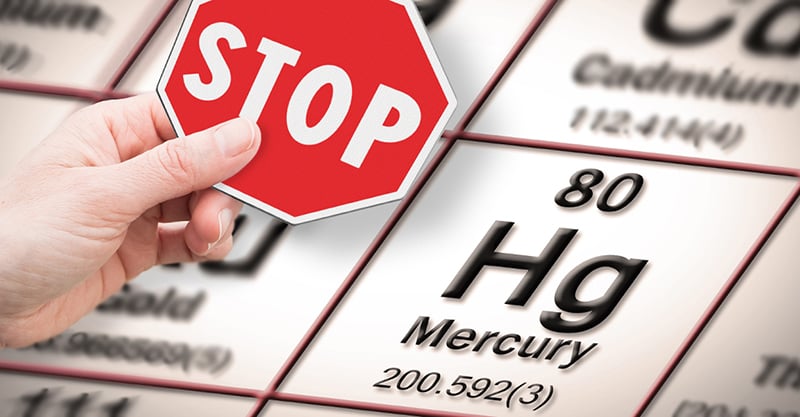
The literature confirming the toxicity of mercury goes well beyond its associations with autism. This document includes abstracts for over 240 studies that confirm the harmful effects of mercury from any source on brain cells, immune cells and other systems in the body. These include cellular, animal and human studies. There can be no justification for any intentional use of mercury given the extent of this literature.
Annotated Version of Peer-Reviewed, Published Research Linking Autism, Mercury and Thimerosal
In February 2017, Children’s Health Defense collected 89 peer-reviewed published articles linking autism, mercury and thimerosal. Each of these article abstracts are presented here along with a short annotation in layman terms about what the researchers found and how the findings are linked to autism. The science continues to accumulate that mercury and thimerosal are potent drivers of the autism epidemic. Download PDF (36.4MB)
Browse through and/or download a PDF of all the study abstracts, or read the individual study abstracts listed individually.
Also see:
Two options:
Download pdf of all studies (27.1mb) or browse the following 240+ abstracts (first page of study only).
Gericke 1993 – Thimerosal induced changes of intracellular calcium in human endothelial cells
Gump 2017 – Background lead and mercury exposures: Psychological and behavioral problems in children
Havarinasab 2004 – Dose-response study of thimerosal-induced murine systemic autoimmunity
Havarinasab 2005 – Immunosuppressive and autoimmune effects of thimerosal in mice
Havarinasab 2005 – Organic mercury compounds and autoimmunity
Jeong 2017 – High Mernal Blood Mercury Level is Associated with Low Verbal IQ in Children
Jin 2004-Thimerosal decreases TRPV1 activity by oxidation of extracellular sulfhydryl residues
Kaplin 1994 – Purified Reconstituted Inositol 1,4,5-Triphosphate Receptors
Kempuraj 2010 – Mercury induces inflammatory mediator release from human mast cells
Kern 2010 – Toxicity biomarkers in autism spectrum disorder: A blinded study of urinary porphyrins
Kern 2012 – Evidence of parallels between mercury intoxication and the brain pathology in autism
Kern 2016 – The relationship between mercury and autism: A comprehensive review and discussion
Kim 2002 – Thimerosal stimulates focal adhesion kinase and cytoskeletal changes by redox modulation
Kramer 2004 – Mercury exposure in protein A immunoadsorption
Lee 2006 – Thimerosal induces oxidative stress in HeLa S epithelial cells
Matheson 1980 – Mercury toxicity (acrodynia) induced by long-term injection of gamma globulin
Migdal 2010 – Responsiveness of human monocyte-derived cells to thimerosal and mercury derivatives
Miller 2005 – Thimerosal, micromercurialism and chronic fatigue syndrome
Mostafa 2007 – Antineuronal antibodies in autistic children: relation to blood mercury
Nataf 2006 – Porphyrinuria in childhood autistic disorder: Implications for environmental toxicity
Obrenovich 2011 – Altered Heavy Metals and Transketolase Found in Autistic Spectrum Disorder
Ohno 2004 – Wide use of Merthiolate May Cause Mercury Poisoning in Mexico
Orct 2006 – Comparison of organic and inorganic mercury distribution of suckling rat
Park 2007 – Evaluation of Cytotoxicity Attributed to Thimerosal on Murine and Human Kidney Cells
Parran 2005 – Effects of Thimerosal on NGF Signal Transduction and Cell Death in Neuroblastoma Cells
Redwood 2001 – Predicted Mercury Concentrations in Hair From Infant Immunizations: Cause for Concern
Risher 2002 – Organic mercury compounds: human exposure and its relevance to public health
Risher 2016 – Alkyl Mercury-Induced Toxicity: Multiple Mechanisms of Action
Rode 2006 – Are Mercury Amalgam Fillings Safe for Children? An Evaluation of Recent Research Results