

 Login
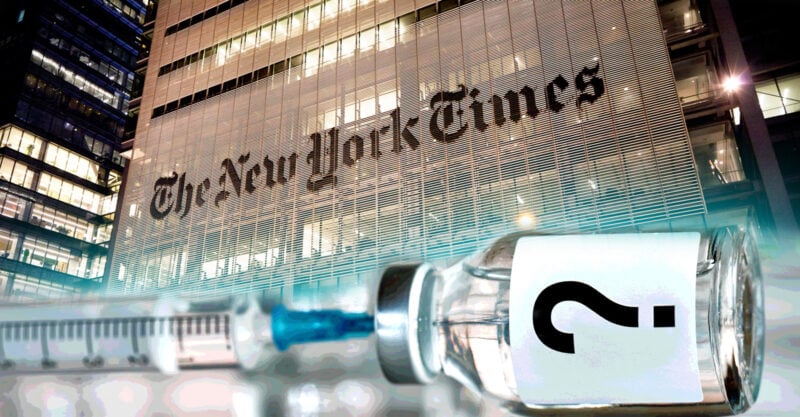


In an Oct. 16 New York Times investigation, journalist Christina Jewett examines U.S. Health Secretary Robert F. Kennedy (RFK) Jr.’s efforts to reshape vaccine research, childhood immunization recommendations and the federal vaccine injury compensation system.
The reporting identifies consequential policy developments, including approximately $46 million in Centers for Disease Control and Prevention (CDC) research contracts.
Yet its emphasis on fears of declining vaccination rates risks overshadowing another public health obligation: independently investigating potential vaccine harms, even when the questions challenge established scientific assumptions.
Vaccine safety research: Why is more investigation alarming?
Jewett reports that the CDC commissioned research through the established Vaccine Safety Datalink network, including investigations into autoimmune diseases, allergies, asthma, seizures and childhood cancers.
These studies involve Kaiser Permanente, HealthPartners, Denver Health and Marshfield Clinic researchers.
The article notes that previous research has addressed some of these questions, including a large Danish study finding no association between aluminum-containing vaccines and numerous chronic conditions.
That evidence matters. But scientific findings are not immune from replication, particularly when methods, populations and exposure patterns differ.
The proper test is methodological quality — not whether another investigation makes public health officials uncomfortable.
Kennedy’s reported distrust of established researchers also deserves scrutiny. A health secretary should not demand predetermined findings, whether favorable or unfavorable to vaccines.
Political influence cuts both ways
Jewett highlights controversial researcher David Geier’s involvement in internal HHS investigations. His earlier work has faced serious scientific criticism, making independent review essential.
But the article relies heavily on officials and commentators already opposed to Kennedy’s approach.
It offers less examination of whether established institutions might possess their own professional or policy commitments.
Notably, a CDC-commissioned white paper published in 2016 recognized that additional observational research into the complete childhood immunization schedule was warranted, despite substantial existing evidence supporting its safety.
Calling for more research is not itself evidence of an anti-science agenda. Predetermining its results would be.
Vaccine injury compensation: More than a political fight
Jewett examines attorney Aaron Siri’s effort to expand conditions eligible for compensation through the federal vaccine injury program.
Critics correctly emphasize that an adverse event listed in a vaccine package insert does not automatically establish causation.
But the opposite assumption is equally unacceptable: an illness reported after vaccination should not be dismissed without investigation.
The article reports approximately $5.6 billion awarded to 13,500 claimants. Those figures demonstrate that vaccine injuries are not merely theoretical.
Meanwhile, HHS announced a National Institutes of Health clinic for patients reporting health problems following vaccination and proposed improving reimbursement for adverse-event reporting. Those initiatives deserve independent evaluation, not presumptive condemnation.
TrialSite news assessment: The framing problem
Jewett identifies genuine risks involving political influence, weakened immunization recommendations and possible erosion of public confidence.
But her article gives greater prominence to experts warning about Kennedy than to the scientific rationale for further safety investigations. What of the patients who are legitimately injured by COVID-19 vaccines for example?
The distinction matters. Lower vaccination rates could increase preventable disease. Yet unresolved safety questions and dismissive treatment of patients can also undermine public trust, which can lead to vaccine hesitancy among other things.
Neither outcome should be treated as acceptable.
The Times investigation is strongest when documenting policy decisions and weakest when it risks conflating scrutiny of established vaccine policy with hostility toward vaccination itself.
Public health cannot demand trust while appearing reluctant to welcome independent verification.
Science must survive its critics
Kennedy must demonstrate that his investigations are independent, methodologically sound, and willing to publish findings that contradict his expectations.
The same standard applies to federal agencies, pharmaceutical companies and researchers defending existing policies. The scope creep of medical industry forces (including funding) represents a real concern.
The public deserves neither reflexive vaccine reassurance nor reflexive vaccine suspicion. It deserves evidence.
A scientific question does not become illegitimate because someone deemed unpopular by some interests asks it. And an answer does not become trustworthy merely because an established institution supplies it.
Originally published by TrialSite News.
