Login
Login
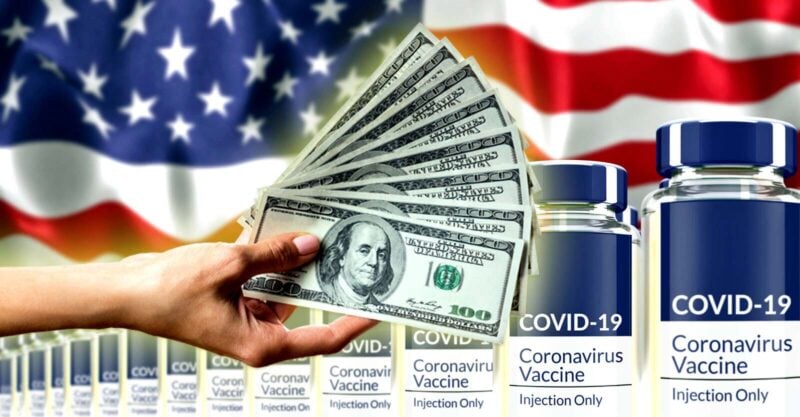


U.S. Health Secretary Robert F. Kennedy Jr. is preparing to launch a rulemaking process that could make it much easier for people injured by COVID-19 vaccines to receive compensation from the federal government, marking one of the most consequential changes yet to the vaccine injury program.
According to a federal regulatory agenda, the U.S. Department of Health and Human Services (HHS) plans to propose a rule in November that would establish a formal “injury table” for COVID-19 vaccines. The proposal would undergo a public comment period expected to run into early 2027 before any final rule could take effect.
Kennedy’s proposal would establish a table identifying injuries the government presumes were caused by covered COVID-19 countermeasures, including vaccines.
For an injury to be listed in the table, the rule will require “compelling, reliable, valid, medical, and scientific evidence” linking the injury to the vaccine. The rule would also specify the time windows in which those injuries must develop following vaccination.
HHS has not disclosed which injuries it may include.
But legal experts expect myocarditis — an inflammation of the heart muscle that has been linked to mRNA COVID-19 vaccines, particularly among adolescent and young adult males — to receive close consideration because federal health agencies have already acknowledged the association.
Experts also think the move could jumpstart scrutiny of other vaccine harms.
“I believe the proposal to create a COVID-19 vaccine injury table is a fantastic start,” said attorney Chad Davenport. “Hopefully, this moves us closer to expanding the list of covered injuries for routine childhood vaccines, which is an area that desperately needs to be expanded as well.”

Did lawsuit prompt HHS to create an injury table?
The proposal comes on the heels of a lawsuit filed in the District of Columbia seeking to compel HHS to create a Countermeasures Injury Table, which is required by law under the Public Readiness and Emergency Preparedness Act (PREP Act).
Such a table identifies injuries that are presumed to have been caused by covered medical countermeasures when they occur within specified time frames, making it easier for claimants to qualify for financial compensation.
In the lawsuit, plaintiff Erica Samp alleges the table is “critically important” because it carries a “presumption that the countermeasure caused the injury.” This reduces the burden of proof for people seeking benefits through the federal Countermeasures Injury Compensation Program (CICP).
Samp alleges she developed encephalopathy, vision and hearing loss and vascular injuries after receiving two doses of Moderna’s COVID-19 vaccine in 2021.
According to the complaint, her claim was denied in 2024 because Health Resources and Services Administration (HRSA) concluded there was not enough clear evidence that the vaccine directly triggered her injuries. HRSA, a department within HHS, oversees the CICP.
Attorney Ray Flores, who filed the suit on behalf of Samp, said the table could ensure those with COVID-19 vaccine injuries get a fair chance at payment — something he said the CICP has been ineffective in doing.
“The CICP compensation program is a black hole for all those who were injured,” Flores told The Defender. “Only 60 claims have been paid in total. The median award is $4,300 for death or serious bodily injury. It’s a scam … this [proposed rule] opens the door for anyone else who missed the deadline to apply. They have a shot at filing in federal court now.”
More than 1.5 million reports of COVID-19 vaccine adverse events filed with the Vaccine Adverse Event Reporting System (VAERS) don’t qualify for compensation through the federal CICP because the program covers only deaths and injuries meeting the government’s definition of “serious physical injury.”
The vaccine injury table won’t change that, Flores said. But it will help others.
He said:
“The beauty of the vaccine injury table is that it gives you a window — a day, a week, six days, or two weeks — for the onset of an injury after a vaccine. That’s what the table does. If the injury is on the table, causation is presumed to be caused by the vaccine. That’s why it’s important.”
HHS has until July 21 to respond to the lawsuit.
A lawyer representing HHS did not respond to a request for comment. Neither did HHS when asked about the case or the vaccine injury table.
Vaccine injury compensation programs and studies
COVID-19 vaccines are excluded from the National Vaccine Injury Compensation Program (VICP), the decades-old no-fault compensation system created by Congress in 1986 to protect vaccine manufacturers from excessive litigation while ensuring people with legitimate vaccine injuries have access to compensation.
Instead, COVID-19 vaccine injury claims must be processed through the CICP, a separate emergency program widely criticized by legal experts and patient advocates for its stricter standards, lower compensation rates and limited opportunities for appeal.
COVID-19 vaccine injuries were evaluated in a 2024 National Academies of Sciences, Engineering, and Medicine review, which explored hundreds of studies related to intramuscular vaccine administration.
Commissioned to inform the VICP, the 336-page report assessed evidence for four COVID-19 vaccines authorized or approved in the U.S.: Pfizer, Moderna, Johnson & Johnson (Janssen) and Novavax.
The committee reached 85 conclusions on potential vaccine-related adverse events. It found sufficient evidence for 20 conclusions, while determining that evidence for many other reported conditions was insufficient to establish, accept or reject a causal relationship.
The review found evidence that did support causal relationships between specific COVID-19 vaccines and several rare adverse events, including myocarditis and pericarditis following mRNA vaccines, thrombosis with thrombocytopenia syndrome after the Johnson & Johnson vaccine, and anaphylaxis after COVID-19 vaccination.
The report also found evidence that improper vaccine administration can cause certain shoulder, bone and nerve injuries.
Argentinian lawyer Augusto Roux, who participated in a Pfizer COVID-19 vaccine clinical trial in Buenos Aires in 2020, and later sued the pharmaceutical giant, told The Defender the vaccine caused him coronary and liver damage.
“Today I still suffer from coronary and hepatic aftereffects,” he said. “The Department of Justice should open an investigation into the clinical trials. Since they were detected during the events and concealed, compensation should therefore arise from a judicial investigation.”
Pfizer did not respond to a request for comment.
‘Post-vaccination injuries are real — they should be … compensated’
The creation of a COVID-19 injury table could represent a significant shift for thousands of individuals who believe they were injured by the vaccines. If claimants meet the listed criteria, they won’t need to establish a case from scratch, which could lead to more efficiency and recompense.
“I agree with adding conditions to the vaccine injury table, and doing so would be consistent with the purpose of the VICP program,” said attorney Michael Baum. “Post-vaccination injuries are real — they should be acknowledged and compensated.”
The proposal comes amid continuing debate over the safety profile of COVID-19 vaccines. Extensive clinical trials and post-authorization safety monitoring involving hundreds of millions of administered doses have found that serious adverse events are uncommon.
Yet COVID-19 vaccines have generated more reports to VAERS than previous vaccines, largely because of the unprecedented scale of the vaccination campaign, heightened public awareness and mandatory reporting requirements under the emergency use authorization.
In April, Sen. Ron Johnson (R-Wis.) released a report citing documents revealing that officials at the U.S. Food and Drug Administration (FDA) knowingly used an inferior safety-signal detection method to analyze VAERS reports, and told a long-time FDA researcher to “cease and desist” from using an improved tool.
The report suggests the agency was aware that the vaccines were causing more serious injuries than they the agency was reporting to the public.
A recent analysis of the Centers for Disease Control and Prevention’s V-safe COVID-19 vaccine surveillance system confirmed short-term reactions to the vaccines. However, the system failed to capture more serious, delayed long-term injuries, TrialSite News reported.
As of June 26, VAERS showed 1.94 million reports of serious injuries following COVID-19 vaccination, including 38,648 deaths.
The Defender is 100% reader-supported. No corporate sponsors. No paywalls. Our writers and editors rely on you to fund stories like this that mainstream media won’t write. 

This article was funded by critical thinkers like you.
Will Congress act?
Will the HHS proposal improve the efficiency of the CICP?
Researcher Wayne Rohde, author of two books on federal vaccine injury compensation, told The Defender he fears Congress will fail to allocate resources — which he estimates to be around $3 billion — for the vaccine-injured. He also said many of these cases could take years to resolve.
But Rohde said despite any challenges, the cause is critical for the future.
“The question is, are we going to compensate these people?” he asked. “The concern is that if we don’t do anything now, during the next pandemic, it will be even worse.”
Bob Snow, a commercial pilot who received the vaccine under threat and was injured, told The Defender the current compensation program is not working.
“Unfortunately, the current plan is convoluted and structured with a timeline that is not conducive to awards being paid,” Snow said.
He added:
“It seems the system has been politicized to the point that health, safety and informed consent are now considered radical ideas and that anyone claiming harm is gaslit, ridiculed and ostracized. Until that stigma changes, which will be difficult due to the levels of cognitive dissonance involved, I see an uphill battle against both financial and political interests. That said, I’m ultimately hopeful for positive change.”
Update: This article has been updated to clarify that the number of serious injuries following COVID-19 vaccination in VAERS is 1.94 million.
Related articles in The Defender
- Reported Vaccine Injuries Continue to Climb, Pfizer Seeks Full Approval for COVID Vaccine
- U.S. Will Track Vaccine Injuries in ‘Real-Time’ Using Electronic Patient Records
- Committee Reviewing COVID Vaccine Injuries Meets Behind Closed Doors
- CDC Study Confirms Short-Term COVID Vaccine Reactions — But Fails to Capture Serious Delayed or Long-Term Injuries
- Federal COVID Vaccine Injury Program Pays for Another Death — But Denials Still Hover Above 98%