

 Login
Login
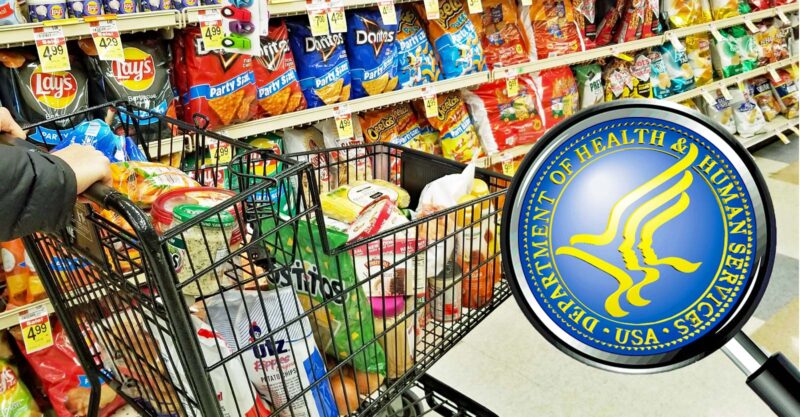


The U.S. Department of Health and Human Services (HHS) on Monday unveiled two food policy proposals aimed at increasing safety and transparency in the nation’s food supply.
The agency proposed requiring food manufacturers to notify the U.S. Food and Drug Administration (FDA) whenever they determine that an ingredient added to human or animal food is “generally recognized as safe” or GRAS.
Today, companies can make those decisions without telling regulators.
HHS and the U.S. Department of Agriculture (USDA) also submitted the federal government’s first proposed definition of ultraprocessed foods for final review by the FDA — a move officials said could eventually shape nutrition research, food labeling, dietary guidelines and other policies affecting what Americans buy and eat.
Officials did not release the definition or say when it would become public.
Food policy reform advocates called both proposals important first steps. However, they cautioned that the changes would not stop companies from introducing new ingredients or fully address the thousands of additives already in the food supply.
Speaking at a news conference Monday, U.S. Health Secretary Robert F. Kennedy Jr. said the proposals are designed to make it easier for people to understand what is in their food.
“Parents should not need a chemistry degree to understand what their children are eating,” he said. “Americans deserve real transparency. They deserve real food.”

GRAS system created ‘major blind spot’ for food safety
Congress created the GRAS exemption in 1958 to allow food manufacturers to use familiar ingredients, such as salt, vinegar and baking soda, without extensive FDA review.
Over time, manufacturers began using the exemption to determine on their own that new ingredients were safe. Public health experts and food scientists say companies have exploited the exemption, and introduced more than 10,000 inadequately studied additives with little or no FDA oversight.
Kennedy called the system “a major blind spot,” saying regulators “do not even have a complete picture of what is entering our food supply.”
Ray Flores, Children’s Health Defense senior outside counsel, said manufacturers have largely been able to make GRAS determinations on their own, often without the FDA’s knowledge.
The current system allows “profit-driven manufacturers to declare their products are safe, in secret, without government oversight,” he said.
Critics say “GRAS” ingredients aren’t necessarily safe.
The FDA has revoked GRAS status for several substances after evidence linked them to health risks. These include synthetic flavorings associated with cancer in animal studies and artificial trans fats linked to coronary heart disease and thousands of fatal heart attacks annually.
Flores said the proposed regulation’s “key difference” is that it would end the FDA’s voluntary notification process by requiring companies to notify the agency whenever they determine an ingredient qualifies as GRAS.
The change would expand the FDA’s public database of GRAS notices but would not require the agency to approve ingredients before they reach the market. Instead, companies could begin selling products while the FDA reviews their notifications.
Under the proposal, the FDA would generally have 180 days to evaluate a submission and could request additional information or ask a manufacturer to delay introducing an ingredient if safety concerns arise, The Associated Press reported.
Companies already using ingredients based on self-determined GRAS decisions would have access to a streamlined process for submitting information, according to HHS.
‘Tremendous backlog’ of ingredients need FDA review
Acting FDA Commissioner Kyle Diamantas said the proposal would strengthen oversight without creating a new premarket approval system.
“Americans deserve confidence that the ingredients in their food are subject to transparent, science-based oversight, and today’s actions strengthen both sides of that equation,” Diamantas said in an HHS press release.
Kennedy acknowledged that requiring FDA approval before ingredients reach the market would require Congress to change federal law.
“Congress must build on these actions through legislation,” he said at Monday’s news conference. “Congress needs to give FDA the additional tools that it needs to keep pace with a changing food supply and protect the American people.”
Even with additional authority, some advocates said the FDA may lack the resources needed to carry out expanded oversight.
Mark Kastel, executive director of OrganicEye, welcomed the proposal but questioned whether recent staffing cuts have left the FDA with enough scientists to review new submissions.
He said the agency should devote adequate personnel to reviewing the “tremendous backlog” of synthetic ingredients companies previously classified as GRAS “with virtually no independent oversight” — including “a number of compounds” permitted in the U.S. but banned by European regulators.
Zen Honeycutt, executive director of Moms Across America, called the proposal “an excellent step” toward greater transparency but agreed that much more work remains.
She said the next steps should include long-term independent safety studies with blood analysis for the thousands of ingredients already in the food supply, restrictions or bans on ingredients that fail to demonstrate safety and clearer package labeling.
The proposed rule now enters the federal rulemaking process, which includes a 120-day public comment period after publication in the Federal Register today.
‘If you can’t define a problem, you can’t solve it’
The government’s second announcement — a proposed definition of ultraprocessed foods — could have even broader long-term effects.
“If you can’t define a problem, you can’t solve it,” Kennedy said.
Federal agencies use different definitions of ultraprocessed foods, making it difficult to compare studies or develop consistent policy.
HHS said its proposed definition — now undergoing final interagency review by the Office of Management and Budget — incorporates feedback from thousands of researchers, consumer groups, food manufacturers and members of the public.
“Nearly 60% of the American diet is made up of ultraprocessed foods,” Kennedy said Monday. “For our kids, it can be up to 70%.”
He linked those eating habits to rising obesity and chronic disease rates.
Food is “the most powerful weapon that we have in our arsenal to change the trajectory of the chronic disease epidemic,” he said.
Earlier this year, Kennedy told podcast host Joe Rogan that once a federal definition was in place, the administration planned to pursue front-of-package food labeling to help consumers quickly identify healthier products.
HHS did not discuss that proposal Monday or provide an updated timeline.


This article was funded by critical thinkers like you.
The Defender is 100% reader-supported. No corporate sponsors. No paywalls. Our writers and editors rely on you to fund stories like this that mainstream media won’t write.
‘Sales growth of real food outpaced ultraprocessed food for the first time’
Monday’s announcements build on a series of food policy initiatives under Kennedy’s Make America Healthy Again (MAHA) agenda.
These include efforts to remove synthetic food dyes, revise federal dietary guidelines to emphasize whole foods, expand nutrition education at medical schools and encourage healthier meals in schools and other federally supported institutions.
Kennedy noted that Kellogg recently announced it would eliminate artificial colors from its cereals by the end of 2026. Other companies, including Kraft Heinz, General Mills and Nestlé, have also pledged to remove artificial colors and other additives from many products.
Those changes reflect growing consumer demand for healthier food, according to Kennedy.
“Over the past year, sales growth of real food outpaced ultraprocessed food for the first time by approximately 7%,” he said.
He credited the MAHA movement and “millions of Americans across the political spectrum” for driving the administration’s food policy agenda.
“You built this movement from the ground up,” Kennedy said. “You demanded change, and today we are transforming our food system because of you.”
Related articles in The Defender
- RFK Jr.’s Push to Remove Synthetic Dyes Hinges on Big Food’s Cooperation — Some Brands Are Holding Out
- RFK Jr. Flips the Food Pyramid
- Kennedy Takes Aim at FDA Loophole That Allows Unsafe Ingredients in Food
- ‘Ingredients for Success’: How One California Nonprofit Is Changing School Lunches
- Let Food Be Thy Medicine? RFK Jr. Announces 50+ Medical Schools Will Add Nutrition Training
- RFK Jr.: MAHA Report a ‘Clarion Call’ to End the Chronic Disease Epidemic
