Login
Login
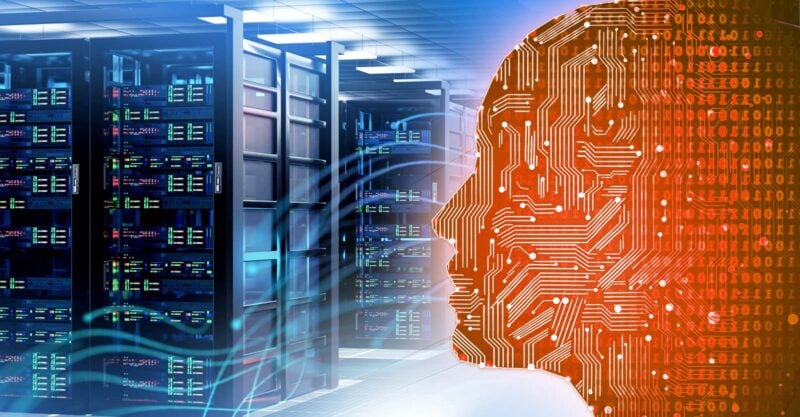


Researchers in Singapore last month released a prototype for a “biological data center” — a computing facility that uses lab-grown human brain neurons connected to electronics to process data.
The prototype uses “wetware” — living neural cells derived from human stem cells and maintained in a lab — to interface with silicon hardware.
The cells, reprogrammed from donor skin or blood cells, have a six-month lifespan. Life-support equipment maintains them at a controlled temperature in sterile conditions and feeds them nutrients, the company said.
Electrodes stimulate the cells and read their activity. Then computers translate that activity into usable software inputs and outputs.
In a press release, the National University of Singapore Yong Loo Lin School of Medicine, which partnered with Cortical Labs and DayOne to make the prototype, said it offers “a powerful glimpse into how biology and technology can come together to transform the future of computing.”
Patrick Wood, editor-in-chief of Technocracy News, called the prototype “creepy.”


Are biological labs really more energy-efficient?
Cortical Labs, which developed the technology — CL1 systems — says the benefit of using neurons as information processors is that, unlike traditional computer chips, neurons form patterns that change over time.
The company previously “grew neurons on a chip” and taught them to play the video games Pong and Doom.
Each unit in the CL1 system contains about 200,000 human neurons grown on a silicon chip with a microelectrode array that stimulates the cells and records their responses. Software then translates those responses into something usable for a computer.
The researchers argue that their technology can solve some of the energy problems associated with the explosion of artificial intelligence (AI).
The data centers being constructed at a rapid rate across the world require massive amounts of energy and water. The human brain operates on much less energy — roughly 20 watts of power, the researchers said.
However, they haven’t publicly addressed the energy and resource footprint necessary to keep the cells alive.
Other products using lab-grown cells — including lab-grown meat — have proven to be energy-intensive.
Critics of the biological data center warn that AI technology is changing so rapidly that new data centers and the hardware they contain will quickly become obsolete — possibly even before they are set to go online.
Scaling up would require ‘huge’ number of brain cells
The biological data center prototype is a small, highly controlled computing installation. All public claims are made by the developer, so there is no large-scale, independent real-world evidence to back the claims.
Cortical Labs has opened a facility in Melbourne, Australia, and is planning a larger site in Singapore.
The systems are “bench-scale” — the Melbourne facility only has 120 units. Typical data centers have tens of thousands of servers.
Critics argue that the neurons’ ability to play simple games is proof of concept, but a long way from demonstrating real-world capabilities to compete with modern computers.
“Scaling living cells into something reliable enough for infrastructure use is a major engineering hurdle,” according to Live Science.
Claire Robinson, founder of GMWatch, said significant funds would be needed to scale up and that scaling up “will require huge numbers of cells, which will have to be regularly replaced, as they don’t last forever.”
Cortical Labs is a startup founded in 2019. As of March, it has raised $11 million in funding, with investors including Horizons Ventures, Blackbird Ventures, LifeX Ventures, Radar Ventures, and the In-Q-Tel — a venture capital outfit funded by the CIA.
Using the technology for a “data center” appears to be a pivot for Cortical Labs.
When the company first debuted the technology in 2025, it billed it as a “platform technology” for drug discovery and disease modeling to develop treatments for conditions such as epilepsy and Alzheimer’s disease.


This article was funded by critical thinkers like you.
The Defender is 100% reader-supported. No corporate sponsors. No paywalls. Our writers and editors rely on you to fund stories like this that mainstream media won’t write.
Are we entering transhumanism territory?
Wood told The Defender it reminded him of former President Barack Obama’s brain-mapping initiative, funded by the National Institutes of Health (NIH) and DARPA, among other agencies, and promoted by former NIH Director Francis Collins.
“The people have too much time on their hands, and if it wasn’t for public tax money, they would starve to death,” Wood said.
Robinson said the project raises serious concerns “about the wider ‘transhumanist’ landscape in which scientists and billionaire investors are trying to blur the line between living beings — including humans — and AI/computers.”
She added:
“We’ve all seen articles enthusing about AI robot soldiers — basically computers with a human appearance and attributes. There are worries about who is controlling these technologies, what their motivation is, what happens when something goes wrong and/or the robot gets out of control, and who is responsible and accountable for any harm caused.”
Much of this research is done in secret, she added. “We urgently need to demand transparency and accountability for where research and investment is being directed and engage in the ethical issues involved. We need to govern the technology before it governs us.”
Related articles in The Defender
- Trump Calls for Rapid Expansion of AI Data Centers, Including on Federal Lands
- Cheating the System: How AI Data Centers Bypass Water and Air Pollution Laws and Permits
- Transhumanism and the Metaverse: Are We Doomed to Live in a Totalitarian Digital Prison?
- The Transhumanist Agenda Behind Biden’s Executive Order on ‘Advancing Biotechnology’
- USDA Approves First Lab-Grown Meat in U.S., But Scientists, Food Safety Experts Aren’t Sold on It