Login
Login
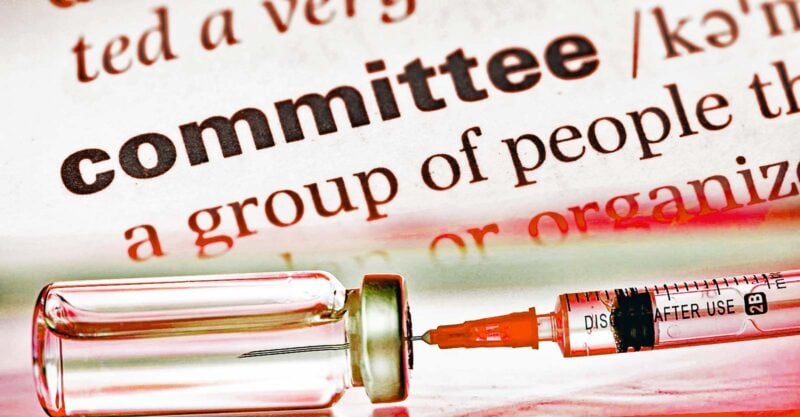


A key federal vaccine advisory committee will begin considering “non-immunization strategies” and “vaccine alternatives” for certain categories of people and has launched a nomination process for members of the public to join the committee.
The National Vaccine Advisory Committee (NVAC) advises the U.S. Department of Health and Human Services (HHS) on vaccine policy. Last month, HHS rewrote the NVAC charter to emphasize non-vaccine alternatives and to include fewer industry representatives and more members of the public in its lineup.
According to NVAC’s new charter, the committee is directed to consider “non-immunization strategies for individuals who are unable to be vaccinated, or who choose not to be vaccinated due to medical contraindications or strongly held personal, conscientious or religious beliefs.”
Alternatives to vaccines may include “healthy lifestyle and disease prevention initiatives, off label repurposed use of existing FDA approved drugs and the use of dietary supplements known to support healthy immune function.”
NVAC’s new charter also calls for a more “balanced” slate of members, including “a selection of public members who are engaged in gold standard science, vaccine safety or efficacy research.”
Steve Kirsch, founder of the Vaccine Safety Research Foundation, said the new charter represents “the single most substantive change to federal vaccine governance in decades.”
Kirsch said:
“It’s an overdue acknowledgment that a vaccine-only monoculture has crowded out every other conversation about childhood health for a generation. For people with genuine medical contraindications, and for families with conscientious or religious objections, there has never been a serious federal conversation about what to do instead.”
But in a blog post, attorney Rick Jaffe wrote that the changes to NVAC are unlikely to substantively change federal vaccine policy. Jaffe pointed out that the committee’s recommendations are non-binding. “What it has never produced is anything with legal consequence,” he wrote.
Changes to another committee could affect vaccine injury compensation program
The change to NVAC’s charter comes as HHS last month refiled the charter for another key vaccine committee, the Advisory Commission on Childhood Vaccines (ACCV). The ACCV makes recommendations to HHS on the federal government’s National Vaccine Injury Compensation Program (VICP).
According to MedPageToday, the changes to ACCV’s charter may alter the committee’s composition and could portend broader changes to the VICP. Earlier this year, U.S. Health Secretary Robert F. Kennedy Jr. removed four ACCV members.
On Monday, the Trump administration issued an executive order recommending the alignment of the recommended childhood vaccination schedule with peer countries by reducing the number of routine vaccinations recommended for most children.
Experts have questioned whether the executive order can lead to substantive changes in vaccine policy.
Changes to NVAC and ACCV also come as the operations of another federal vaccine committee, the Advisory Committee on Immunization Practices (ACIP), remain frozen following a stay a federal court issued in March in an ongoing lawsuit by the American Academy of Pediatrics (AAP) and other groups against HHS and Kennedy.
Experts say vaccine advisory committees were ‘captured’ by pharma
Kirsch said the NVAC and ACCV have historically stayed out of public view. NVAC, established by the National Childhood Vaccine Injury Act of 1986, “functioned as a kind of ceremonial body — stacked with industry-funded researchers and public health officials who affirmed the consensus and produced reports nobody read.”
ACCV has been “even quieter,” Kirsch said. “These committees existed, but they were captured [by] people whose careers, grants and institutional prestige depended on never asking hard questions about vaccine safety.”
According to Medical Daily, NVAC will, for the first time, be tasked with considering healthy lifestyle and disease-prevention initiatives, the off-label use of drugs already approved by the U.S. Food and Drug Administration (FDA) and the use of dietary supplements that support the healthy operation of the immune system.
NVAC will also be tasked with identifying people who are at higher risk of vaccine-related adverse events.
Jaffe noted that unlike ACIP, which advises the Centers for Disease Control and Prevention (CDC) on vaccine policy, NVAC “gives advice directly to senior HHS leadership, bypassing the CDC apparatus entirely.”
“Congress gave it four jobs: vaccine supply, research priorities for safety and efficacy, advising on implementation of the National Vaccine Program, and an annual report identifying where governmental and non-governmental cooperation ought to go,” Jaffe wrote.
However, despite producing a series of recommendations and reports over the years, “No insurer’s obligation changes because of an NVAC report,” Jaffe wrote. “No state statute changes. No vaccine gets purchased or stops getting purchased.”
Kirsch said ACCV may also benefit from the changes made to its charter. He said the committee’s new charter could enable it to push for transparency in how VICP claims are adjudicated, and also push for faster compensation for families, and “honest accounting of which injuries are being recognized.”
Last month, Kennedy announced that HHS would create a COVID-19 vaccine injury table, which could make it easier for people injured by COVID-19 vaccines to receive compensation from the federal government.
But Jaffe wrote that these changes will not impact childhood vaccination policy. “If you are trying to figure out what ACCV means for the childhood schedule, the answer is that it means nothing, because ACCV is about what happens after a child is injured, not about which shots a child gets.”
Brian Hooker, Ph.D., Children’s Health Defense chief scientific officer, said limitations remain under ACCV’s new charter.
“Two of the public members of ACCV must have vaccine-injured children — but only those who have ‘won’ in the VICP are considered to be qualified. This has not been changed in the new charter … and serves to promote the pro-pharma status quo.”
‘Reconstituted NVAC could finally take adverse reaction prevention seriously’
NVAC, composed of 17 members, may operate with less pharma industry influence under its new charter. Medical Daily reported that representatives of Big Pharma — or pharma-funded organizations — are limited to one-third of seats, while at least one-third of seats must now be held by members of the public.
“Those provisions narrow the pool of people who have spent careers studying vaccines, since much of that research is industry-funded,” Medical Daily reported.
Kirsch said that NVAC, with a new charter and new members, can accomplish “more than people realize,” noting that the committee’s statutory mandate includes a focus on “optimal prevention against adverse reactions to vaccines.”
“A reconstituted NVAC could finally take adverse reaction prevention seriously,” Kirsch said. This could include “recommending research into who’s at risk, pressing for better pre-licensure safety testing” and calling for data from federal vaccine safety surveillance databases to “be treated as evidence rather than noise.”
“None of NVAC’s output is binding — but agenda-setting is power. If these committees start producing reports on adverse reactions, natural immunity, and informed consent, it changes the entire policy conversation even before any rule changes,” Kirsch said.
John Gilmore, executive director of the Autism Action Network, is a member of another federal public health committee, the Interagency Autism Coordinating Committee, which advises HHS on autism-related policy and research. He said that what NVAC can accomplish will depend on its new lineup of members.
“And I understand recommendations must be voted on by the full committee before they are sent up the food chain, which could help avoid policymaking by a smaller interested group on the committee,” Gilmore said. “The direction of these committees, though, always hinges on who is on them.”
Healthcare attorney and vaccine proponent Richard H. Hughes IV told MedPageToday that the updates to NVAC’s charter are “deeply concerning” as they “appear poised to use this committee as yet another vehicle to disseminate misinformation on the use of vaccines and immunizations.”
But Retsef Levi, Ph.D., a professor of operations management at the MIT Sloan School of Management and ACIP member, said the changes may help promote informed consent and medical freedom. He said:
“As part of the consideration of the risks and benefits of vaccines, like any other medical interventions, potential alternatives should be evaluated.
“These alternatives should be evaluated for their own risks and benefits, according to the highest scientific standards, and the overall information should be transparently communicated to patients and medical providers to allow them to make the best choices over their health.”


This article was funded by critical thinkers like you.
The Defender is 100% reader-supported. No corporate sponsors. No paywalls. Our writers and editors rely on you to fund stories like this that mainstream media won’t write.
‘You need to change which questions get asked’
The changes HHS made to the NVAC and ACCV charters have led to suggestions that the two organizations can together replicate at least some of the authorities held by ACIP while it remains inactive due to the federal court order.
But according to Kirsch, “this is the confusion every outlet gets wrong.”
“ACIP advises the CDC director on which vaccines should be given to whom, and its recommendations flow directly into insurance mandates, the Vaccines for Children Program, and state school-entry requirements. That’s real regulatory power,” Kirsch said.
Conversely, “NVAC advises the National Vaccine Program on the whole landscape — safety, supply, research priorities, adverse reactions. ACCV advises on the compensation system for vaccine injuries. They’re advisory in the truest sense: They write reports, frame questions, and lend or withhold credibility.”
This means that ACIP’s recommendations “become law in practice, while NVAC and ACCV shape the intellectual and policy environment.”
With ACIP’s operations frozen, Kirsch said that the Trump administration is “directing policy energy through the committees the court hasn’t touched.”
“If anything, the [AAP] lawsuit revealed how much power had been concentrated in a single advisory body that was never democratically accountable. Diversifying that advice stream is long overdue,” Kirsch said.
Kirsch added that there is value to NVAC and ACCV’s recommendations even if they are non-binding.
“Kennedy understands that you don’t just need to change the rules — you need to change which questions get asked and who’s considered a legitimate expert to answer them,” Kirsch said.
Related articles in The Defender
- Trump Signs Executive Order Aimed at Reducing Number of Childhood Vaccines
- Trump’s Executive Order on Vaccines — What Does It Mean? Experts Weigh In
- RFK Jr. Revamps Commission That Advises on Vaccine Injury Program
- Exclusive: ‘Unqualified’ Judge to Blame for ‘Highly Politicized’ Ruling Against RFK Jr.’s Vaccine Advisers
- Breaking: Federal Court Blocks ACIP Meeting, Changes to Childhood Vaccine Schedule
- RFK Jr. to Create COVID Vaccine Injury Table — Will More People Finally Be Compensated for Injuries?