Login
Login
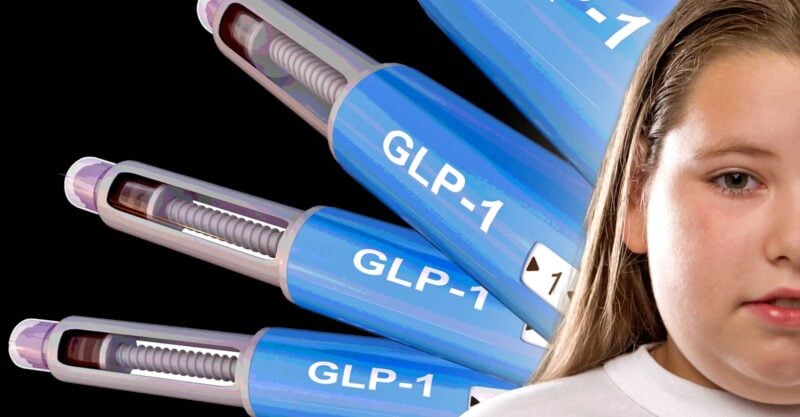


The number of American children being prescribed GLP-1 weight-loss drugs has surged dramatically over the past few years, fueling debate over whether doctors are medicating childhood obesity instead of preventing it, according to new research.
A recent study led by researchers at NYU Langone Health found prescriptions of Saxenda, Wegovy and Zepbound for children ages 8 to 11 rose 310-fold from 0.03% in 2019 to 9.3% in 2026.
Researchers said 20,282 children in that age group were prescribed the drugs in 7.5 years — still a small fraction of the more than 3.5 million children studied, but a fast-accelerating one.
The U.S. Food and Drug Administration (FDA) has not approved GLP-1 drugs for children under 12, but doctors prescribe them off-label for extreme cases.
We ‘need more long-term data in children,’ physician says
Babak J. Orandi, M.D., Ph.D., the study’s lead investigator and an obesity medicine specialist at NYU Grossman School of Medicine, said the research offers the first national look at how GLP-1 drugs are being used in young children amid the broader obesity epidemic.
Roughly 20% of U.S. children are obese, he said, and that underlying trend is what worries him most.
“My biggest concern is upstream of any medication: Nearly 1 in 5 children this age has obesity, and that’s what’s really driving this,” Orandi told The Defender.
He added:
“Medication can help an individual child, but it doesn’t address why so many children are developing severe obesity in the first place. I’d like to see real investment in the food environment kids grow up in, with less reliance on ultra-processed food, better food access and affordability, less screen time and more opportunity for physical activity, and support for families trying to build healthier routines at home.
“Treating more children with medication while leaving that environment unchanged just means we’ll keep producing more children who need treatment.”
Orandi said the drugs can be effective for treating obesity and related health problems, and that forgoing treatment carries its own long-term risks, including a higher chance of developing chronic disease later in life.
Dr. Fatima Cody Stanford, an obesity physician-scientist at Massachusetts General Hospital and Harvard Medical School, agreed.
“Children with obesity can develop Type 2 diabetes, high blood pressure, fatty liver disease, sleep apnea, orthopedic complications, and stigma-related emotional harm at a young age,” she told The Defender. “The question should not be whether children deserve access to effective treatment — it is how to ensure that treatment is thoughtful, evidence-based, individualized, and equitably available.”
Still, Stanford said more studies are required to know whether the drugs remain effective and safe over the long haul.
“These medications should be prescribed with careful screening, gradual dose escalation and ongoing follow-up,” she said. “We also need more long-term data in children, particularly regarding growth, puberty, bone health, nutritional adequacy, mental health, and outcomes after medication discontinuation.”
Multiple studies point to serious side effects
Separate research has raised additional red flags.
A study published in Clinical Nutrition identified a possible link between GLP-1 drugs and Wernicke encephalopathy, a rare but dangerous brain condition caused by a severe deficiency of thiamine, or vitamin B1.
Left untreated, the condition can cause confusion, loss of muscle coordination and abnormal eye movements, and may lead to permanent brain damage.
Researchers evaluating the FDA’s adverse event database and medical literature identified 15 cases of Wernicke encephalopathy in patients taking GLP-1 drugs, mostly semaglutide or tirzepatide — the active ingredients in Ozempic, Wegovy, Zepbound and Mounjaro.
The cases were reported at a disproportionately higher rate than with other medications, and more than half of the patients who could be tracked afterward were left with lasting neurological damage.
A South Korean study published in the Korean Journal of Family Practice found that adults who used prescription weight-loss medication reported higher rates of depression, mental health counseling and suicidal thoughts than nonusers, with the associations strongest among those who regained weight after treatment.
Researchers led by Son Ki Young, Ph.D., of Asan Medical Center in Seoul analyzed data from 27,741 adults collected between 2013 and 2022, finding that the 846 who had used weight-loss drugs in the prior year were 1.9 times more likely to report depression and 2.7 times more likely to report suicidal thoughts than nonusers.
Outside experts cautioned that the study is observational and can’t establish that the drugs caused the symptoms. They noted that the survey period largely predates widespread use of newer GLP-1 drugs in South Korea and instead reflects older appetite suppressants already linked to mood changes.
Those are just two of the latest studies. Past studies have linked GLP-1 drugs to a host of serious conditions, including sudden death, stroke, suicidal ideation, vision loss, malnutrition and vitamin deficiency, cancer and tooth decay.
Novo Nordisk defends approved use
A spokesperson for Novo Nordisk, the Danish healthcare company known globally for making diabetes and obesity treatments — including Ozempic and Wegovy — said the drugs are not fully approved for children and should be taken with caution.
The spokesperson told The Defender that Wegovy is FDA-approved, alongside diet and exercise, for adolescents 12 and older with obesity, based on the STEP TEENS trial. However, Ozempic’s safety and efficacy haven’t been established in children.
“No GLP-1 is currently FDA-approved for weight management in children under the age of 12,” the spokesperson said. “Any use in this age group would be considered off-label, and Novo Nordisk does not promote off-label use of its medicines.”
This doesn’t stop doctors from prescribing GLP-1 drugs for younger children, Orandi said.
“Off-label prescribing is a routine, well-established part of pediatric medicine, not unique to this drug class, and it’s typically how treatment advances for younger children ahead of a completed approval process,” he said.
The Novo spokesperson said obesity affects more than 1 billion people worldwide, including 160 million children and adolescents ages 5 to 19 as of 2022, and that some teens see little benefit from diet and exercise alone.
“Adolescence is a time when bodies are developing, making managing obesity critical,” the spokesperson said. “For some teens, diet and exercise have little or no effect, and a more tailored weight management approach is needed to help support long-term health.”
However, treatments for children should be taken carefully, the spokesperson said.
“For youths considering GLP-1s, treatment decisions should be made in consultation with a physician, together with the adolescent patient and their caregiver. A physician can determine whether treatment is appropriate based on the individual patient’s needs and overall benefit-risk assessment.”
The Defender is 100% reader-supported. No corporate sponsors. No paywalls. Our writers and editors rely on you to fund stories like this that mainstream media won’t write. 

This article was funded by critical thinkers like you.
Financial ties to AAP prompt guideline scrutiny
In 2023, the American Academy of Pediatrics (AAP) issued clinical guidelines for treating childhood obesity, recommending physicians offer weight-loss drugs and surgery to obese children.
The AAP said its internal vetting process for the guidelines turned up no evidence of bias. However, a BMJ investigation in 2025 called that claim into question.
Analyzing data from the government’s Open Payments database, BMJ researchers found more than a third of the doctors on the AAP’s guidelines and systematic review committee had taken payments from GLP-1 drugmakers — 10 of 27 members, with six showing no payments and data unavailable for the rest.
Most payments were small, largely covering meals and travel, but the researchers said size doesn’t determine influence.
“Small gifts build relationships and leave recipients with more favourable views towards the gift giver,” they wrote, noting that physicians who accept them are often less likely to see themselves as biased — “thus allowing companies to grow and preserve their influence over time.”
The ties extend beyond individual doctors to the organization itself.
Eleven GLP-1 drugmakers, including industry leaders Eli Lilly and Novo Nordisk, gave the AAP an estimated $1.9 to $2.6 million in corporate sponsorship between 2012 and 2024.
The BMJ called that figure conservative, considering that data for 2019 were missing entirely. An archived version of the AAP’s website once promised corporate donors “special access to AAP leadership,” invitations to donor receptions and “special communication opportunities” at an annual summit at AAP headquarters.
Open Payments data showed the reach went further still: 22% of the AAP’s national leadership collected a combined $293,400 from GLP-1 manufacturers between 2017 and 2023, mostly for food, travel and lodging.
The BMJ researchers concluded the guidelines relied on limited evidence — including no published pediatric trials for children under 12 — and wrote that the findings “suggest the AAP’s childhood obesity guidelines should be interpreted with caution.”
Michelle Perro, a pediatrician and founder of GMOScience, wrote that pediatric GLP-1 prescribing has “outpaced the evidence” and called for “an immediate halt and independent reassessment of GLP-1 drug use in children.”
“The guideline that accelerated this expansion was authored by individuals with undisclosed financial relationships to the manufacturers,” she wrote. “The safety data in pediatric populations are of insufficient duration to characterize long-term risk.”
Related articles in The Defender
- Nutrition, Exercise Better Than Drugs Alone for Managing Obesity in Kids and Teens
- AAP Members With Ties to GLP-1 Drugmakers Helped Write Weight-Loss Drug Guidelines for Kids
- 19-Year-Old’s Sudden Death Linked to Popular GLP-1 Weight-Loss Drug
- Maker of Ozempic, Wegovy Failed to Report Strokes, Suicidal Ideation and Deaths
- Federal Court Consolidates 70+ Lawsuits Alleging Ozempic, Wegovy Caused Vision Loss
- ‘Ozempic Face’: What Is It? And What Does It Mean?