Login
Login
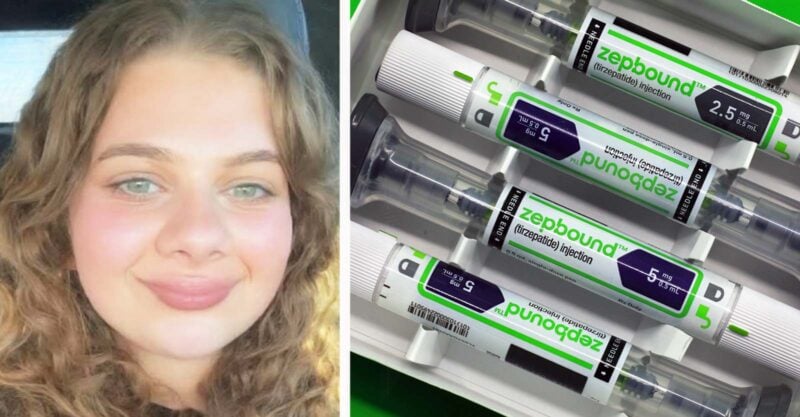


A California teenager studying in London died while on a popular GLP-1 weight loss drug, a London inquest heard.
Josephine Nasr, a 19-year-old law student at the University of East London, experienced a fatal cardiac arrhythmia. She was found dead in her dorm room on Sept. 23, 2025, just days after returning to London from her home in Southern California, according to the Daily Mail, which first reported on the death.
In the summer of 2025, a California doctor prescribed tirzepatide for Nasr, even though her body mass index classified her as overweight, not obese, according to the inquest.
An empty bottle of the medication was in Nasr’s room when she was discovered dead. Eli Lilly sells tirzepatide under the brand names Mounjaro, for Type 2 diabetes, and Zepbound, for chronic weight management.
According to evidence presented Aug. 3 at East London Coroner’s Court, Nasr spoke with her parents and sister at about 8:30 p.m. on the night of her death. She told them she had been experiencing nausea and vomiting.
Family members, who were preparing for a trip to Egypt, became concerned about her condition and encouraged her to get some fresh air. Her sister, who was particularly worried that Nasr could become dehydrated, contacted a private healthcare provider to arrange IV fluids.
When the sister later attempted to reach Nasr by phone and received no response, she contacted university security and requested a wellness check.
By the time the sister reached a security staff member, a nurse had arrived on campus to administer the IV. Security personnel accompanied the nurse to Nasr’s dorm. After receiving no response at the door, they entered the room and found Nasr lying on the bathroom floor.
Emergency services were called, but the London Ambulance Service pronounced her dead at the scene.
A post-mortem examination by pathologist and author Dr. Alan Bates found that Nasr had a congenital heart condition known as myocardial bridging, which can affect blood flow through the heart and may have contributed to the fatal arrhythmia.
Bates also told the inquest that tirzepatide can cause nausea and vomiting. Severe vomiting, he explained, can contribute to hypoglycemia, or abnormally low blood sugar, and electrolyte imbalance.
That type of imbalance can trigger an abnormal heart rhythm, he said, and Nasr’s underlying heart condition may have increased the risk.
“She was an otherwise healthy young woman,” Bates said.
Coroner Graeme Irvine concluded that Nasr’s death was due both to her congenital heart condition and her tirzepatide prescription.

Pediatrician: Nasr’s death was a ‘preventable tragedy’
Dr. Michelle Perro, co-author of “What’s Making Our Children Sick?” — who has long raised concerns about pediatric drug use — called Nasr’s death a “preventable tragedy.” Nasr’s California doctor prescribed her a drug with known side effects to presumably treat a symptom without addressing the root cause.
Those side effects “set off a fatal chain reaction,” Perro told The Defender. “That’s the nightmare the GLP-1 boom was always risking, and it should be a wake-up call: These drugs are not a good idea for young people.”
As a pediatrician, Perro said she was “so alarmed” that weight-loss drugs were greenlit for kids that she wrote a handout warning parents about their risks.
The handout cites potential negative health effects in young people, including gastrointestinal issues, pancreatitis, gallbladder disease, thyroid tumors, nutritional deficiencies, mental health risks and unknown long-term effects — because long-term studies have yet to be done.
People taking GLP-1 medications have also reported that the drugs led to dental decay and anorexia.
GLP-1 prescriptions for kids skyrocket after AAP recommends them
About 20% of U.S. children and adolescents are chronically obese, according to the Centers for Disease Control and Prevention (CDC).
In December 2020, the U.S. Food and Drug Administration (FDA) approved the GLP-1 drug Saxenda to treat obesity in kids 12 and older. In 2022, the agency approved Wegovy for the same age group.
Weeks later, in January 2023, the American Academy of Pediatrics (AAP) issued new guidelines on childhood obesity recommending early diagnosis and aggressive treatment, including weight-loss drugs for obese children as young as 8 and consultation for bariatric surgery for children with severe obesity as young as age 13.
In 2025, a BMJ investigation uncovered undisclosed financial ties between the AAP and major drug companies behind the blockbuster weight-loss medications. The BMJ analysis found financial ties to industry among AAP members — including those who wrote the guidelines, those who reviewed them and the organization overall.
Prescribing the drugs to children under age 12 is an off-label use of the drugs recommended by AAP.
Not long after the AAP issued its recommendations, GLP-1 drug prescriptions for those age groups skyrocketed — they jumped 38% in the first year following the change. MedPage Today reported that prescriptions for two of the drugs jumped 700%.


This article was funded by critical thinkers like you.
The Defender is 100% reader-supported. No corporate sponsors. No paywalls. Our writers and editors rely on you to fund stories like this that mainstream media won’t write.
More than 150 deaths linked to GLP-1 drugs
Over 150 deaths in the U.K. have been linked to GLP-1 injections, according to data from the U.K. Medicines and Healthcare products Regulatory Agency (MHRA), which collects information about spontaneous suspected adverse drug reactions.
The BMJ reported the breakdown of those deaths by medication name: As of July 7:
- 98 fatal outcomes were reported following tirzepatide.
- At least 37 deaths were associated with semaglutide, made by Novo Nordisk and sold under the brand Ozempic/Wegovy.
- 19 deaths were linked to liraglutide, sold under the brand name Victoza, also made by Novo Nordisk.
However, The BMJ referred to figures elsewhere on the MHRA website suggesting the true number of fatalities is higher, but did not provide the MHRA webpage link showing the higher figures.
In the U.S., the FDA recently warned Novo Nordisk that it failed to properly disclose adverse event information, including death, for its weight-loss drugs.
In a March 5 warning letter, the FDA cited five cases in which patients taking Ozempic and Wegovy suffered a stroke, contemplated suicide or died — all of which Novo Nordisk failed to report properly.
On June 4, Forbes reported that roughly 12% of U.S. adults report using GLP-1 medications for weight loss. By 2030, nearly 50% of adults in the U.S. are predicted to be obese.
The global market for anti-obesity drugs is forecast to reach $50 billion by 2030.
Related articles in The Defender
- Nutrition, Exercise Better Than Drugs Alone for Managing Obesity in Kids and Teens
- ‘Their Rubber Stamp Is Reckless’: After AAP Endorses Weight-Loss Drugs for Kids, Prescriptions Soar
- Weight-loss Drug Prescriptions for Kids and Teens Soar Despite No Safety Data
- AAP Members With Ties to GLP-1 Drugmakers Helped Write Weight-Loss Drug Guidelines for Kids
- Weight Loss Drugs for Kids: A ‘Minefield of Health and Emotional Problems,’ Researchers Warn