Login
Login
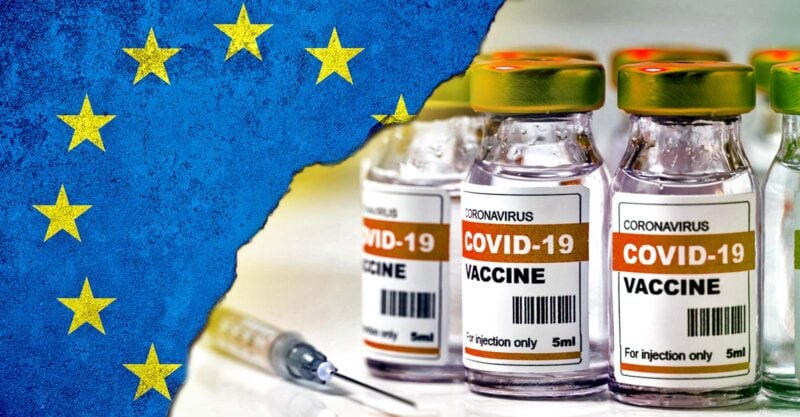


A military officer failed to convince Europe’s highest court that Italy’s COVID-19 vaccine mandate for military members discriminated against military members because the mandate didn’t also apply to civilian employees.
The officer, identified by the initials B.G., served in Italy’s Army Engineer Corps. He was suspended without pay in January 2022 for refusing to comply with the mandate.
Earlier this month, the European Court of Justice ruled that opposition to vaccine mandates based on policy disagreement, rather than sincerely held belief, is not protected under European Union (EU) anti-discrimination law.
B.G. challenged his suspension, arguing that regular COVID-19 tests were an acceptable alternative to compulsory vaccination and that workers in other sectors were given this choice.
Italy’s Constitutional Court ruled against him, finding that the military vaccine mandate was an appropriate measure for military personnel.
On appeal, Italy’s Council of State, the country’s highest administrative appeals court, asked the European Court of Justice to clarify several legal questions.
The European Court of Justice found that B.G. did not demonstrate a sincerely held religious, spiritual or philosophical belief protected under EU law.
“Judges found BG was not expressing a protected religious, philosophical or spiritual belief but challenging Italy’s public health policy,” Courthouse News reported. His objections “focused on vaccine effectiveness, possible side effects, testing as an alternative and the way the mandate was implemented.”
In its ruling, the European Court of Justice wrote that B.G. “does not seek to oppose the compulsory vaccination at issue in the main proceedings on the basis of his own beliefs, but to challenge, as such, the choices made by the Italian authorities in the field of public health.”
Those objections “constitute opinions” on public health, and as such, are not protected. Aside from sincerely held beliefs, EU law also protects against discrimination based on age, disability or sexual orientation.
Dutch attorney Meike Terhorst called the ruling “unfortunate and disappointing,” as the legal protection of personal beliefs in the EU “appears to be an empty shell.”
Ruling not ‘a blank cheque to impose medical requirements’
Legal experts disagree on the potential ramifications of the European Court of Justice’s ruling.
According to Defence Matters, while the case originated from COVID-19-era legislation, its relevance extends beyond the pandemic to “the wider question of how far armed forces may impose health and readiness obligations on personnel, and how EU law distinguishes military employment from civilian work.”
More broadly though, the ruling falls short of a general endorsement of vaccine mandates, as the European Court of Justice “did not decide whether all compulsory vaccination rules are valid in every setting,” Defence Matters reported.
According to Defence Matters, the ruling still “limits the use of ‘belief’ as a legal basis for challenging workplace vaccination rules.” This may reduce the scope for future “anti-discrimination claims based on personal opposition to vaccination.”
“That distinction may matter in future disputes where employees seek to frame objections to health or safety rules as protected convictions,” Defence Matters reported.
Defence Matters said the European Court of Justice’s decision does not give EU member states “unlimited discretion.” Military personnel may still challenge national mandates based on “domestic constitutional law, human rights law, administrative law or other areas of EU law where applicable.”
According to Defence Matters, the ruling is likely to affect military service members throughout the EU the most, as “it confirms that military status may justify different employment obligations.”
“Armed forces regularly apply medical, fitness, vaccination and deployment rules that are stricter than those imposed on civilian personnel. These rules may affect the ability of personnel to serve, deploy or remain in particular roles,” Defence Matters reported.
Paolo Vargiu, Ph.D., associate professor of law at the U.K.’s University of Leicester, told Courthouse News the ruling does not give governments “a blank cheque to impose medical requirements” and does not limit protected beliefs just to religion but leaves open the boundary between protected beliefs and challenges to policy.
Vargiu said this means that future legal challenges may emerge over topics ranging from medical autonomy to climate commitments and other workplace requirements.
But Terhorst said the European Court of Justice’s ruling “undermines any exemption from compulsory vaccination based on belief” and that it ignored Article 3 of the Charter of Fundamental Rights of the European Union, which states that any medical intervention must be based on informed consent.
“To say no to a medical intervention is the most fundamental human right — the right to decide on your own body,” Terhorst said.


Pending case argues vaccine mandates violate informed consent
Terhorst predicted that “the legal discussion on compulsory vaccination” in the EU “will continue,” as the European Court of Justice has not yet reviewed a challenge to such mandates in relation to European human rights law.
Italian attorney Alessandro Fusillo told The Defender that another case pending before the European Court of Justice may provide answers to some of the unresolved legal questions.
Case C-386/25 also focuses on alleged discrimination against military service members who were subject to Italy’s COVID-19 vaccine mandate. However, the case challenges the mandate, in part, on a claim that service members were denied informed consent.
The European Court of Justice was asked to determine whether Italy’s vaccine mandate is “uninformed because of the lack of indications or information necessary to ensure awareness of the citizen.”
This lack of informed consent could violate several articles of the Charter of Fundamental Rights of the European Union — including Article 3 — and several other EU and Council of Europe laws and resolutions.
“This request is way more ample and may force the Court to abandon the limited consideration of religious and philosophical questions, since it is strictly connected with the right to informed consent,” Fusillo said.
Related articles in The Defender
- Worker Wins Religious Exemption From AI — Could It Boost the Case for Vaccine Exemptions?
- EU Broke Law By Refusing to Turn Over Text Messages Related to Pfizer COVID Vaccine Contracts
- Government Officials Pressured EU Regulators to Rush Authorization of Pfizer Vaccine, Leaked Documents Reveal
- Breaking: Congress Members Urge DOJ to Investigate 4 States That Prohibit Religious Exemptions
- ‘Death Sentence for Millions’: WHO, EU Launch New Global Vaccine Passport Initiative