Login
Login
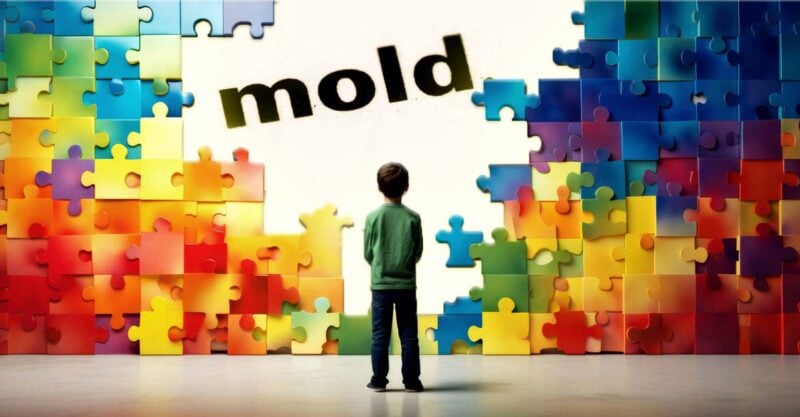


Could mold exposure be partially to blame for the steady rise in autism diagnoses among U.S. children in recent years?
Relatively few studies have examined a possible connection. But several mainstream autism websites suggest there’s evidence that when some children and pregnant women are exposed to mold, the exposure may contribute to the onset of autism. Mold exposure may also cause autism-like symptoms, or exacerbate the condition in some children.
No singular factor causes autism, according to Lindsey Wells, a naturopathic physician. However, mold and mycotoxins — toxic compounds produced naturally by certain types of mold — are “one potential environmental contributor that should be considered when evaluating a child with autism.”
Mold exposure can cause “the dysregulation of key systems of the body, including the immune system, the microbiome and the ability to utilize Vitamin D properly,” biologist Christina Parks, Ph.D., told The Defender.
Mold exposure and contamination should be considered part of the “total load” that “could push children over the edge of the toxic tipping point, leading to neuroinflammation, neurodegeneration and an autism diagnosis,” said Brian Hooker, Ph.D., chief scientific officer for Children’s Health Defense (CHD).
Total load theory argues that the onset of autism is most likely driven by a complex combination of biological, environmental, immunologic, neurological, psychological and toxicological load factors.
The evidence of a mold-autism connection is also supported by testimonials of some parents, who say mold exposure resulted in autism symptoms in their children.
Experts — and several published studies — suggest the probability is high enough to warrant further research. They highlight the importance of raising awareness among parents and pregnant women about the dangers of mold exposure.
Several studies have suggested a possible mold-autism link
The authors of a 2016 study published in Toxins screened 54 children for 87 urinary mycotoxins. They found “no positive association” between mycotoxin presence and autism because they couldn’t identify the presence of mycotoxins in any of the autistic children in the sample.
But Hooker called the study “underpowered.”
“The studies I’ve seen that dispute a mold-autism link are generally designed to not find what the authors claim they’re looking for,” Hooker said.
Parks suggested the 2016 study might be an outlier.
“Much of the research on the mold-autism link looks at the effect of mold on the immune system, microbiome and inflammatory signaling pathways. The research shows that mold exposure can result in serious dysregulation of these systems, theoretically functioning as a trigger for the onset of autism or for worsening symptoms,” she said.
A systematic review published in 2021 in the journal Current Molecular Pharmacology analyzed 11 studies examining a possible connection between mycotoxin exposure and autism. The review found that in most of the studies, “possible links” were found between mycotoxins and autism.
A 2017 study published in the journal Toxins examined 172 autistic children and 61 non-autistic children in Italy, finding “significant differences” in mycotoxin levels in the autistic children. The study also found a higher level of cytokines — proteins that help control inflammation — and antibodies against wheat and gluten.
Medical physicist Alex Zaharakis, CEO of Autism is Biomedical, said the outcomes of these studies match his own observations. He said he’s seen that “elevated mycotoxins impact the apparent cognitive state and functionality of the individual.”
“I would expect there to be a relationship between mycotoxin exposure and the severity of autism in some individuals based on my experience with testing and working with many families,” Zaharakis said.
Mold exposure can also be associated with a range of symptoms that may overlap with symptoms or co-occurring conditions seen in people with autism, Wells said. These symptoms can range from cognitive difficulties to sleep disturbances, gastrointestinal symptoms and behavioral or mood disorders.
Some published studies have identified a link between mold and symptoms commonly linked to autism. A 2020 study published in Brain, Behavior, and Immunity found that mold exposure was linked to “cognitive and emotional dysfunction.”
And a 1987 study published in Life Sciences found that several tremor-causing mold toxins interfere with the normal function of brain receptors, contributing to the excessive nerve activity that causes tremors and seizures.
Mold can impact children and result in autism through multiple pathways
According to Parks, “several converging pathways” of mold exposure may lead to the onset of symptoms that are common among autistic people.
These include immune system activation, which can lead to inflammation, and mast cell activation — where mast cells, a key component of the immune system, release histamine and other chemicals too easily or too often. This can result in brain fog and digestive problems.
Mold exposure may also cause a breakdown of the blood-brain barrier or the gut microbiome. It can also cause mitochondrial dysfunction, a condition that occurs when mitochondria — the cells that produce the body’s energy — operate at lower capacity.
Wells said that when she evaluates children with autism, she assesses several interconnected systems that commonly contribute to symptom burden. These include gastrointestinal health, mitochondrial function, metabolism, immune regulation, infections and environmental exposures.
“Mold has the potential to influence each of these systems,” Wells said. She noted that mold exposure has been associated with impaired immune function — and chronic immune activation may contribute to neuroinflammation. It’s also associated with impaired immune function, which may increase susceptibility to infections,
In an interview with CHD.TV last year, physician and researcher Dr. Christian Bogner said one way mold may affect children with autism is through the gastrointestinal pathway. “Up to 90% of children with autism have gastrointestinal problems,” Bogner said.
“We consistently find severe overgrowth of pathogenic bacteria-producing toxins that create intestinal permeability,” Bogner said. As a result, “the mold toxins that should have been eliminated begin leaking into the bloodstream.”
Mold exposure at home, in food can affect kids
Hooker said that a common site of exposure to mold is the home, particularly in damp or dark environments.
“The two cases of autism where the children were unvaccinated and not exposed to acetaminophen, that I know of personally, involve mold toxicity and one led to a legal settlement with the owner of the building the individual occupied,” Hooker said.
In a 2023 interview with CHD.TV, Elise Pugliese said that hidden aspergillus mold toxicity in her home affected her children even though they were unvaccinated. It especially affected her son Levi, who developed severe autistic-like symptoms, including speech delays, vocal tics and developmental regression.
Pugliese said that after a series of incorrect diagnoses, tests showed that Levi had aspergillus niger in his body, brought on by contamination in her family’s home. His condition improved significantly after the family relocated and paid closer attention to potential contaminants in their new home.
Food is another possible source of mold exposure. Zaharakis said that “dietary exposure is another potential contributor of certain mycotoxins, as low concentrations can occur naturally in certain grains, nuts, spices, coffee, dried fruits and other foods.”
In his CHD.TV interview last year, Bogner said the U.S., India and China have some of the worst mold contamination of crops. Wheat, corn, soy and alfalfa crops have all “been shown to contain mold toxins,” he said.
“You almost never have U.S. crops completely free of mold toxins,” he said. He noted that exposure to mold spores in food may cause inflammation, chronic inflammation, immunosuppression or cancer.
Zaharakis noted that many crops are also sprayed with glyphosate, a weedkiller commonly linked to cancer that studies have shown can dysregulate gut function. “Glyphosate … kills bacteria in the microbiome via the shikimate pathway, potentially weakening the gut and increasing susceptibility to mold contamination.”
Wells said that while food may contribute to mold exposure, most chronic exposure to mold and mycotoxins comes from water-damaged buildings. This is a greater concern because children may be continuously exposed through the air they breathe and the environments where they spend the majority of their time.
Pregnant women and their fetuses also at risk from mold exposure
Experts noted that pregnant women and their fetuses are also at risk from mold exposure. Parks said exposure during pregnancy can affect the fetus because it often results in chronic immune activation in the mother
A study published last year in the journal Toxins that evaluated neonatal blood samples found that nearly 87% of newborns had detectable levels of at least one mycotoxin.
Wells said the finding was important because it “demonstrates that mycotoxin exposure is not only a concern after birth, as babies enter the world already carrying an environmental toxic burden.”
She added:
“We once thought that babies developing in utero were largely protected from environmental exposures. We now have mounting evidence that a mother’s environment can directly influence the developing fetus and the future health outcomes of that child.
“Mycotoxin exposure during pregnancy has been associated with adverse pregnancy and birth outcomes, including miscarriage, stillbirth, premature birth, impaired fetal growth, low birth weight and neonatal jaundice.”
According to Zaharakis, chronic antibiotic use by pregnant women — and by young children — can also amplify the effects of toxic insults, including mold. Children born via cesarean section also have the potential to have incomplete microbiomes from their delivery method, he said.
But even when faced with the same levels of exposure, not all children will face the same degree of risk, according to Parks.
“Everyone’s genetic profile and susceptibility factors are different, so mold exposure might trigger autism spectrum symptoms in one person and autoimmune symptoms or food sensitivities in another,” Parks said.
During his CHD.TV interview, Bogner noted that even with exposure to the same contaminated foods, not all children will be affected by mold exposure. “There has to be something more.” That something more is “genetic susceptibility — the inability to detoxify these toxins properly,” he said.
Wells agreed. “Genetics influence how efficiently a child detoxifies and eliminates environmental toxins, regulates inflammation, responds to infections, produces cellular energy, and protects the brain from oxidative stress.”
Zaharakis said mold exposure may also exacerbate the already existing symptoms of autism. “Individuals with impaired microbiome balance or altered immune function may be more susceptible to fungal overgrowth, colonization or the biological effects of mycotoxins,” he said.
Wells has observed this in her practice. “Mold and mycotoxins can affect many of the same systems that are already vulnerable in children with autism,” she said, because “their clinical picture is often more complex.” As a result, “their symptoms can be more severe, and it can take longer to see meaningful improvement.”
The Defender is 100% reader-supported. No corporate sponsors. No paywalls. Our writers and editors rely on you to fund stories like this that mainstream media won’t write. 

This article was funded by critical thinkers like you.
Experts recommend regular testing, call for more mold-autism research
Several studies, including the 2017 Toxins study and the 2021 Current Molecular Pharmacology study, called for more research into a possible link between mold and autism.
Wells called for “large, prospective studies that evaluate environmental exposures before conception, during pregnancy and throughout early childhood,” to learn how the timing, severity and duration of exposures may influence neurodevelopment.
She also called for research into why some children are more susceptible. “Identifying genetic differences, biomarkers and underlying biological vulnerabilities that influence a child’s response to mold and mycotoxins could help us identify children who are most at risk,” she said.
Zaharakis suggested that mold and mycotoxins should be studied as a contributing burden to the onset of autism. He said people with autism “are susceptible to multiple issues because their “immunity and detoxification schemes are compromised.”
Last year, U.S. Health Secretary Robert F. Kennedy Jr. announced that the U.S. Department of Health and Human Services would launch studies to determine all possible causes of autism.
Experts suggested that parents regularly test their children and their homes. Wells recommended starting with urinary mycotoxin testing to evaluate whether a child has evidence of mycotoxin exposure.
Bogner said all the children he has tested in his practice had mold toxins in their urine.
Evaluating the child’s environment and looking for signs of current or previous water damage in the home is equally important, Wells said. “For families concerned about mold exposure, I often recommend an ERMI test as a first-line assessment of the home, particularly in the areas where the child spends the most time.”
Related articles in The Defender
- What’s Behind Skyrocketing Autism Rates — Better Diagnostics? Or an Avalanche of Toxins?
- 1 in 31 Kids Had Autism in 2022 — Up From 1 in 36 in 2020
- ‘Deceptively Toxic’: How Regulators, Chemical Companies Get Away With Calling Glyphosate ‘Safe’
- Glyphosate Poses ‘Profound and Permanent’ Risks to Kids: Children’s Health Defense Urges U.S. Supreme Court to Rule Against Bayer
- Tylenol, FDA Knew About Autism Risk For Years, Newly Surfaced Emails Show
- ‘Uncompromising and Relentless’: HHS to Study All Possible Causes of Autism, Including Vaccines