

 Login
Login
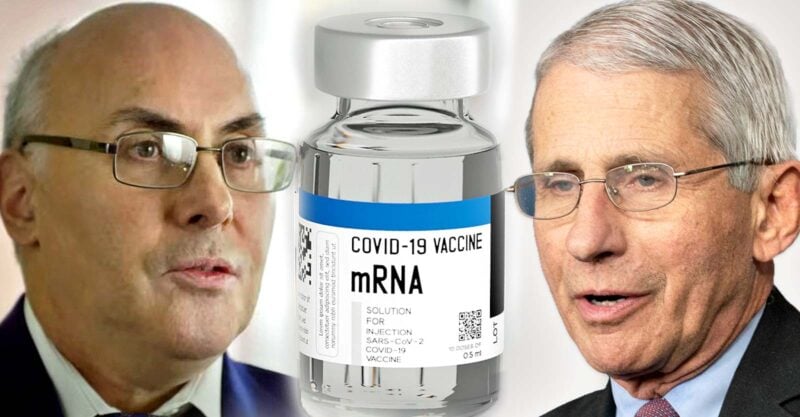


It was only last year that Nobel laureate Drew Weissman spoke with complete confidence about the mRNA technology he helped create.
When asked whether the genetic material or lipid nanoparticles (LNPs) used in COVID-19 vaccines could persist in the body or spread far beyond the injection site, his answer was unequivocal.
“It is absolutely impossible … The RNA is gone in days,” said Weissman, who shared the 2023 Nobel Prize in Medicine for co-inventing the technology.
But four years earlier, behind closed doors, his message was very different.
Newly released documents made public by Sen. Rand Paul (R-Ky.) reveal that Weissman privately alerted Dr. Anthony Fauci to some concerning findings from his own laboratory.
Those findings triggered discussions among some of the National Institutes of Health’s (NIH) most senior vaccine scientists before eventually finding their way into Fauci’s personal diary.

Still emerging technology
When the pandemic hit, mRNA vaccines were still an emerging technology. Just two years prior, Weissman and his colleagues published a review in Nature Reviews Drug Discovery.
While praising the technology’s potential, they highlighted unresolved hurdles — including RNA instability, unwanted immune reactions and the challenge of getting genetic material into the right cells.
Though initial animal studies showed promise, early human trials yielded modest results, leading the authors to urge “cautious expectations.”
Significant questions also remained around the safety of mRNA vaccines during pregnancy, as pregnant women were excluded from the pivotal Pfizer and Moderna trials.
Regulators had to rely on animal reproductive data while human data accumulated post-rollout.
It was against this backdrop that Weissman reached out directly to Fauci.
Fauci alerted to new data
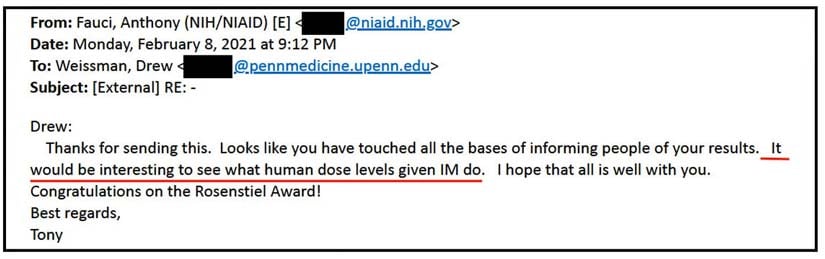
On Feb. 8, 2021, Weissman emailed Fauci.
“I wanted to alert you to some new data we generated.”
Weissman reported that when injected into pregnant mice, mRNA-LNPs crossed the placenta and entered the fetus, generating viral proteins and triggering an immune response in the amniotic fluid.
In non-pregnant mice, the LNPs accumulated in the uterus and ovaries.
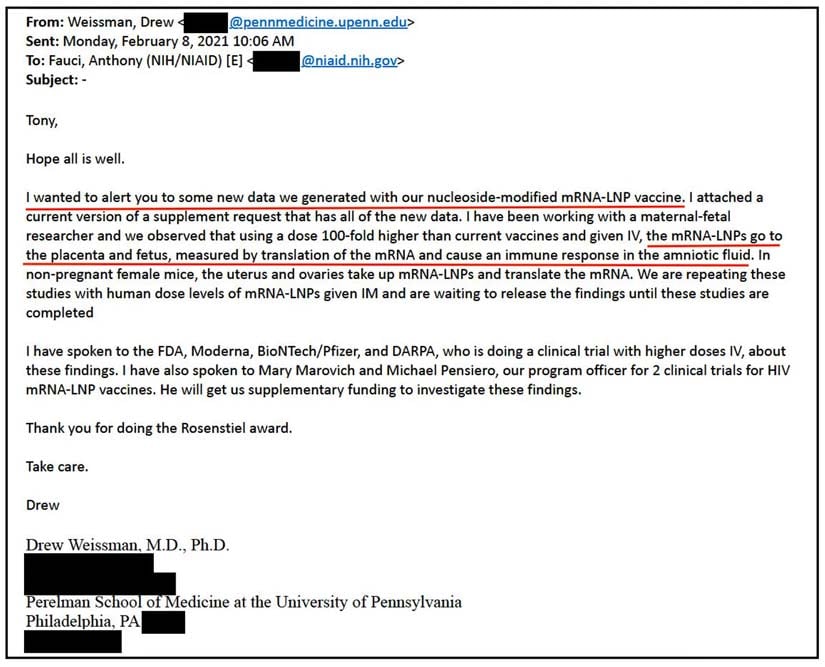
While these initial experiments used intravenous (IV) delivery at doses roughly 100 times higher than a standard vaccine, they aligned with broader research.
As early as 2013, French scientists had shown that LNPs could accumulate in organs such as the ovaries, highlighting the need to understand how different delivery methods behave inside the body.
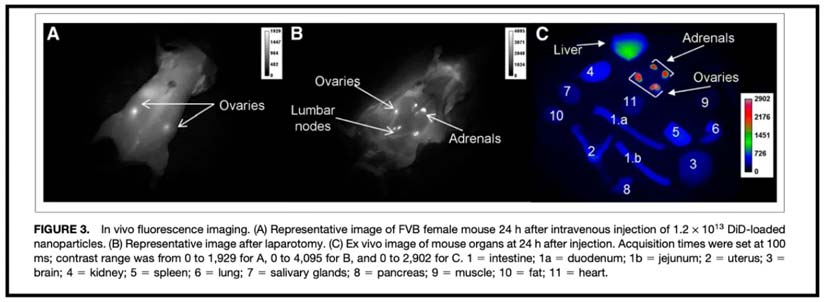
This was also reflected in regulatory documents for COVID-19 vaccine pre-clinical studies, which showed that mRNA LNPs accumulated in organs, including the ovaries.
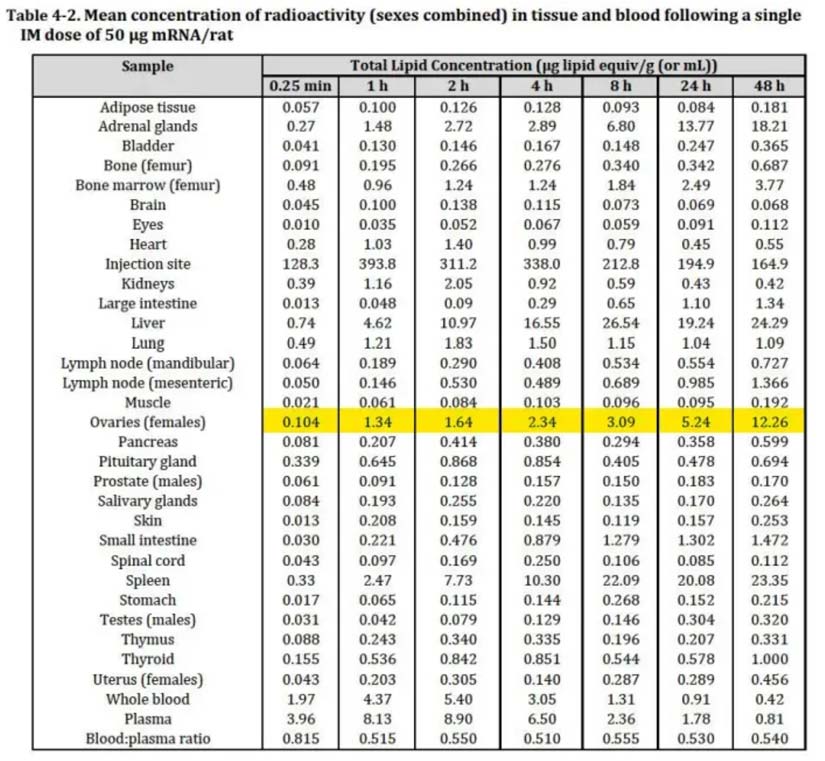
Weissman wanted to test a more clinically relevant scenario, so he planned to repeat the study using intramuscular (IM) injections, matching standard vaccination practices.
“We are waiting to release the findings until these studies are completed,” Weissman told Fauci, noting he had already alerted the U.S. Food and Drug Administration (FDA), Moderna, BioNTech/Pfizer and DARPA.
Fauci replied that evening.
“It would be interesting to see what human dose levels given IM do.”
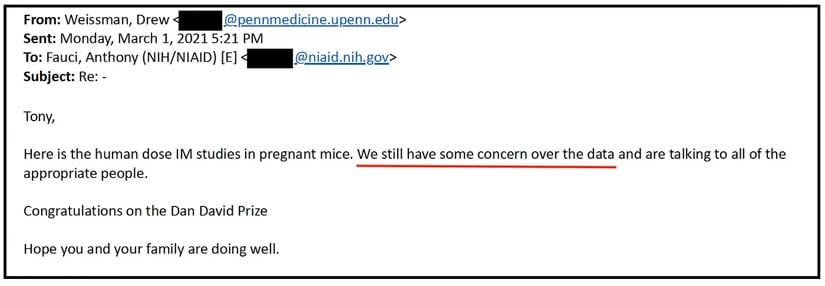
Three weeks later, on March 1, 2021, Weissman emailed back with a confidential report attached.
“Here is the human dose IM studies in pregnant mice. We still have some concern over the data,” he wrote.
Within the hour, Fauci forwarded the report to Dr. John Mascola, director of the NIH Vaccine Research Center, writing, “Let us discuss.”
Mascola quickly circulated the report to his senior leadership team for review.
Dismissed by officials
Despite Weissman’s status as a leading mRNA pioneer, NIH officials swiftly dismissed his concerns. Karin Bok, senior adviser for vaccine development at the NIH, dismissed the study almost immediately.
“I have no comments or concerns,” she wrote, claiming the results were standard for mouse studies and that it made sense for mRNA to travel beyond the injection site, “including placenta.”
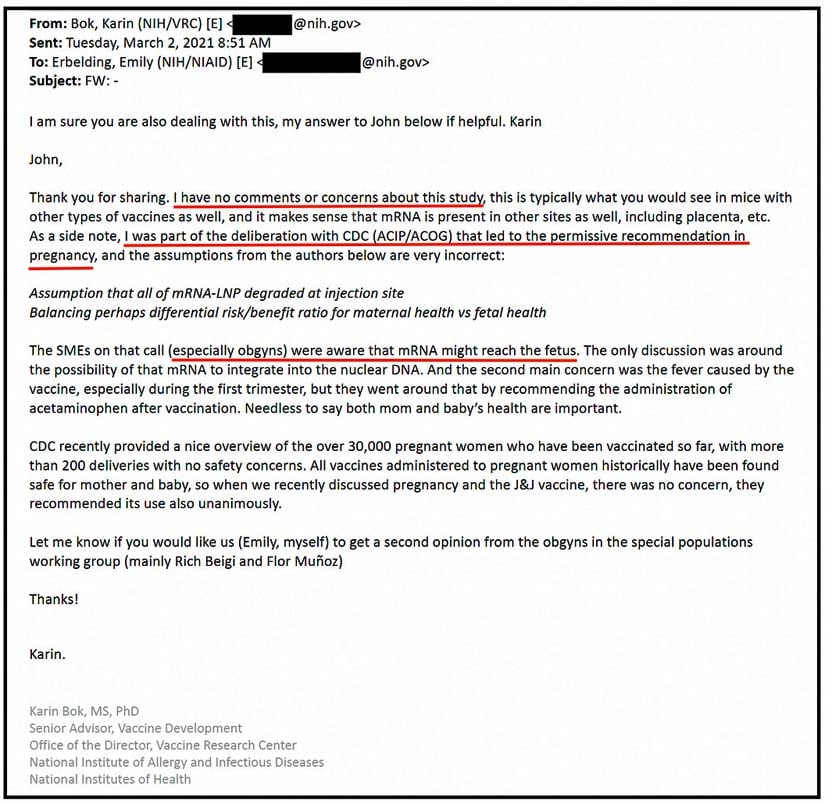
This private assessment sharply contradicted public messaging at the time, which assured the public that vaccine material remained largely at the injection site (arm).
Bok added that obstetric experts involved in developing the Centers for Disease Control and Prevention (CDC) pregnancy recommendations were already “aware that mRNA might reach the foetus.”
Dr. Emily Erbelding, director of the National Institute of Allergy and Infectious Diseases Division of Microbiology and Infectious Diseases, was similarly dismissive of Weissman’s concerns.
“I don’t know what Drew Weissman is trying to accomplish with this,” she wrote, noting that regulatory oversight rested with the FDA.
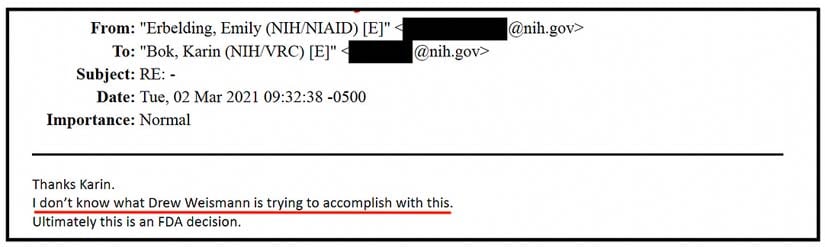
The divide was striking. One of the inventors of mRNA technology believed the findings warranted further investigation, but senior health officials saw no cause for concern.
Weissman wanted a press conference
Despite his staff’s dismissal of the data, Fauci remained uneasy — largely because Weissman was planning to hold a press conference.
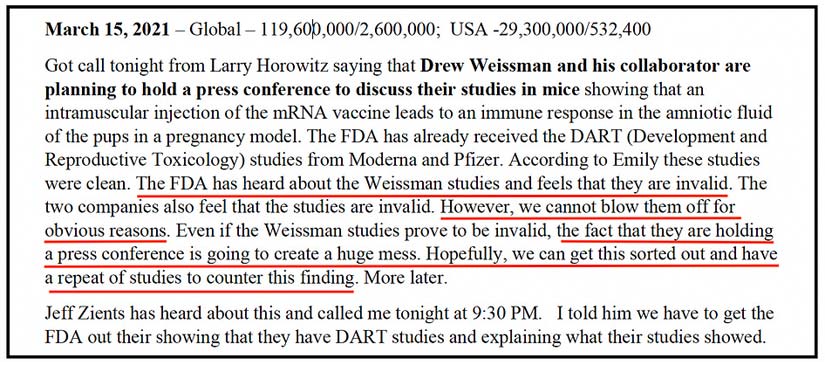
In his private diary, Fauci noted that the FDA and both vaccine manufacturers considered Weissman’s findings “invalid.”
Ordinarily, that might have ended the matter. But Fauci recognized the public relations nightmare if Weissman went public with his findings.
“We cannot blow them off for obvious reasons,” Fauci wrote. “The fact that they are holding a press conference is going to create a huge mess.”
Instead, he hoped repeat studies could be performed “to counter this finding.”
The issue quickly reached the highest levels of government. That same evening, White House COVID-19 coordinator Jeff Zients called Fauci to discuss the situation. Fauci noted that the FDA needed to publicly clarify its safety data.
After that point, the paper trail goes cold. Fauci’s diary records contain no further mention of Weissman’s findings or whether subsequent studies resolved the concerns.
What changed?
Between 2021 and 2025, Weissman’s public stance shifted dramatically.
In March 2021, after completing follow-up intramuscular studies, he explicitly told Fauci that he and his colleagues “still have some concerns over the data.”
That confidential report has never been made public, nor has any peer-reviewed paper detailing those specific follow-up results been published to my knowledge.
By September 2025, however, Weissman was expressing no such reservations.
The CDC COVID-19 vaccine workgroup chaired by Massachusetts Institute of Technology professor Retsef Levi had raised concerns about the “wide biodistribution and prolonged persistence of spike, mRNA and nano-lipid particles.”
Asked by STAT to respond, Weissman dismissed those concerns as poor science.
“It is absolutely impossible,” he said. “The RNA is gone in days … If you put a vaccine-equivalent dose, you see it in the muscle, you see it in the draining lymph node, and that’s about it.”
So, what evidence transformed Weissman’s private concerns into public certainty?
The documents released by Paul do not answer that question.
But over that same period, Weissman was awarded the Nobel Prize, and financial disclosures show BioNTech provided roughly $2.48 million to support research in his lab.
What the newly released documents do show is that during a critical juncture in the global vaccine rollout, one of mRNA’s key creators privately raised troubling laboratory findings about COVID-19 vaccines in pregnant animals.
Then, behind closed doors, senior health officials quickly brushed those concerns aside, and the public was never told.
Originally published on Maryanne Demasi’s MD Reports Substack page.
