

 Login
Login



By Daniel O’Connor
The claim that COVID-19 mRNA vaccines “stay in the arm” and disappear in hours or a day or two did not begin with a single government press release. It came from an older scientific shorthand: endogenous and naked mRNA are fragile, so they are usually short-lived.
That idea appears in foundational mRNA literature. In 2018, Norbert Pardi and Drew Weissman’s widely cited review described the field as historically limited by mRNA “instability” and inefficient in vivo delivery.
But that shorthand became misleading once COVID-19 vaccines used chemically modified mRNA packaged in lipid nanoparticles (LNPs), because those delivery systems change where the payload travels and how long it persists.
The early mRNA field already knew that LNPs do not just sit still
This is the buried lede. In 2015, Pardi and colleagues reported that intramuscular mRNA-LNP delivery could traffic systemically and produce active translation in the liver for 1-4 days, not just at the injection site.
In 2013, Alnylam scientists said a “persistent theme” in LNP design was adding biodegradability to improve biocompatibility and elimination.
In 2018, Sabnis and colleagues wrote that MC3-based LNP toxicities were associated with cytokine and complement activation.
In 2019, Moderna-linked work on intramuscular mRNA vaccines found liver and spleen lipid levels closely followed levels at the injection site.
In plain English: before COVID-19, the field already understood that LNP delivery changed the pharmacology, and with it, the safety questions. And yet this was not commonly disclosed to the medical establishment, including academic medicine. Did the research community opt to ignore the topic?
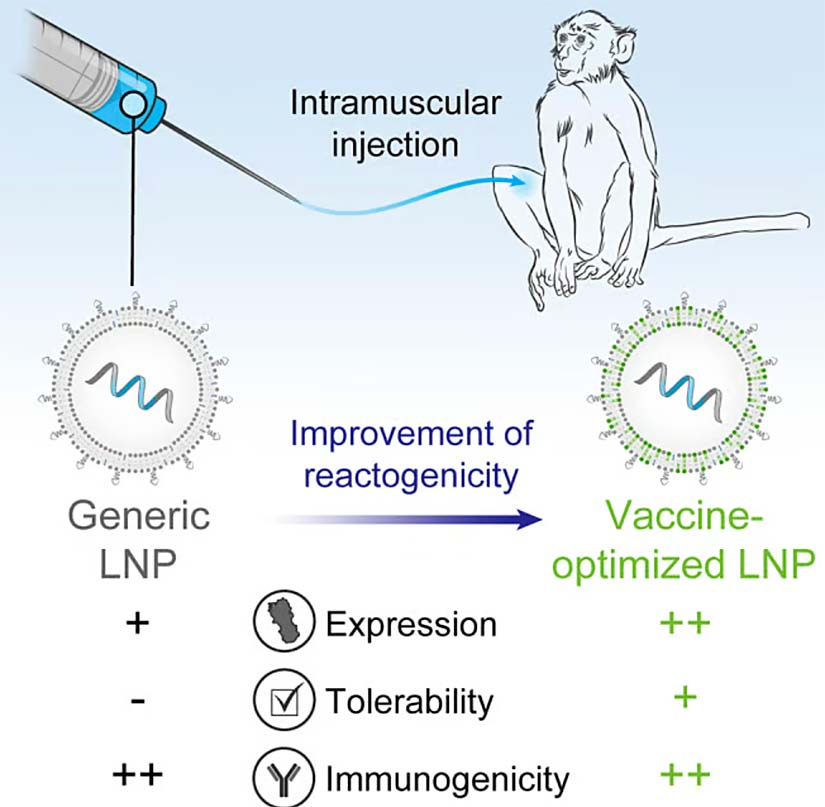
Regulators knew more than the public was told.
By the time the shots rolled out, regulators were already reviewing data that did not support a simplistic “stays local, gone instantly” story.
Australia’s Therapeutic Goods Administration (TGA) wrote in January 2021 that Pfizer/BioNTech’s platform localized antigen expression “mainly” to the injection site, liver and likely draining lymph nodes, with near-complete degradation in nine days.
The same TGA report described radiolabeled lipid nanoparticle uptake mainly in the injection site and liver, with lower distribution in the spleen, adrenal glands and ovaries, and noted clinical signs that “might indicate toxicity” at high doses in rats.
Moderna’s European assessment report was similarly revealing. EMA accepted biodistribution data from a different SM-102 LNP vaccine rather than a dedicated mRNA-1273 study. That report said the mRNA platform was distributed throughout the body, including low levels in brain, heart, lung, eye and testis, with liver distribution “evident.”
It also stated that no dedicated absorption, metabolism and excretion studies had been submitted for mRNA-1273. That is not proof of a catastrophe. But it is proof that precise public claims of near-zero biodistribution were far stronger than the product-specific evidence. Was it misrepresentation?
Meanwhile, the public got a cleaner story
Public messaging was far more categorical. In July 2021, University of Alabama at Birmingham vaccine researcher Dr. Paul Goepfert said vaccines are “quickly eliminated” and that this is “particularly true” of mRNA vaccines.
In March 2022, the U.S. Department of Veterans Affairs told patients that vaccine mRNA lasts “a day or two” and the protein only “a few weeks.”
In late 2022, Nebraska Medicine said there was “no evidence” of organ accumulation, that mRNA is degraded “within a few days,” and that vaccines mostly remain near the injection site and local lymph nodes. See also Hendaus et al.
Even the Centers for Disease Control and Prevention’s 2024 explainer still reduces the story to mRNA entering muscle cells, making spike and then being broken down and removed as waste.
That messaging was not wholly fabricated. It was quite a convenient, oversimplified average-case narrative. But it was still a narrative. It blurred the difference between naked cellular mRNA and LNP-formulated, nucleoside-modified therapeutic mRNA.
It also omitted that regulators had already seen liver distribution and platform-wide systemic trafficking. And Emergency Use Authorization or not — this needed to be disclosed. And it was not.

Later human evidence made the simplification harder to defend
Human data since rollout have pushed the field toward a more honest position. Vaccine mRNA has been reported in blood at 15 days after vaccination, full-length or trace sequences in blood up to 28 days and vaccine material in the heart up to 30 days in some recently vaccinated decedents.
A 2022 Cell paper reported that mRNA vaccination stimulated germinal centers containing vaccine mRNA and spike antigen for up to eight weeks in some cases. And recent primate imaging and 2025 reviews now openly describe biodistribution as a function of LNP formulation, route and tissue trafficking, with delivery to draining lymph nodes, liver, spleen and other sites.
Several more peer-reviewed studies and reviews now report that SARS-CoV-2 spike protein, vaccine mRNA or related immune signatures may persist far longer than the original “hours to days” narrative suggested — at least in a subset of individuals.
A 2023 study led by A.J. Krauson found SARS-CoV-2 vaccine mRNA and spike protein could persist up to 30 days post-vaccination and be detected in cardiac tissue. A 2022 study by Fertig et al. reported detectable vaccine-associated mRNA in blood circulation for at least 15 days after vaccination.
A 2023 review titled “Biodistribution of RNA Vaccines and of Their Products” summarized evidence that lipid nanoparticle-encapsulated mRNA and translated spike protein can distribute beyond the injection site into lymphatic tissue, liver, spleen and other organs.
More controversially, a 2025 Yale-associated investigation into post-vaccination syndrome reported elevated circulating spike protein in some symptomatic individuals months after vaccination, suggesting possible persistent antigen exposure in at least a subset of cases.
Meanwhile, long COVID research has demonstrated viral spike protein fragments and viral material persisting in tissues up to 14 months — and in some reports nearly two years — after infection, reinforcing broader scientific recognition that spike-related persistence biology may be more complex than originally assumed.
Importantly, persistence does not automatically prove toxicity or ongoing disease causation, but a growing cadre of physicians and scientists alike are certain lingering spike protein can lead to adverse reactions in the body.
These findings significantly complicate the early pandemic-era assurances from government agencies, academia, hospitals and media outlets that spike protein and mRNA products remain strictly localized and are rapidly eliminated within hours or days.
The cleanest verdict is this: the “gone in hours” line was never a rigorously demonstrated property of the COVID mRNA-LNP products. It was a reassurance script built by combining old mRNA dogma, platform extrapolation and pandemic-era messaging discipline.
The science has since grown more nuanced. The public deserved that nuance from the start.
Open questions and limitations
This investigation could not identify a single “patient zero” for the claim that COVID-19 mRNA vaccines remain localized and disappear from the body within hours or a day or two.
Instead, the evidence points to a distributed messaging ecosystem involving pre-COVID mRNA pioneers, pharmaceutical company scientists, regulators, hospital systems, public-health agencies and media communicators, all reinforcing the same simplified narrative.
Whether that coordination emerged organically through institutional groupthink or through more centralized pandemic-era communications discipline remains an open question.
Was there direct orchestration from senior figures such as Dr. Anthony Fauci or broader federal messaging structures? The public still does not fully know. What is increasingly clear, however, is that reassuring claims about rapid clearance and minimal biodistribution were communicated with a level of certainty that exceeded the available human evidence at the time.
Meanwhile, a growing body of peer-reviewed literature, mechanistic studies, autopsy findings and small human cohorts now conclude that vaccine-derived mRNA, spike protein or related immune signatures may persist far longer in at least a subset of individuals than originally presented.
While persistence alone does not prove toxicity or causation of disease, the implications are profound given the unprecedented scale of the global vaccination campaign — including mandates affecting healthcare workers, military personnel, students and private-sector employees.
At this point, the appropriate scientific response is not panic, but neither can it be institutional denial, minimization or bureaucratic inertia. This now represents a direct challenge to the U.S. Department of Health and Human Services under Robert F. Kennedy Jr.
The American public was told with extraordinary confidence that these products remained localized, rapidly cleared and posed little long-term biodistribution concern.
If that confidence exceeded the underlying evidence — as mounting literature reveals — then federal agencies, pharmaceutical manufacturers and the academic establishment now carry an obligation far beyond public relations management.
They carry a duty to fully investigate, with urgency and independence, the true scope, duration, biodistribution, persistence, immunological impact and long-term biological consequences of mRNA-LNP technologies across human populations.
Anything less risks transforming one of the largest public health campaigns in modern history into not only one of the greatest unresolved scientific accountability failures of the modern era, but potentially a profound legal, regulatory and ethical, if not criminal, scandal as well.
The evidence reviewed herein strongly suggests that definitive public assurances regarding biodistribution, persistence and long-term biological effects were communicated with a level of certainty that clearly exceeded the underlying evidence available at the time, even as internal regulatory documents and preclinical findings pointed to a more complex biological reality.
That discrepancy now raises serious questions surrounding regulatory conduct, informed consent, negligent misrepresentation, potential suppression or minimization of material safety information, and whether civil — or even criminal — liability could ultimately emerge if intentional deception or knowing concealment were proven in the courts.
The stakes are no longer merely scientific. They now touch the integrity of modern medicine, regulatory governance, informed consent and public trust itself.
Originally published by TrialSite News.
Daniel O’Connor is the founder and CEO of TrialSite News.
