Login
Login
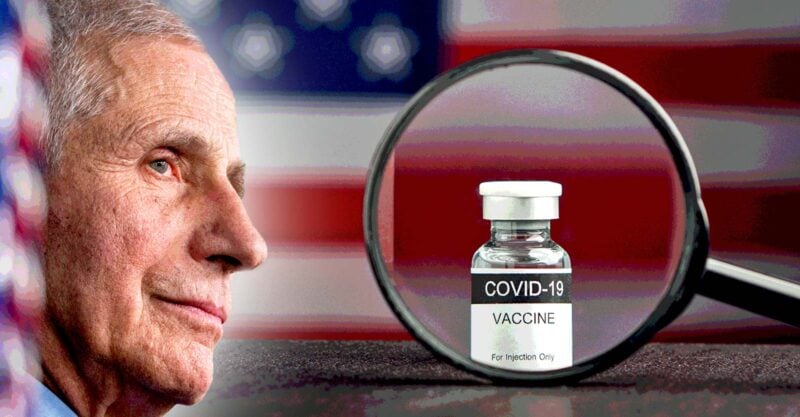


A newly released diary entry ahead of Dr. Anthony Fauci’s Wednesday congressional hearing is fueling renewed debate surrounding COVID-19 vaccine safety.
Sen. Rand Paul (R-Ky.) shared Fauci’s personal diaries that span from December 2019 through Fauci’s retirement in late 2022. The documents are expected to be a focal point when Fauci returns to Capitol Hill on Wednesday to face additional questioning about the pandemic and his role in the government’s response.
Among the most-discussed entries is a June 19, 2021, journal note describing what Fauci characterized as a “horrible roller coaster day” after diagnostic imaging, performed because he had experienced chest pain, revealed what physicians initially feared could be lung cancer.
According to his notes, multiple specialists ultimately concluded the primary confirmed finding was a pulmonary infarction — an area of damaged lung tissue caused by loss of blood flow. Doctors recommended immediate treatment.
The diary states:
“The only definite thing on the film was the pulmonary infarct. He recommended a follow-up CT in three months and begin anticoagulation immediately with Eliquis.”
Eliquis is a blood thinner manufactured by Bristol Myers Squibb and Pfizer.
Paul’s office released the records without asserting a definitive cause of the pulmonary infarction. However, some physicians and commentators have argued that the event deserves additional scrutiny.
Cardiologist Dr. Peter McCullough wrote on Substack that the episode occurred months after Fauci received Moderna’s COVID-19 vaccine and was a “direct result of a pulmonary embolism which is a known side effect of the mRNA COVID-19 vaccination.”
McCullough contends Fauci’s medical event may have been vaccine-related. He believes federal officials didn’t adequately inform the public about potential mRNA COVID-19 vaccination risks.
McCullough wrote:
“There is a profound, sick irony in a public health leader suffering a life-threatening blood clot following a novel mRNA inoculation, only to return to the podium to demand that millions of others accept the same risk profile.
“While he navigated his own recovery with the specialized care of top-tier pulmonologists and radiologists, he simultaneously championed policies that forced the populace into a state of medical compliance.”
No evidence contained in the diary itself attributes Fauci’s pulmonary infarction to vaccination, and no treating physician cited in the released records identified the Moderna vaccine as the cause.
Richard Ebright, Ph.D., a molecular biologist at Rutgers University in New Brunswick, New Jersey, said he was not convinced — though he thought it was not impossible the vaccine and the pulmonary infarction were related.
“I highly doubt it,” he told The Defender. “But I would not rule it out.”
Federal health agencies, including the Centers for Disease Control and Prevention (CDC) and the U.S. Food and Drug Administration (FDA), have acknowledged that adverse events have been associated with COVID-19 vaccines while continuing to conclude that the benefits outweighed the risks for most populations during the pandemic.
Large studies have also found that COVID-19 infection itself substantially increases the risk of blood clots.
Kennedy revives criticism of Fauci, pandemic response
U.S. Health Secretary Robert F. Kennedy Jr. weighed in following the release of Fauci’s diaries, writing on X that the pandemic “exposed a profound failure of America’s public health institutions” before addressing Fauci directly.
“Fauci lied about masks,” Kennedy said. “ He lied about social distancing. He lied about transmission. He lied about natural immunity.”
In a recent Fox News appearance, Kennedy referenced a press conference featuring Fauci getting vaccinated in December 2020.
In June 2021 — as Fauci’s pulmonary infarction went under the radar — Fauci told Americans to get vaccinated for COVID-19.
This helped create a rift between public health officials and American citizens, Kennedy stated on the segment.
“Anybody who did not give complete blind faith to these expert opinions, which we now know were lies, was marginalized, vilified, demonized, censored,” he said. “Americans no longer trust public health and they shouldn’t because they were lied to.”
The COVID era exposed a profound failure of America’s public health institutions. Fauci lied about masks. He lied about social distancing. He lied about transmission. He lied about natural immunity.
Under President Trump’s leadership, HHS is replacing secrecy with transparency,… pic.twitter.com/Cbdoibpdj6
— Secretary Kennedy (@SecKennedy) July 28, 2026
COVID vaccines consistently linked to cardiac events
A September 2021 pooled analysis combining a Singapore hospital cohort with a systematic review found that cardiac events reported after COVID-19 vaccination were uncommon but showed distinct patterns for myocarditis and acute myocardial infarction, or heart attack.
Researchers identified 30 patients from a tertiary hospital in Singapore who developed cardiac symptoms within 14 days of vaccination, including 29 cases of acute myocardial infarction and one case of myocarditis, or inflammation of the heart muscle.
The systematic review of 16 published studies added 41 myocarditis cases and six acute myocardial infarction cases, for a total of 77 patients.
The analysis found that myocarditis occurred primarily in younger men and typically developed about 72 hours after vaccination, most often following the second dose. In contrast, acute myocardial infarction cases generally involved older adults, occurred within about 24 hours of vaccination and were more commonly reported after the first dose.
Among the Singapore cohort, five patients developed heart failure, two experienced cardiogenic shock, three required mechanical ventilation and one died from cardiovascular complications.
Singapore’s Ministry of Health (MOH) formally recognized the country’s first fatality associated with the Moderna COVID-19 vaccine in February 2023. A statement from the MOH stated a 28-year-old Bangladeshi man identified only as Rajib died 21 days after receiving the vaccine, after succumbing to myocarditis, according to the state coroner.
A 2022 systematic review examining a potential link between COVID-19 vaccination and myocardial infarction found reports of heart attacks following multiple COVID-19 vaccines but concluded that existing evidence does not establish a causal relationship.
Researchers reviewed 29 studies published through May 2022, including case reports, case series, cohort studies and systematic reviews, involving vaccines from AstraZeneca, Pfizer-BioNTech, Moderna, Johnson & Johnson/Janssen, Sinopharm, Sinovac and Bharat Biotech.
Across the studies, more than half of published case reports described symptom onset within hours of vaccination, while most of the remainder occurred within 10 days.
The reported mortality among published myocardial infarction cases was 29%. They concluded that although “many studies linked MI [myocardial infarction] to COVID-19 vaccinations, no definitive association could be found.”
A December 2025 Stanford Medicine study identified a potential biological mechanism underlying cases of myocarditis seen after mRNA COVID-19 vaccination.
Researchers found that the vaccines can trigger a two-step immune response involving the cytokines CXCL10 and interferon-gamma (IFN-γ). Laboratory experiments in human cells, cardiac tissue models and mice suggested these signaling molecules promote inflammation that can injure heart muscle cells. Blocking the cytokines reduced markers of cardiac injury while largely preserving the immune response.
The study noted that vaccine-associated myocarditis is rare, occurring in approximately 1 in 140,000 people after a first mRNA vaccine dose and about 1 in 32,000 after a second dose.
The highest reported incidence was among males age 30 and younger, at roughly one case per 16,750 vaccine recipients. Symptoms, including chest pain, shortness of breath and palpitations, typically develop within one to three days after vaccination.
The Defender is 100% reader-supported. No corporate sponsors. No paywalls. Our writers and editors rely on you to fund stories like this that mainstream media won’t write. 

This article was funded by critical thinkers like you.
Pandemic response led to decline in Americans’ trust in public institutions
The release of Fauci’s diaries comes as Americans remain sharply divided over whom they trust for reliable health information.
While confidence in federal health agencies stabilized after years of decline, trust in government officials continues to erode, according to a recent KFF poll.
The survey found that 51% of adults say they have at least “a fair amount” of trust in both the CDC and the FDA to provide reliable health information — unchanged from January 2026, after years of declining confidence during and after the COVID-19 pandemic.
Trust in political leaders, however, slipped.
Confidence in state government officials fell to 38%, down from 43% six months earlier, while trust in President Donald Trump declined from 30% to 24%. Only 34% of respondents said they trusted Kennedy.
Despite growing skepticism toward government institutions, personal physicians remained the nation’s most trusted health resource. The poll found that 86% of adults said they trust their own doctor or health care provider to deliver reliable health information.
“Doctors continue to be the public’s most trusted source of reliable information on health issues,” KFF researchers wrote in the report.
Fauci hasn’t publicly responded to release of diaries
Fauci did not respond to several requests for comment from The Defender regarding the diary entries.
The former National Institute of Allergy and Infectious Diseases director who retired in 2022 after 54 years last spoke with lawmakers publicly in June 2024.
Fauci has consistently defended his handling of the pandemic. He previously testified that his recommendations reflected the best available scientific evidence at the time, even as guidance evolved with new research.
During the previous two-day hearing in 2024, Fauci told lawmakers, “I don’t recall” more than 100 times when asked about decisions he made during the early months of the outbreak.
On Wednesday, Fauci’s diaries will likely loom large during his scheduled congressional hearing as lawmakers continue investigating federal pandemic decision-making, vaccine policy and the government’s early response to COVID-19.
Related articles in The Defender
- ‘I Am the Most Famous’: Fauci Basked in Media Spotlight, Newly Released Diaries Show
- Fauci Told Colleagues to Delete COVID-Related Communications, Emails Show
- Fauci’s Replacement at NIAID a Cheerleader for Gain-of-Function Research
- Fauci’s Self-proclaimed ‘DNA of Caring’: It Was All About Fast-tracking mRNA Vaccines