Login
Login
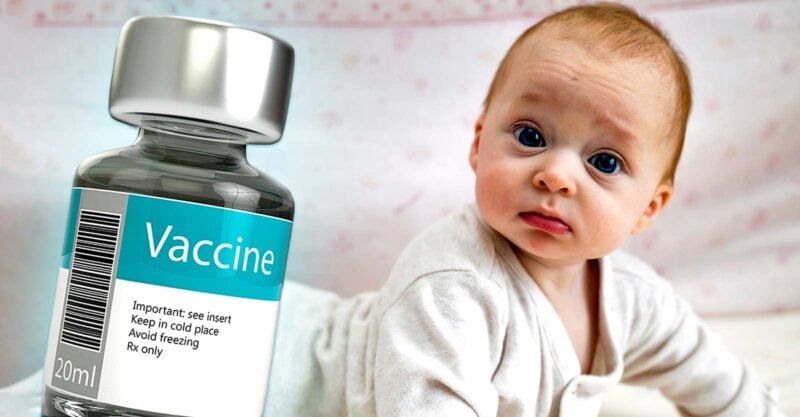


Recent measles outbreaks attributed to the unvaccinated, and President Donald Trump’s executive order last month recommending fewer childhood vaccines have fired up the debate over childhood vaccines — and whether “anti-vaxers” are putting public health at risk.
But according to some physicians and medical experts, evidence supporting the safety and benefits of vaccines is inconclusive. And in fact, many routine childhood vaccines may pose a greater risk to children than the diseases those immunizations are said to protect against.
A peer-reviewed study published in July in Medical Research Archives, the journal of the European Society of Medicine, supports that argument. The study, based on official data from the German Children’s Health Survey, found that “vaccinated children are not healthier than unvaccinated children.”
On his blog, German researcher Harald Walach, Ph.D., who co-authored the study, wrote that vaccinated children “are less likely to contract measles, mumps, whooping cough, and rubella. But they are more likely to contract chickenpox, scarlet fever, Epstein-Barr, herpes, salmonella, and hepatitis.”
The German Children’s Health Survey data initially led Germany’s public health agency, the Robert Koch Institute (RKI), to claim in 2011 that there were no health differences between vaccinated and unvaccinated children.
But after researchers reexamined the same dataset, the authors of the new study determined that RKI’s conclusion was incorrect.
“The RKI had every incentive to find that vaccines made kids healthier,” said Dr. Michelle Perro, a pediatrician. “They didn’t. And when independent researchers dug deeper, the signal went the other direction.”
Walach told The Defender that his team’s findings are significant, especially given that “the effect of cumulation of vaccines has not been studied.”
Other physicians and public health experts agreed. Retired pediatrician Dr. Paul Thomas told The Defender:
“For every vaccine on the childhood schedule, not one used a full saline control group. They tend to use other vaccines or vaccine ingredients as the control group. None had adequate follow-up times. None looked at all health outcomes, thus missing the serious side effects and deaths that were directly vaccine related. None had an unvaccinated control group, so they could not detect vaccine effects and side effects.”
Dr. Ben Edwards, an integrative medicine and family practitioner, said vaccines that focus on one strain of a disease may lower the odds of being infected by that strain — but they “very well may dysregulate, damage, imbalance or manipulate the immune system to such a degree that it misses other germs and increases the likelihood of getting and succumbing to other germs that you would not have otherwise.”
Are there data showing whether routine childhood vaccines pose less risk than the diseases they target?
A review of some childhood vaccines — including those for measles, mumps and rubella (MMR); diphtheria, tetanus and pertussis (DTaP); hepatitis B (Hep B); polio; and flu vaccines, suggests those data don’t exist.
What the available data do show is this: The risk of serious adverse events caused by vaccines often outweighs the risk of contracting the disease if not vaccinated.
Data also indicate that many once-common childhood diseases were declining long before vaccines became available, due to improvements in nutrition and sanitation.
Yet, those same common childhood vaccines are frequently promoted to the public as treatments that are safe, effective and fully tested.


Lack of safety data ‘an indictment of the entire vaccine safety enterprise’
Perro told The Defender that for many common childhood vaccines, we “don’t have the data” to determine whether they are deadlier than the diseases they target — but we also lack the data to definitively conclude they are safer and pose less risk.
“That is itself an indictment of the entire vaccine safety enterprise,” Perro said.
Dr. Elizabeth Mumper, a pediatrician and CEO of Advocates for Families, said several factors play a role in determining the risk a disease — or the vaccine targeting that disease — may pose to kids.
“Case fatality rates vary by age, nutrition, comorbidities, access to care and location,” Mumper said. “Mortality rates for measles and pertussis decreased significantly prior to the development of vaccines against those diseases, probably due to public sanitation measures.”
The development of antibiotics and other non-vaccine treatments, such as vitamin A treatments for measles, “have made those diseases very manageable with very low risks for children living in developed countries,” Mumper said.
‘Vaccines and the Diseases They Target’ — what the book says and doesn’t say
Mumper’s analysis mirrors that of a 2025 book, “Vaccines and the Diseases They Target: An Analysis of Vaccine Safety and Epidemiology,” published by Physicians for Informed Consent.
The book analyzes data from multiple studies and public health authorities on common childhood vaccines and the diseases they target — and identifies several key trends.
The book’s analysis of the MMR, DTaP, Hep B, polio and flu vaccines finds these diseases have a low incidence rate in the U.S. and developed countries, even among the unvaccinated:
- Measles: only 1 in 10,000 measles cases in the U.S. are fatal, 7 in 1,000 result in hospitalization, and 3 to 3.5 in 10,000 result in seizure.
- Rubella: Up to half of infections are asymptomatic and most are not reported to public health authorities.
- Diphtheria, tetanus and pertussis: The total annual risk of infection for children from any of the three diseases covered by the DTaP vaccine is 1 in 200,000.
- Polio: 95% of infections are asymptomatic, and 84% of cases that cause paralysis result in recovery without disability.
- Flu: Only 1 in 1.26 million children die from the flu, with or without other high-risk conditions.
The analysis also showed that infection rates of formerly common childhood diseases had sharply declined even before the introduction of vaccines targeting those conditions:
- Measles: Between 1900 and 1963, before the introduction of the measles vaccine and its subsequent inclusion as part of the combination MMR vaccine, the measles mortality rate declined from 13.3 per 100,000 to 0.2 per 100,000.
- Diphtheria: Between 1900 and 1945, before the introduction of a vaccine targeting diphtheria, the mortality rate dropped from 40.3 per 100,000 to 1.2 per 100,000.
- Tetanus: Between 1900 and 1945, before the introduction of a vaccine targeting tetanus, the mortality rate decreased from 2.4 per 100,000 to 0.5 per 100,000.
- Pertussis: Between 1900 and 1945, mortality declined from 16.1 per 100,000 to 1.3 per 100,000.
- Hep B: Before the vaccine was widely introduced, fewer than 1 in 7,000,000 children under age 10 at normal risk of exposure contracted chronic hepatitis B that led to fatal liver cirrhosis or to cancer later in life.
- Polio: Before the introduction of the polio vaccine, and among children who had not had their tonsils removed or did not rest after illness, 1 in 190,000 died or developed permanent disability.
The authors of the book couldn’t rule out a higher risk of severe adverse events — or deaths — from the vaccines listed above, compared to the risk posed by those diseases if a child remains unvaccinated. This includes:
- MMR: The 1 in 640 risk of seizure associated with the MMR vaccine is about five times higher than the risk of seizure from measles infection.
- Flu: Populations that receive the flu vaccine have shown a 65% higher risk of non-flu respiratory illness, and the vaccine has been shown to prevent the flu in approximately 65% of cases.
- Polio: The vaccine is associated with a 1 in 829 risk of seizure. A Journal of the American Medical Association study of nearly 379,000 children seeking an association between the polio vaccine and epilepsy found no association, but it also did not draw a specific conclusion when compared to the epilepsy risk posed by natural polio infection. The study did not rule out the possibility of the risk of an adverse event leading to permanent disability increasing by up to 56%, “which is greater than the risk of permanent disability from polio for children at normal risk.”
In an analysis posted on Substack, epidemiologist Nicolas Hulscher identified at least three U.S. deaths likely linked to the MMR vaccine this year — compared to no U.S. deaths definitively linked to measles cases.
Several other studies also could not confirm a link between childhood vaccines and adverse events — but could not rule out an association. For example:
- A 2002 New England Journal of Medicine (NEJM) study looked for an association between the MMR vaccine and autism. According to the Physicians for Informed Consent book, “the results were inconclusive when compared to the risk of measles, mumps and rubella.”
- An Institute of Medicine (IOM) study found that “the evidence is inadequate to accept or reject a causal relationship between MMR vaccine” and severe adverse events potentially linked to the vaccine, including multiple sclerosis and Guillain-Barré syndrome.
The IOM study also could not accept or reject a causal relationship between the polio vaccine and severe adverse events like Guillain-Barré and sudden infant death syndrome (SIDS).
The book notes that the package inserts for the MMR, DTaP, Hep B and polio vaccines indicate that those vaccines have not been evaluated for their carcinogenic or mutagenic potential or possible adverse effects on fertility.
The NEJM study “did not rule out the possibility that the MMR vaccine increases the risk of an adverse event that leads to permanent disability by up to 95% … greater than the risk of death or permanent disability from measles, mumps and rubella for children at normal risk: 1 in 1,900 instead of 1 in 50,000,” the book states.
The book also cites a 1999 study finding no association between Hep B and adverse events, “but results were inconclusive when compared to the risk of Hep B. The study did not rule out the possibility that the Hep B vaccine increases the risk of an adverse event that leads to permanent disability by up to 110%.”
This figure is “greater than the risk of Hepatitis B for children at normal risk of exposure, 1 in 3,000 compared to 1 in 700,000,” the book states.
What doctors say they’ve observed
Mumper said that while studies have not drawn definitive conclusions, she’s made key observations involving patients at her practice.
“My clinical experience suggests there are links. Forty-seven percent of the parents of patients with autism in my clinic cited MMR vaccine or multiple vaccines given when the child was ill as a trigger for their child’s regression into autism,” she said.
According to the Physicians for Informed Consent book, vaccine-induced immunity has reduced infection rates for diseases like measles — but this immunity is not lifelong and tends to wane by adolescence or early adulthood, whereas natural immunity has been shown to confer lifelong protection.
For instance, for the MMR vaccine, “by age 15, about 60% of vaccinated children are susceptible to subclinical infection with measles virus, and by age 24-26, 33% susceptible to clinical infection.” For the Hep B vaccine, “around 50% of children lose their immunity by age 5,” according to the book.
Edwards said that as people with naturally acquired immunity to measles age out of the population, measles incidence rates will increase because the measles vaccine does not provide lifelong protection.
“Everyone acquired measles naturally prior to the 1960s, and almost all survived — 99+% range — and then had robust natural immunity for life. This generation is dying and will soon all be gone. Once this happens, we will see many more outbreaks,” Edwards said.
The Defender is 100% reader-supported. No corporate sponsors. No paywalls. Our writers and editors rely on you to fund stories like this that mainstream media won’t write. 

This article was funded by critical thinkers like you.
Aluminum adjuvants may account for worse outcomes in vaccinated kids
Walach told The Defender it’s “difficult to say” why vaccinated children may be more likely to contract at least some of the childhood diseases they receive shots for.
It’s his “educated guess” that these children are “able to go through some of these childhood diseases in a stable environment, where they are tedious, but not dangerous, allows the immune system to learn and ripen, such that other diseases are more easily curbed, even before they become symptomatic.”
On the contrary, “vaccine adjuvants — often aluminum oxide — are problematic and place a strain on children, particularly when they accumulate through multiple vaccinations,” Walach said.
The Physicians for Informed Consent book addressed aluminum adjuvants, which are used to “enhance the immune response to an antigen (foreign substance).”
The Hep B, DTaP (and Tdap) vaccines contain aluminum, which the U.S. Department of Health and Human Services has classified as a neurotoxin.
In 2008, the Agency for Toxic Substances and Disease Registry (ATSDR) determined that no more than 1 milligram (mg) of aluminum per kilogram (kg) of body weight should be taken orally per day to avoid aluminum’s harmful effects — including nervous system damage.
However, several vaccines sharply exceed this limit.
For instance, the Hep B vaccine contains 250 micrograms (mcg) of aluminum per dose, while the DTaP vaccine contains between 330 and 625 mcg per dose.
When combined with other childhood vaccines that contain aluminum, including the Haemophilus influenzae type B and pneumococcal conjugate vaccines, cumulative exposure during the first year of life exceeds the ATSDR limit.
The ATSDR study noted that while the human digestive system is able to process almost all aluminum that is ingested, aluminum that is introduced intramuscularly by injection enters the bloodstream directly — even though the “rate at which aluminum from vaccines migrates from human muscle to the bloodstream is not known.”
Walach said it is wrong to exclusively blame the unvaccinated for outbreaks of diseases like measles, noting that “the highest load of measles cases in
Europe is in Poland, which has had compulsory measles vaccination much
longer than other countries.”
A peer-reviewed study published last year in Expert Review of Vaccines and co-authored by scientists from entities including the Centers for Disease Control and Prevention, Emory University, Johns Hopkins University, Public Health Agency of Canada, and the Pan American Health Organization found that it is possible for the vaccinated to transmit measles.
Such cases “must be considered in public health investigations, as such transmissions can contribute to outbreaks,” the study stated.
Thomas suggested that vaccine-strain measles might be contributing to outbreaks, noting that “it is quite possible that much of the measles we are seeing is driven by shedding by the vaccinated.”
Karl Jablonowski, Ph.D., senior research scientist for Children’s Health Defense, said measles “may be evolving to evade the vaccine.”
Perro drew parallels with what she called the “polio narrative.” She said, “Wild poliovirus has been eliminated from the Western Hemisphere since 1991. The only polio cases in the U.S. in recent decades have been vaccine-derived.”
“The real question shouldn’t be ‘do unvaccinated cause or drive or make up most of these outbreaks,’ which is kind of a no-brainer, but which kids come out the other side healthier — less death and disease of any kind,” Edwards said.
Related articles in The Defender
- Trump Signs Executive Order Backing HHS on Childhood Vaccine Reform — Will It Matter?
- Breaking: Federal Court Blocks ACIP Meeting, Changes to Childhood Vaccine Schedule
- Dr. Paul Thomas: Why I Don’t Vaccinate Kids — and What Parents Should Know
- Half of SIDS Cases Occurred Within 48 Hours of Vaccination, Former Police Detective Says
- Exclusive: ‘Just Normal Doctoring’ — a Texas Doctor’s Eyewitness Report on Measles Outbreak
- Guillain-Barré Syndrome Associated With 17 Vaccines, Including COVID and Flu Shots