Login
Login
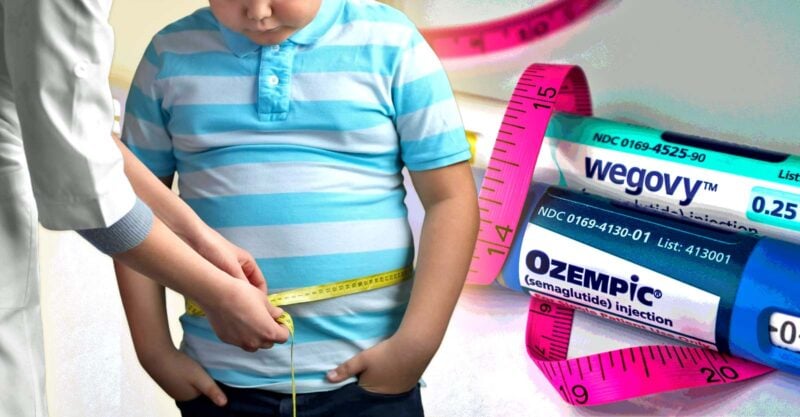


In January 2023, the American Academy of Pediatrics (AAP) issued new clinical guidelines for treating childhood obesity. The guidelines, still in effect, recommend physicians offer GLP-1 weight-loss drugs and bariatric surgery to obese children.
Under the new guidelines, the AAP said pediatricians “should” offer the weight-loss drugs to obese adolescents ages 12 and older and that they “may” offer the drugs to children ages 8-11.
It didn’t take long for prescriptions for GLP-1 drugs for those age groups to skyrocket — they jumped 38% in the first year following the change. MedPage reported that prescriptions for two of the drugs jumped 700%.
Two-and-a-half years later, a BMJ investigation uncovered undisclosed financial ties between the AAP and major drug companies behind blockbuster weight-loss medications.
The BMJ analysis found financial ties to industry among AAP members — including those who wrote the guidelines, those who reviewed them and the organization overall.
The researchers also identified serious irregularities in the process of making the guidelines. They concluded that the AAP based the guidelines on weak or nonexistent evidence.
Their results “suggest the AAP’s childhood obesity guidelines should be interpreted with caution,” researchers said.
Pediatrician calls for immediate halt to weight-loss drugs for kids
The January 2023 update was the first change AAP made to the guidelines in 15 years. It marked a major shift away from the organization’s earlier “watchful waiting” approach to childhood obesity and toward early, active, and aggressive pharmaceutical intervention.
Many researchers and commentators questioned the controversial recommendations, but evidence shows that clinicians rapidly took them up.
Pediatrician Michelle Perro, co-founder of GMOScience and co-author of “What’s Making Our Children Sick?,” told The Defender:
“The BMJ analysis raises legitimate questions about financial conflicts of interest and the limited pediatric evidence behind the current recommendations, bringing to light why caution is warranted before widespread use of GLP-1 drugs in children.
“Given the current evidence gaps and safety concerns, an immediate halt and independent reassessment of GLP-1 drug use in children is warranted.”


Third of doctors who reviewed guidelines took payments from GLP-1 drugmakers
The AAP stated there were no conflicts of interest in the clinical guidelines or in the accompanying technical report. The organization also said its guidelines were internally vetted for bias.
However, the BMJ investigation found a starkly different picture after analyzing data from the government website Open Payments.
They found that more than one-third of the doctors on AAP’s guidelines and systematic review committee received payments from GLP-1 drugmakers.
Of 27 members on the committee, 10 took payments, six did not and data weren’t available for the other members.
Most payments were small, consisting of meal and travel compensation — but research shows that small payments to physicians are highly effective.
“Small gifts build relationships and leave recipients with more favourable views towards the gift giver,” the researchers wrote. And physicians who accept small gifts are less likely to see themselves as biased, “thus allowing companies to grow and preserve their influence over time.”
The AAP has received corporate sponsorship from 11 developers of GLP-1 drugs, including Eli Lilly and Novo Nordisk, the two largest. Between 2012 and 2024, those donations totalled around $2 million. There are no data for 2019.
This is a conservative estimate based on available data, according to The BMJ analysis. It shows that corporate sponsors donate at least $50,000 each year, but the actual amount could be higher.
An earlier version of the AAP website indicated that corporate donors can attend an annual corporate summit at the AAP headquarters. The website said the donors have “special access to AAP leadership,” invitations to donor receptions, and “special communication opportunities.”
Data from Open Payments show that from 2017 to 2023, 22% of AAP’s national leaders received $293,400 from companies making the weight-loss drugs. Most payments were for food and beverages, and travel and lodging.
AAP used ‘grade B’ evidence to support GLP-1 prescriptions for teens
The AAP did not follow the World Health Organization guidelines for disclosing conflicts of interest. These guidelines set the industry standard.
Instead, the conflicts of interest were “handled internally by the AAP,” the researchers found.
The organization wrote that “any conflicts have been resolved through a process approved by the board of directors” — the same board of directors shown to have conflicts of interest.
The AAP’s Institute for Healthy Childhood Weight chose a methodologist and an evidence review committee to develop the guidelines. However, the institute didn’t provide any criteria for the selection. Half of the review authors also wrote the guidelines.
The AAP used “grade B” evidence to support the recommendation that adolescents “should” be prescribed the drug.
That means they used evidence that included “level B” studies, which include “trials or diagnostic studies with minor limitations; consistent findings from multiple observational studies.”
The review included trials funded by Novo Nordisk and Vivus. Notably, one study did not involve GLP-1 drugs, and both trials were still in the recruitment stage when AAP published the guidelines.
Also, most studies cited showed “some effectiveness,” but also had serious limitations. For example, the researchers studied non-GLP-1 drugs, or the trial participants were unblinded.
No studies on GLP-1 drugs or new weight-loss drugs for kids under 12 were published during the AAP’s review. Still, the organization recommended them.
“There is no discussion of risks, harms, costs, benefit-harm assessment, treatment duration, or treatment cessation,” the authors of the BMJ analysis wrote.


This article was funded by critical thinkers like you.
The Defender is 100% reader-supported. No corporate sponsors. No paywalls. Our writers and editors rely on you to fund stories like this that mainstream media won’t write.
GLP-1 recommendation for teens based on single GLP-1 trial
The BMJ study authors concluded that the AAP guidelines made a strong recommendation that physicians “should” prescribe weight-loss drugs to adolescents, citing data from a single GLP-1 trial.
They warned that any practitioners adopting the AAP’s strong recommendation should be mindful that the “systematic review methods were not pre-registered, included no direct evidence of GLP-1 efficacy or safety in adolescents, and did not use standard procedures for grading the strength of recommendations.”
They added:
“In paediatric care, even more so than in adults, informed consent must weigh the health consequences of childhood obesity against the long term risks of medications for growth and reproductive development.
“Trustworthy guidelines and institutional independence from vested interests are needed to guide these clinical decisions.”
Perro said the AAP guidelines failed to consider the serious known risks of the drugs.
“These medications alter metabolic, hormonal and appetite-regulation pathways during rapid periods of growth and neuroendocrine development. Yet long-term pediatric data on bone mineralization, reproductive maturation, lean-mass development, nutrient sufficiency, and lifelong metabolic adaptation remain insufficient,” she said.
“Children deserve prevention-first medicine, not lifetime pharmacologic management beginning in grade school,” she added.
Related articles in The Defender