Login
Login
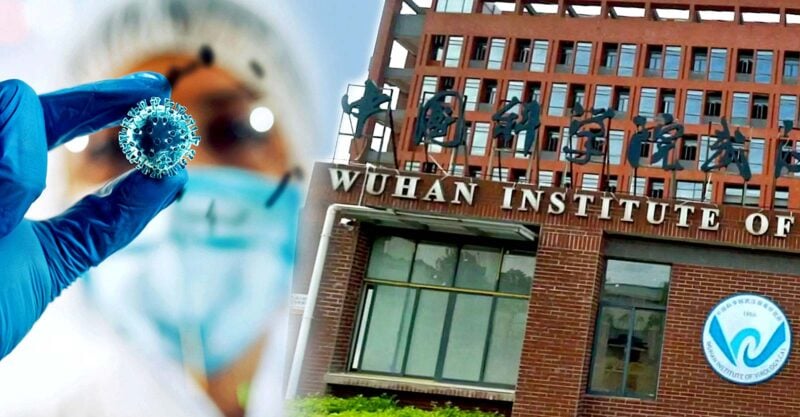


A new investigation has uncovered a significant but overlooked piece of evidence in the search for COVID-19’s origin: multiple failures in the Wuhan Institute of Virology’s biohazard waste disposal system in the months before the pandemic began.
The investigation by The New Atlantis revealed that official investigations have largely ignored records documenting repeated problems with the laboratory’s systems for handling infectious waste — evidence that could have important implications for the theory that a lab leak led to the COVID-19 pandemic.
The investigation, by Dan Silver, former rapporteur for the Program for Monitoring Emerging Diseases, examined publicly available Chinese government records, procurement contracts, regulatory notices and state media reports that he said have received little attention from scientists or official investigators examining the origins of the COVID-19 virus.
The evidence does not prove that the virus emerged from a lab, Silver wrote. However, it reveals significant problems in Wuhan, China’s hazardous waste disposal infrastructure at a time when several laboratories in the city were researching dangerous pathogens.
Those weaknesses included fires that shut down two of the three companies licensed to dispose of hazardous laboratory waste in Hubei Province, a decades-long accumulation of improperly stored laboratory waste at the Wuhan Centers for Disease Control and Prevention (Wuhan CDC) and field research practices that fell short of internationally accepted biosafety standards.
The evidence shows that Wuhan’s laboratory system was operating “under unusual strain” in the months leading up to the outbreak.
It also shows a consistent pattern of “institutional ambition advancing ahead of the infrastructure and protocols required to sustain it safely,” Silver wrote.


Biological waste disposal system began unraveling in May 2019
Chinese regulations classified much of the chemical and biological waste generated by research laboratories under a category known as HW49.
In 2019, only three companies in Hubei Province — where the Wuhan Institute of Virology (WIV) is located — were licensed to collect and dispose of that material, according to the report.
One of those companies, Wuhan Beihu Yunfeng Environmental Protection, had a contract to dispose of hazardous waste generated by the WIV.
That system began to unravel in May 2019.
On May 12, a fire destroyed warehouses at the Yunfeng facility. Firefighters battled the blaze for more than eight hours, then had to return the following day after a second fire broke out. The incident eliminated one of the key pillars supporting Wuhan’s laboratory waste disposal system, according to Silver.
Just nine days later, on May 21, a second fire occurred at Hubei Tianyin Environmental Protection, another licensed hazardous waste disposal company located about 140 miles from Wuhan. Reports attributed that fire to a chemical reaction involving stored laboratory waste. The facility subsequently ceased operations.
According to the investigation, the two fires left laboratories across Hubei Province — including the WIV and Wuhan CDC — with only one remaining licensed contractor capable of disposing of HW49 laboratory waste. That company was about 190 miles from Wuhan.
Silver argues that such disruptions would likely have required laboratories to improvise by relying on unfamiliar contractors, longer transport routes or modified procedures while continuing research operations.
“If that improvisation occurred without a corresponding reduction in research activity, the period represented an expanded window of risk in which the margin for error or mishap was thinner than usual,” he wrote.
Wuhan CDC had history of violating hazardous waste storage regulations
According to the report, the Wuhan CDC had for decades accumulated hazardous laboratory waste in violation of Chinese regulations, which prohibit the storage of hazardous waste for more than a year.
According to procurement documents cited in the investigation, hazardous waste had been stored at the agency since 1994, eventually reaching nearly two metric tons.
Chinese law prohibited the storage of hazardous waste for more than one year, yet the accumulated material remained in storage for 25 years.
In a procurement notice issued in June 2019, months before the COVID-19 outbreak, the Wuhan CDC reportedly acknowledged that the stockpile represented “hidden safety concerns” and sought to have the waste removed.
After the two disposal companies ceased operations, the remaining licensed contractor was given the contract to transport and dispose of the accumulated material.
Did bat samples end up on laboratory waste?
The investigation also revisits the work of Wuhan CDC researcher Tian Junhua, now its managing director, whose bat-sampling expeditions attracted international attention after the pandemic began.
Silver notes that Chinese state media had portrayed Junhua as a scientific hero for collecting bat samples from caves.
However, video later reported by The Washington Post showed him wearing only thin gloves and a surgical mask while handling bats — protective equipment that many biosafety experts would consider inadequate for collecting unknown viruses.
Junhua admitted to forgetting to use personal protective equipment and being splattered with bat blood on multiple occasions, according to The New York Times.
According to the report, biological samples collected during such fieldwork would likely have been returned to the Wuhan CDC for analysis, and may have ended up in the laboratory waste that the agency struggled to dispose of properly.
An overlooked timeline
By the autumn of 2019, many of the visible disruptions appeared to have been resolved.
The Wuhan CDC substantially cleared its waste storage facility before relocating to a new headquarters near the Huanan Seafood Market in early December 2019.
The WIV also adapted after losing its primary waste disposal contractor, although public records provide little detail about how laboratory operations changed during that period, according to the report.
When unexplained pneumonia cases began appearing in Wuhan weeks later, international investigators focused primarily on identifying the virus, tracing its spread and searching for potential animal sources.
Silver argues that the laboratory waste disposal disruptions that occurred earlier in 2019 were largely absent from subsequent investigations, despite being documented in public records. He suggested they ought to be included in the virus origins investigations and also in the February 2021 investigation by the World Health Organization (WHO).
According to Silver, the WHO team acknowledged that the Wuhan CDC’s move to a new facility in December 2019 could have disrupted laboratory operations. But the team reported that Chinese officials identified no significant incidents associated with the relocation.
The report made no mention of the agency’s previous hazardous waste violations or the disruptions to Hubei Province’s waste disposal network.
Even WHO Director-General Tedros Adhanom Ghebreyesus said after the report’s release that additional data would be needed before firm conclusions about the pandemic’s origin could be reached, Silver noted.


This article was funded by critical thinkers like you.
The Defender is 100% reader-supported. No corporate sponsors. No paywalls. Our writers and editors rely on you to fund stories like this that mainstream media won’t write.
Evidence doesn’t prove leak. ‘It is about systemic fragility.’
Silver said the evidence he assembled does not prove a laboratory leak. But he suggested that the records demonstrate systemic weaknesses in biosafety oversight and hazardous waste management that deserved greater scrutiny during investigations into the pandemic’s origins.
“The significance of these events is not primarily about attribution or blame,” Silver wrote. “It is about systemic fragility.”
The question of how SARS-CoV-2 first entered the human population remains unresolved.
The U.S. Senate Homeland Security and Governmental Affairs Committee, led by Sen. Rand Paul (R-Ky.), continues to investigate the issue. It has subpoenaed multiple federal agencies and held hearings on the matter.
One of the key questions is the role the U.S. had in funding gain-of-function research at WIV during Dr. Anthony Fauci’s tenure as director of the National Institute of Allergy and Infectious Diseases (NIAID).
Fauci held the top post at NIAID when the agency reportedly funded gain-of-function research, conducted by Chinese and U.S. researchers, at the WIV.
Documents obtained through Freedom of Information Act requests, along with findings from a congressional investigation, revealed that Fauci and others also colluded to push the “natural origins” theory and to cover up U.S. government funding of gain-of-function research.
Last week, the Senate Homeland Security Permanent Subcommittee on Investigations said it had obtained a copy of Fauci’s iPhone from the U.S. Department of Health and Human Services (HHS), The Wall Street Journal reported.
Also last week, the Homeland Security and Governmental Affairs Committee voted to hold Fauci in contempt of Congress and refer him to the Justice Department for possible prosecution after he pled the Fifth Amendment 111 times in last week’s hearing on COVID-19 origins.
Silver concluded that regardless of whether COVID-19 ultimately originated through natural spillover, a laboratory incident or another pathway, investigators should continue pursuing all available evidence — including public records documenting the challenges facing Wuhan’s laboratory system before the outbreak.
“The complete story has yet to be told,” he wrote.
Related articles in The Defender
- HHS Turns Over Copy of Fauci’s iPhone to Senate Committee Investigating COVID Origins
- Breaking: Senate Committee Votes to Hold Fauci in Contempt
- Congress Asked Fauci at Least 111 Questions — Fauci Refused to Answer at Least 111 Times
- Smoking Gun? Documents Suggest Fauci Knew COVID Was Created in Wuhan Lab, and mRNA Vaccines Wouldn’t Work
- New White House Website Declares COVID Escaped From Wuhan Lab