Login
Login
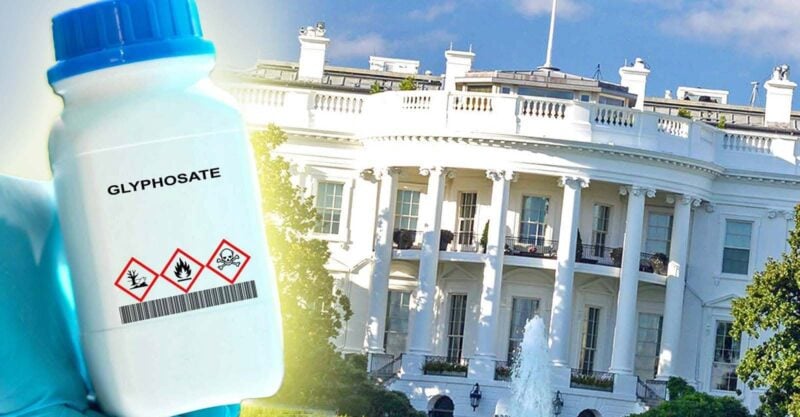


The Center for Biological Diversity sued President Donald Trump’s U.S. Department of Agriculture (USDA) yesterday, seeking records revealing who advocated behind the scenes for — and potentially ghost-wrote — the president’s Feb. 18 executive order directing the department to accelerate domestic production of glyphosate.
The order to increase U.S. production of the nation’s most-used herbicide was issued under the emergency powers granted to the president by the Defense Production Act — a Cold War-era law designed to address wartime shortages of critical goods.
Despite annual glyphosate use of more than 300 million pounds, the Trump executive order declared that increasing production of the pesticide was critical to national defense and ordered the federal government to ensure its continued availability.
Of Trump’s 13 executive orders invoking the Defense Production Act, the glyphosate order is unique for its language granting immunity to the chemical companies that make glyphosate, should they take otherwise illegal actions in complying with the order.
“This executive order is another corrupt giveaway to the pesticide industry, and people have a right to know who pushed for it behind the scenes,” said Brett Hartl, the Center for Biological Diversity government affairs director.
“The pesticide industry is doing everything they can to avoid accountability for the harms their products have caused across this country, and the only reason this administration is hiding these important records is that they will almost certainly show just how deeply the poison-makers’ influence permeates the Trump government.”
The executive order also declared elemental phosphorus, a key ingredient for glyphosate production, to be critical for national security.
The order’s language mimics text that artificial intelligence generates when prompted to explain consumption of elemental phosphorus in the U.S., including language that the nation imports “more than 6,000,000 kilograms” from other nations annually.
The glyphosate executive order is the only executive order in the history of the nation to use the word “kilogram.”
“Everyone knows that Trump doesn’t write, let alone often read, the executive orders he signs,” said Hartl.
“But the chatbot slop that makes up the majority of this executive order shows that virtually anything can reach the president’s desk if the right levers of power are pulled around Trump and his cronies.”

Glyphosate has been linked to a variety of human health impacts, including cancer, liver disease and developmental and metabolic disorders in young children that could lead to diabetes and cardiovascular disease later in life.
Recent analysis has shown that despite acknowledged links between pesticides and cancers, regulators in the U.S. have consistently allowed pesticides to go to market with a cancer risk as high as 1 in every 100 people exposed, a far greater level than the U.S. Environmental Protection Agency’s (EPA) benchmark of a one in a million chance of developing cancer.
The executive order was released at the same time that the Trump administration was intervening in support of a lawsuit at the U.S. Supreme Court that could broadly shield pesticide makers from liability when their products fail to warn of their “likely” human carcinogenic qualities.
The Center for Biological Diversity submitted its Freedom of Information Act request in February but has not yet received any response from the USDA. The law is meant to ensure public access to information about the functioning of federal agencies by guaranteeing a response within 20 business days of a request.
The June 22 lawsuit was filed in the U.S. District Court for the District of Columbia. The Center for Biological Diversity expects to receive records from the suit in the next two to three months.
Originally published by the Center for Biological Diversity.