Login
Login


By Ben Felder
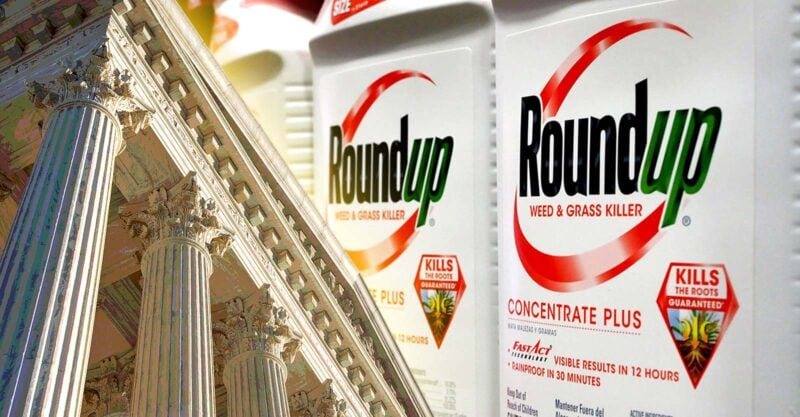
The U.S. Supreme Court is expected to rule next month on whether lawsuits can be brought against pesticide and herbicide makers over claims their products have caused cancer.
The court heard arguments in the case in April, and the justices appeared split.
With a ruling weeks away, here are five things to know about the topic of pesticide use and cancer.
1. Geographic correlation between heavy pesticide use and high cancer rates
Numerous studies and an analysis of federal data have shown a potential correlation between pesticide use and cancer.
Out of the 500 U.S. counties with the highest pesticide use per square mile (largely concentrated in corn, soybean and fruit-producing states like Iowa, Illinois, Missouri, California and Florida), 60% have cancer rates higher than the national average of 460 cases per 100,000 people.
A 2024 study in Frontiers in Cancer Control and Society suggests the impact of pesticide use on cancer incidence may rival that of smoking.
2. Thousands of lawsuits have been won against agrichemical companies
State courts have also found that correlation credible, as Bayer, the maker of the herbicide Roundup, has lost thousands of cases and agreed to pay more than $12 billion in settlements, including individual jury verdicts such as an initial $2 billion award in California and a recent $1.25 million verdict in Missouri.
According to the company, more than 65,000 lawsuits have been filed by farmers, gardeners and other users alleging the chemical caused their cancer.

3. Companies push for ‘liability shields’
In response to these lawsuits, agrichemical companies have aggressively lobbied for state-level bans on this type of litigation.
Often referred to as “liability shield” laws, they would essentially say that because the U.S. Environmental Protection Agency (EPA) has not warned of a link to cancer, state-level claims would be void.
Georgia and North Dakota are the only two states that have passed these liability shield laws.
4. The Trump administration has largely sided with pesticide makers
The push for stricter pesticide regulation has created unusual alliances between left-leaning environmentalists and conservative health advocates under the “Make America Healthy Again” (MAHA) banner.
After an initial U.S. Department of Health and Human Services report linked pesticide overuse to childhood health issues, the agency’s final report last year walked back all regulatory calls and instead pivoted to promote public confidence in current EPA standards.
President Donald Trump also signed an executive order this year declaring glyphosate critical to national security, and his administration actively sided with Bayer during oral arguments before the Supreme Court.
In April, MAHA activists celebrated a win after the U.S. House of Representatives voted to remove a pesticide industry-backed provision from its farm bill. The debate is expected to continue as the U.S. Senate drafts its own version of the farm bill.
5. Supreme Court hears arguments on national ‘liability shield’ ban
In April, the U.S. Supreme Court heard arguments in Monsanto v. Durnell, in which Monsanto (owned by Bayer) argued that because the EPA has ruled glyphosate is unlikely to be carcinogenic, federal law preempts states from requiring cancer warning labels or awarding damages through state juries. A decision is expected in July.
Originally published by Investigate Midwest.
Ben Felder is Investigate Midwest’s first editor in chief. He was hired in 2023 to cover agribusiness and the meat industry in Oklahoma.