

 Login
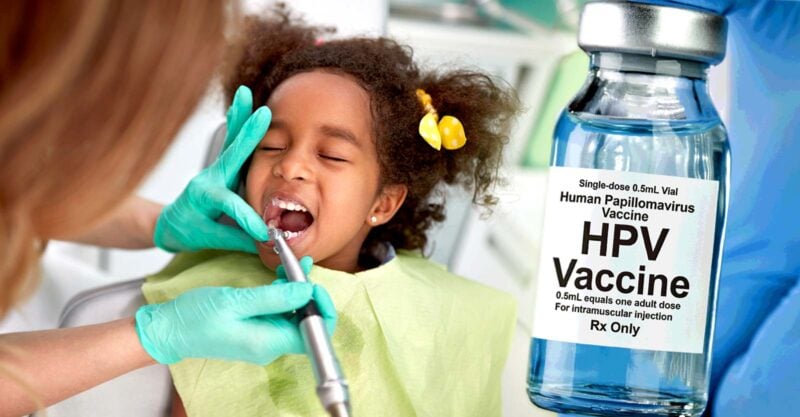


West Virginia health groups are pushing legislation to let dentists and dental hygienists administer the human papillomavirus (HPV) vaccine, West Virginia Watch reported earlier this month.
The effort is part of a national push by St. Jude Children’s Research Hospital, the American Academy of Pediatrics (AAP) and the American Cancer Society to increase HPV vaccination rates and encourage vaccination starting at age 9.
Both the AAP and the American Cancer Society receive funding from Merck.
The campaign comes amid questions about the vaccine’s safety and claims that it prevents cancer. Merck, the maker of Gardasil, recently agreed to pay $50 million to settle more than 200 lawsuits alleging vaccine-related injuries, including autoimmune disorders and reproductive problems.
Although Merck markets Gardasil as a vaccine that protects against certain cancers, clinical trials did not test whether the vaccine prevented cancer — only whether it blocked certain strains of HPV.
Merck’s Gardasil is the only HPV vaccine available in the U.S.
HPV is a common, sexually transmitted virus that most people will encounter during their lives, according to the Centers for Disease Control and Prevention (CDC). Some types can cause cancers, such as cervical or oropharyngeal, which affects the back of the throat.
The CDC recommends the shot for children beginning at ages 11-12.
In 2021, the U.S. Food and Drug Administration (FDA) approved the HPV vaccine to protect against oropharyngeal cancer — despite no clinical evidence to support the claim.

National campaign promotes vaccine-related birthday cards for 9-year-olds
The West Virginia Oral Health Coalition is preparing legislation that would allow qualified dental professionals to administer the HPV vaccine. The legislative session begins in January.
Similar laws have passed in Kentucky, Indiana, Louisiana, Massachusetts, Mississippi, New Jersey and Oregon.
St. Jude’s HPV Cancer Prevention Program is working with West Virginia organizations to promote HPV vaccination through dental offices.
St. Jude’s April and June reports cited the “unique challenges” to vaccination in West Virginia’s rural areas, including the spread of “vaccine misinformation” and the “increased value of personal choice” in medical decisions.
To encourage earlier vaccination, the American Cancer Society’s National HPV Vaccination Roundtable developed a toolkit to help rural dental providers promote the shot.
One proposed strategy is sending children birthday cards on their 9th birthdays to encourage parents to discuss HPV vaccination.
Merck is also studying whether to extend vaccination to even younger children. The company is funding and conducting clinical trials of Gardasil on children ages 4-8.
Lucija Tomljenović, Ph.D., a scientist who has published more than a dozen peer-reviewed papers on HPV vaccination, called the trial “reckless.” She said it “assumes safety in an age group in which the vaccine has never been tested.”
Hygienist said she avoided discussing HPV’s sexual transmission
The push to expand vaccination through dental offices raises questions not only about safety but also about informed consent — particularly what parents are told about HPV and the vaccine.
West Virginia Watch reported that the state conducted a pilot project earlier this year, enlisting dental hygienist Lauren French to discuss HPV vaccination with patients at a rural dental clinic. French said the conversations fit naturally into routine dental visits, which already include oral cancer examinations.
However, earlier studies found that dental health providers remain generally reluctant to recommend or administer the vaccine.
French acknowledged that her conversations with parents often did not address HPV’s sexual transmission.
“The way that I go about it is I don’t have to bring up sex at all,” French told West Virginia Watch. “It’s just, ‘This is a virus that most people come into contact with.’ We want them to get vaccinated before they come into contact with this virus. That’s why we suggest age 9 to 16.”
For parents deciding whether to vaccinate their children, understanding how HPV spreads is part of understanding the purpose and timing of the intervention. Parents also need information about the vaccine’s potential risks and the evidence supporting its claimed benefits.
Tomljenović has questioned whether Gardasil offers any meaningful protection against cancer, arguing that its risks “clearly outweigh” its benefits. She has also cited research suggesting HPV vaccination may increase cervical cancer risk among women who use oral contraceptives long-term.
Other research has raised questions about how vaccination affects HPV types not targeted by the vaccine.
A 2023 study in Cell Host & Microbe found the HPV vaccine may actually increase the prevalence and distribution of some HPV virus strains not targeted by the vaccine — including some strains that are linked to cancer.
Meanwhile, the CDC convened a workgroup in January 2026 to reexamine HPV vaccination, including its effectiveness, dosing, safety and long-term impact.
The FDA’s prescribing information for Gardasil lists injection-site pain, swelling and redness, headache, fever, nausea and dizziness among reported adverse reactions. It also warns about fainting and severe allergic reactions.
Tomljenović has raised concerns about reports of postural orthostatic tachycardia syndrome (POTS), chronic fatigue syndrome and autoimmune disorders, multiple sclerosis and gynecological problems, including menstrual disorders and infertility.
The Defender is 100% reader-supported. No corporate sponsors. No paywalls. Our writers and editors rely on you to fund stories like this that mainstream media won’t write. 

This article was funded by critical thinkers like you.
Screenings — which dentists already do — protect against HPV-related cancers
A central question in the HPV vaccine debate is how strongly the available evidence supports claims that vaccination prevents cancer.
Earlier this year, scientists concluded that two Cochrane reviews — widely cited by health authorities and the media to support the claim that the vaccine reduces cervical cancer incidence by up to 80% — are flawed.
The majority of epidemiological studies cited to show the vaccine’s effects — including its ability to stop invasive cervical cancer — had serious or critical risk of bias, Tomljenović told The Defender in March, calling the review “garbage.”
Tomljenović also argued that while Gardasil doesn’t prevent HPV-related cancer, routine screenings are essential to reducing deaths from the disease. She pointed to the U.S. cervical cancer death rate of approximately two per 100,000 women as evidence of the importance of screening.
The AAP notes on its HealthyChildren.org site that “unlike cervical cancer, there is no test to screen for oral cancer or any other HPV-associated cancer.”
Even so, dentists already examine patients for signs of oral cancer during routine visits.
The Mayo Clinic and Cleveland Clinic describe oral cancer examinations as part of routine dental care. Dentists look for suspicious lumps, sores, red or white patches and other abnormalities. They may refer patients for further evaluation or biopsy when they find something concerning.
“During every routine cleaning, there’s an exam. … And we’re telling the patient, ‘We’re doing an oral cancer screening just to make sure there’s no lumps, bumps, or anything that’s suspicious in your mouth,’” French told West Virginia Watch.
Related article in The Defender
- ‘The Whole Propaganda Just Stinks’: HPV Vaccine Doesn’t Prevent Cancer, Scientist Says
- After Years of Pushing HPV Vaccine as ‘Safe and Effective,’ CDC Now Taking a Closer Look
- HPV Vaccine Increases Risk of Autonomic Dysfunction and Menstrual Irregularities in Young Women
- Consultants Push HPV Vaccines for Infants, as Merck Tests Gardasil in Kids as Young as 4
- ‘Completely Misleading’: Scientists Accuse Cochrane Reviews of Using Biased Studies to Claim HPV Vaccine Prevents Cancer
