Login
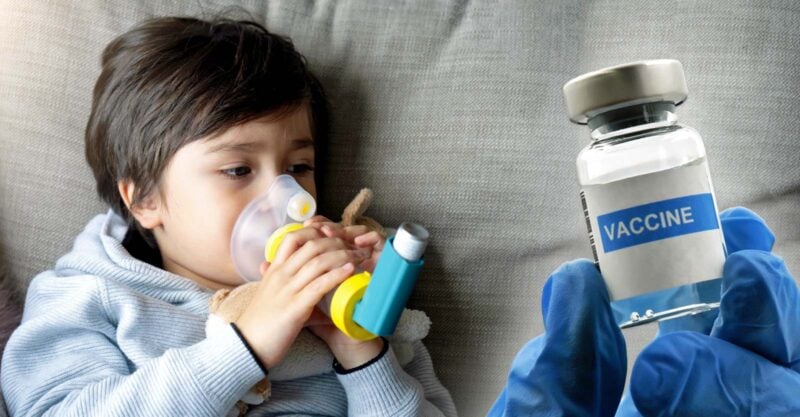


A new study of more than 14,000 children enrolled in Florida Medicaid found links between childhood vaccinations and higher rates of health issues including asthma, autism, attention-deficit hyperactivity disorder (ADHD) and respiratory infections.
The study, written by independent researcher Josh Mittledorf and Children’s Health Defense Chief Scientific Officer Brian Hooker and published in the peer-reviewed Journal of Independent Medicine, analyzed medical records from 1990 to 2010 for 14,235 children whose health histories were available from birth through age 10.
They found that children with the highest recorded number of vaccinations were more than twice as likely to be diagnosed with asthma, autism and ADHD as children with no documented vaccinations.
Autism was linked to combinations of hepatitis B (Hep B) and measles-mumps-rubella (MMR) shots. Developmental delays correlated with the MMR/Hep B combination, the number of flu shots and the total number of recorded vaccinations.
The flu vaccine demonstrated some of the strongest associations with adverse health outcomes. Children who got the flu shot had approximately four times the rates of asthma and three times the rate of autism as other children.
“The message is that the childhood vaccination schedule must be evaluated as a whole,” the authors concluded. “The aggregate burden on the immune system of many vaccine challenges during the few years when the immune system is not yet fully mature appears to be broadly damaging to health.”
What the Florida Medicaid records showed
The Florida Medicaid database contains records for more than 10 million patients. Of the 14,235 children studied, 9,703 had at least one documented vaccination, while 4,532 had no vaccinations.
The researchers examined associations between vaccination status and diagnoses of autism, developmental delay, ADHD, asthma, respiratory infections, ear infections, skin rashes, streptococcal infections and fever.
In total, 4,360 had an asthma diagnosis, 2,267 had ADHD, 4,411 had developmental delays and 152 had autism.
Children with no recorded vaccinations had a 21% annual probability of receiving medical attention for a respiratory infection, compared with 47% in the highest vaccination category.
The total number of diagnoses increased with the number of recorded vaccine doses, the study showed.
The flu, MMR, and combined diphtheria-tetanus vaccines were associated with the worst outcomes.
DTP-Hib (Haemophilus influenzae type b), HPV and pneumococcal vaccines were associated with the least detrimental outcomes.
The researchers also identified associations between flu shots and developmental delays, respiratory infections and other conditions. Several diagnoses increased with the number of recorded flu vaccinations.
The authors acknowledged that the study could not establish causation and confounding factors may influence outcomes.
For example, children with asthma may be more likely to receive flu vaccines because of their existing condition. Because the records were analyzed by year rather than exact dates, researchers could not determine whether vaccination preceded diagnosis in every case.
Mittledorf told The Defender the analysis used the most complete Medicaid data available, but some of the data may be incomplete because children can access health services elsewhere.
The authors also noted that at the time the data were collected, autism and ADHD diagnoses were likely undercounted and the childhood vaccine schedule was roughly half its current size.
The database also contains no information about other variables that shape pediatric outcomes, such as gestational age and maternal health.
“The data we had were from one special set of children, and the information was incomplete,” Mittledorf said. “So we did the most conservative thing. We analyzed the data in a way that we could say with confidence, ‘the correlations are at least this strong at a minimum.’ So there’s a good chance the situation is worse than what we reported.”
They said their findings were “suggestive, not definitive” and indicate the need for rigorous testing in larger, more complete datasets with better data for individual variables.
Accounting for differences in medical care given
According to the researchers, the greatest potential for bias is that families who vaccinate may be more likely to seek medical care — this is known as the “healthy vaccinee effect.”
Those children may therefore have more opportunities to be diagnosed, which could create the appearance of higher disease rates.
To account for this, the researchers grouped children by their number of annual well-child visits and compared vaccination status and diagnoses within each group.
They also found evidence of protective effects. Hepatitis A and flu vaccinations were associated with fewer ear infection diagnoses, while Hib vaccination was associated with fewer ADHD diagnoses.
They urged caution in interpreting these findings, which they said may also be linked to the healthy vaccinee effect.


This article was funded by critical thinkers like you.
The Defender is 100% reader-supported. No corporate sponsors. No paywalls. Our writers and editors rely on you to fund stories like this that mainstream media won’t write.
Authors call for better data access
The authors anticipated that those who support the current vaccine status quo would dismiss their paper for its limitations. Instead, they argued, the appropriate response would be “to insist that the data necessary to overcome those limitations be made available to the independent scientific community without gatekeeping by agencies with vested interests in the status quo.”
They called on state Medicaid agencies, insurance companies and health maintenance organizations to make de-identified medical records available to independent researchers.
Those datasets, they said, could allow investigators to reproduce the Florida analysis, account for additional confounding factors and examine health outcomes across larger populations.
They wrote:
“The status quo is (potentially) bad for child patients, and their parents, who have no organized representation. But it is also (potentially) bad for health insurance companies and HMOs, which are not only paying the cost of vaccinations that have questionable value; they are also paying for the downstream treatment of diseases whose prevalence is increased by the vaccination schedule. …
“… The take-home message is that those empowered to form public health policy have an urgent need to review all vaccines for safety, using better data than is available from legacy Florida Medicaid datasets.”
Related articles in The Defender
- Research Report: Repeated Diagnosis of Fever or Pain During Early Childhood Very Strongly Associated With Autism
- Vaccine ‘Quietly’ Pulled Off Market in 2007 Now Linked to 19 Diseases — 35 Million Babies Who Got the Shot Now at Risk as Adults
- Infants Who Receive Multiple Vaccines at Once at ‘Exponentially’ Greater Risk of Disease, Developmental Delays