Login
Login
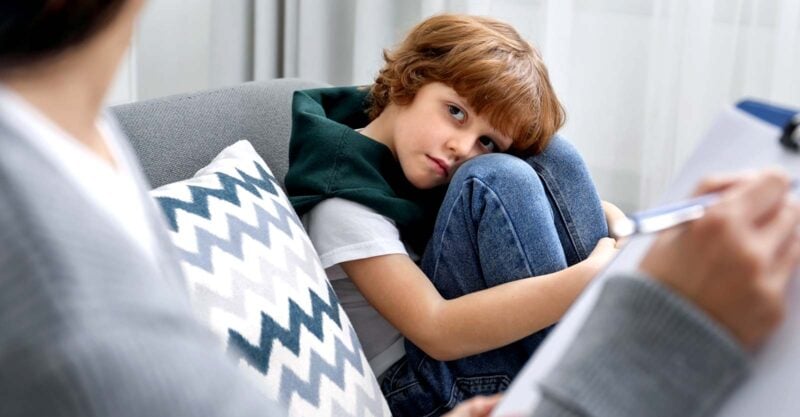


An increasing number of children are likely to face mental health screening when they return to school this fall. But experts warned those screenings pose more risk than benefit — and urged parents to opt out their child.
“While early identification sounds responsible, in practice it risks doing more harm than good,” Gretchen Watson, Ph.D., a clinical psychologist and researcher, told The Defender.
School-based routine or universal mental health screening “often functions as an entry point into a therapeutic culture that pathologizes normal childhood distress, erodes resilience and funnels children toward psychiatric labels, therapy, and medication,” Watson said.
Nearly one-third of U.S. schools now conduct some form of mental health screening — and that number is likely to increase, as more states work to pass mental health screening mandates.
Last year, Illinois became the first state to require students in grades three through 12 to undergo a mental health screening each year.
In January, lawmakers in South Carolina proposed a bill that would create a statewide mental health screening program for students in grades six through 12. The bill is in committee.
It’s a trend that has experts like Watson worried.
Watson is one of the foremost authorities in the U.S. on the overmedicalization of children with psychiatric drugs. She is also the author of the forthcoming book, “The Prescription Affliction: Why We Overmedicate Young Minds with Psychiatric Drugs ― and How to Stop It.”
Mental health screening tools flag many false positives, Watson said. For example, a child grieving the loss of a grandparent, or who is simply more intense or imaginative than the average student, can easily be flagged as needing further evaluation.
“That evaluation can start a cascade: a label, a treatment plan and, in many cases, medication,” she said.
Parents need to be on the lookout for consent forms as they send their kids back to school, Watson said.
The forms may be buried in back-to-school packets. And they may portray mental health screening using language crafted to make parents who decline the screening seem uncooperative, she said.
Beware passive consent forms, experts warn
Some schools may use a passive consent system that presumes consent unless the parent actively opts out, said Jan Eastgate, president of Citizens Commission on Human Rights (CCHR), a mental health industry watchdog.
That’s why CCHR created a printable parent’s exemption form that parents can proactively give to their school leaders. The form states that school staff may not subject the child to any form of mental health, psychological, social service, or counseling screening or tests without the parent’s written consent.
Watson — who said she is not affiliated with CCHR, the Church of Scientology, which founded CCHR, or any of its activities — and Eastgate are far from alone in criticizing school-based mental health screening.
In a January 2026 report for the Manhattan Institute, policy analyst Carolyn D. Gorman concluded such screenings were both ineffective and harmful.
U.S. Health Secretary Robert F. Kennedy Jr. and U.S. Secretary of Education Linda McMahon argued in a September 2025 Washington Post op-ed that schools should avoid subjecting kids to yearly mental screening.
Instead, “schools should engage and rely on parents to raise their children with nutritious family meals and family interaction, outdoor play and role-modeling,” Kennedy and McMahon wrote.
Power of suggestion: Could screenings cause depression and anxiety?
A key criticism of mental health screenings is that they may paradoxically cause harm by using confusing and suggestive language.
Watson pointed out that pediatric depression and anxiety questionnaires commonly include leading questions, including:
- In the past few weeks, have you wished you were dead?
- Have you felt that you or your family would be better off if you were dead?
- Have you been having thoughts about killing yourself?
- Have you ever tried to kill yourself?
- Are you having thoughts of killing yourself right now?
- How often have you felt overwhelmed in the past month?
- Are you sad much of the time?
Some screening tools even ask children how often they have felt that they have something important to contribute to society, and what strategies they have found helpful in managing their mental health.
Watson said:
“Now, I ask, how would you have answered those questions at 8? At 13? As a K-12 student, I was definitely not thinking about my contribution to society or managing my mental health. Were you?
“Is it even healthy to encourage children to think about such matters? Worse, could these questions plant confusing ideas in the minds of our youth?”
These types of questions can convince healthy children they are “troubled,” Eastgate said.
Watson agreed, noting that a child who is repeatedly asked if they are depressed might just decide they are.
According to the American Academy of Pediatrics (AAP), all children, toddlers and babies as young as 6 months old should undergo regular mental health and developmental issue screenings.
In an August 2025 clinical report, the AAP claimed that rates of mental, emotional and behavioral problems in the U.S. are rising, and early detection will lead to intervention.
However, an August 2022 study in Preventive Medicine concluded that screening adolescents for depression does not reduce their treatment for suicidal behaviors.
And a 2017 systematic review found no evidence that screening children improves mental health outcomes, but instead raises the risk of potential harm and wasted resources.
‘Labels often erode self-efficacy and create self-fulfilling prophecies’
Screenings also carry privacy and stigma risks, Eastgate said.
Watson urged parents to ask lots of questions, including what instrument will be used, what happens to the data, who sees the results, and what follow-up looks like if a child is flagged.
A child who is inaccurately flagged as having a mental health issue can end up with a psychiatric label that follows the child for years, Watson said.
“These labels often erode self-efficacy and create self-fulfilling prophecies: peers may exclude or stigmatize diagnosed children as ‘different,’ while adults lower their expectations for them.”
Who really profits from school-based mental health screenings?
Watson said good intentions may partly explain the push toward school-based mental health screenings.
After the 1999 Columbine school shooting and subsequent school shootings, many school administrators and parents have sought ways to prevent school violence perpetrated by mentally unwell students.
But there is no track record showing that mental health screenings prevent school shootings, Watson said.
She explained:
“The characteristics most often associated with school shooters — such as loneliness, social isolation and emotional distress — are extremely common among children and adolescents. While nearly all school shooters have struggled with these issues, the vast majority of lonely, isolated or emotionally distressed youth will never commit an act of violence.
“Because these risk factors are so widespread and school shootings are so rare, universal screening has very poor predictive value for identifying who will actually become a shooter.”
In other words, mental health screenings produce many false positives, while failing to identify truly high-risk individuals.
But that hasn’t stopped companies from profiting off the trend toward school-based mental health screenings.
Maro, a mental health screening digital platform for K-12 schools and districts, touts itself as “the single most efficient tool for screening youth (ages 7-17) at school for depression, anxiety, suicide and/or ADHD [attention-deficit/hyperactivity disorder] & getting families to matched care.”
Eastgate said she has yet to find any independent evidence to back up Maro’s claim. Even if the claim were true, efficiency is not the same as benefit, Watson said. “Making a flawed process more efficient does not make the process sound.”


This article was funded by critical thinkers like you.
The Defender is 100% reader-supported. No corporate sponsors. No paywalls. Our writers and editors rely on you to fund stories like this that mainstream media won’t write.
Pharma behind some school mental health screening tools
Parents aren’t warned about pharmaceutical companies’ conflicts of interest in mental health screenings, Eastgate said.
For example, Pfizer — which sells the anxiety and depression drug Zoloft — funded the development of a widely used youth depression screening tool, the Patient Health Questionnaire-9 (PHQ-9).
In 2023, STAT published an investigative report on the PHQ-9’s origins under the headline, “How a depression test devised by a Zoloft marketer became a crutch for a failing mental health system.”
“In addition, many of the screening tools used are explicitly aligned with the DSM [Diagnostic and Statistical Manual of Mental Disorders] diagnostic criteria. This means the tools are designed to look for the same symptom clusters used to assign psychiatric diagnoses,” Watson said.
A 2024 special report in The BMJ revealed that 55 of the U.S. doctors who helped decide what diagnoses and treatments were included in the DSM, now in its fifth edition, DSM-5-TR, received more than $14 million in undisclosed industry funding.
Often referred to as the “bible” of psychiatric disorders, the DSM is the American Psychiatric Association’s main diagnostic manual, ABC News reported.
The BMJ found that the doctors who received the most money — often in the form of food, beverages, travel and consulting reimbursements — were those working in diagnostic areas, such as depressive disorders, neurocognitive disorders and drug-induced movement disorders, “where drug interventions are often the standard treatment.”
Maro did not immediately respond to a request for comment.
Related articles in The Defender
- Exclusive: How ADHD Became ‘Gateway Diagnosis’ That Led to Drug Cocktails for Millions of Children
- ‘Nobody Told Me’: Former Mental Health Patient Calls Out Dangerous Side Effects of Psychiatric Drugs
- ‘Medically Reckless’: AAP Pushes Mental Health Screenings for Kids as Young as 6 Months Old
- Hidden Epidemic’: She Was 7 When Doctors Prescribed Ritalin — By Age 20, She’d Taken 14 Different Psychotropic Drugs
- 55 U.S. Doctors Behind Psychiatric Diagnosis Manual Took $14M From Drug Companies
- Big Money for Pharma, Big Risk for Kids: When Doctors Prescribe Antipsychotics and SSRIs for Children With Autism