Login
Login
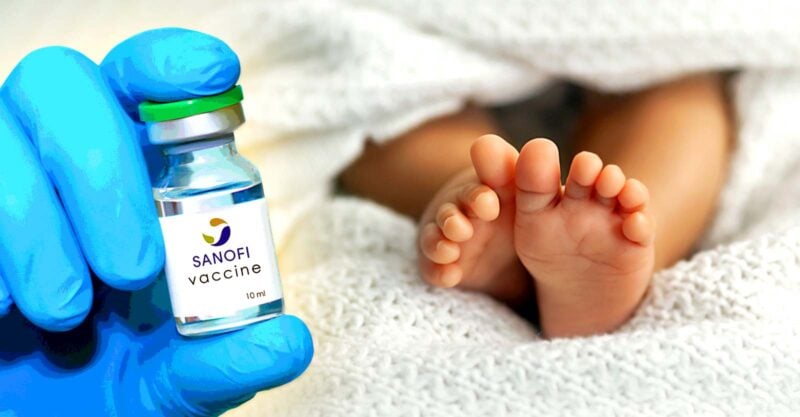


Sanofi shut down its RSV vaccine trial for infants and toddlers in 2024 after a baby died. It was later determined that the baby had an underlying congenital heart defect, which should have disqualified the infant from participating in the trial.
Now, a newly obtained letter shows the company paused the trial “to re-educate all participating sites and investigators” on the criteria they should use to judge who should or shouldn’t be allowed to participate in the trial, and to “reiterate the need to assess for chronic illnesses” that would make an infant or toddler ineligible to participate in a clinical trial.
The letter — obtained through a Freedom of Information (FOI) request by British general practitioner and RSV vaccine expert Dr. Peter Selley — sheds new light on the infant death and trial pause first reported by The Defender.
The infant’s death constituted a “serious adverse event” that triggered the halt.
A Sanofi spokesperson last month confirmed the death and told The Defender that the baby had underlying congenital heart disease. The company’s analysis — supported by the independent data monitoring committee — the spokesperson said, concluded the experimental vaccine was not the “underlying cause of the event.”
Research published in the Pediatric Infectious Disease Journal indicates that most children who die from respiratory syncytial virus, or RSV, have comorbidities such as congenital heart or lung disease.
Congenital disorders should have excluded babies from the study, and participants should have been assessed for preexisting conditions, according to the clinical trial’s exclusion criteria.
“Given that they stopped the trial to ‘re-educate’ investigators about inclusion and exclusion criteria, it suggests that the trial protocol was not being followed in at least one of the trial sites,” Selley told The Defender.
Sanofi told The Defender that when the infant with an undiagnosed underlying heart condition died after receiving the experimental vaccine, the company proactively informed and worked closely with the independent data monitoring committee (IDMC) and health authorities to address the issue.
He said the U.S. Food and Drug Administration (FDA) put the trial on a clinical hold and the company worked “to amend the Phase 3 protocol, adjust and clarify screening procedures and inclusion criteria, and re-educate all participating sites and investigators.”
Failure to follow exclusion criteria ‘important’ protocol deviation under FDA rules
The FDA classifies failure to adhere to inclusion and exclusion criteria as an “important” protocol deviation — and notes that violations must be investigated.
Failures of this kind have triggered FDA warning letters to individual investigators in other trials, including cases in which subjects were enrolled even though their health histories should have disqualified them based on trial protocols designed to screen out certain health conditions.
In May 2026, The Defender submitted a Freedom of Information Act (FOIA) request to the FDA seeking communications about the reported infant death in the Sanofi trial. The FOIA request specifically sought a “Dear Investigator Letter,” issued by Sanofi on Dec. 13, 2024, that referenced a pause in the trial due to a “Fatal SAE” — a fatal serious adverse event.
The letter would have been sent to 130 investigators around the world conducting Sanofi’s studies.
Such letters are typically used to formally notify clinicians of important information that immediately affects a trial.
The “Dear Investigator Letter” Selley obtained, which Sanofi issued on May 20, 2025, to clinical trial investigators, indicates that it is a follow-up letter to previous “Dear Investigator Letters” issued in December 2024, January 2025 and March 2025. All of the letters referred to pausing the RSV trial for infants and toddlers.
The FDA has not acknowledged or responded to The Defender’s FOIA request, and England’s National Health Service has declined to provide Selley with more information in response to his requests.
Sanofi announced trial’s end 10 months after infant death, claimed no safety issues
Beginning in 2023, Sanofi sponsored the Phase 3 “PEARL” trial to test its genetically modified intranasal RSV vaccine, RSVt, in healthy children ages 6-22 months.
The Phase 3 trial followed a smaller Phase 2 trial that reported “promising” results with no safety concerns.
The Phase 3 trial, which enrolled 6,300 children in the U.S. and globally, tested the vaccine against a placebo. Children were given two doses of the vaccine and monitored for safety for 24 months following the shots.
Sanofi launched the study in 2023, according to the federal trials database. The trial was set to run through 2027. However, in October 2025, Sanofi told shareholders that it had pulled the plug on the trial.
The public announcement came 10 months after Sanofi had paused the trial following the infant death. Sanofi never restarted the trial, according to a company spokesperson.
The company didn’t report any safety issues with the vaccine, stating instead that it ended the trial because the vaccine wasn’t as effective as hoped.
“The safety profile was acceptable, and no signals of vaccine-associated enhanced respiratory disease were observed by the IDMC,” the company said.
Vaccine-associated enhanced respiratory disease, or VAERD, is a severe respiratory illness that develops when a vaccinated child who never had RSV is exposed to the virus and develops a more severe case of RSV than it would have if the child hadn’t received the vaccine.
Previous attempts to develop an RSV vaccine have been stymied by VAERD.


This article was funded by critical thinkers like you.
The Defender is 100% reader-supported. No corporate sponsors. No paywalls. Our writers and editors rely on you to fund stories like this that mainstream media won’t write.
RSV vaccine development has long, troubled history
Since the 1960s, RSV vaccine development has been riddled with serious safety concerns involving young children since the 1960s.
An early National Institutes of Health (NIH) experimental RSV vaccine was tested in children in the early 1960s, followed by a more concentrated formulation tested in low-income, Black infants — without their families’ knowledge or consent — in 1965-66.
Vaccinated children experienced unexpectedly severe RSV illness, and two infants later died after developing serious respiratory illnesses associated with VAERD. The episode stalled RSV vaccine development for decades.
When RSV vaccine research accelerated again in recent years, safety questions persisted, particularly around pregnancy and young children. GSK halted a maternal RSV vaccine trial after a preterm-birth safety signal, while Pfizer’s FDA-approved maternal vaccine has also been flagged for an association with preterm birth.
The infant monoclonal antibody Beyfortus — which is not a vaccine, but an immunization that provides infants with antibodies to temporarily protect against RSV — was approved in 2023 — 12 child deaths occurred during its clinical trials, although investigators said they were unrelated to the product. Adverse-event reporting of infant deaths has since drawn additional scrutiny.
More recently, Moderna’s experimental mRNA RSV vaccines for young children raised renewed concerns about the same phenomenon encountered in the 1960s.
According to an FDA briefing document, data from Moderna’s pediatric trial raised a potential VAERD safety signal after severe RSV illness occurred more frequently among vaccine recipients, prompting the FDA to pause enrollment in pediatric RSV vaccine studies involving RSV-naive children. Moderna halted its trial in 2024.
Despite these red flags, research into RSV vaccines for infants and young children has continued, with some pediatric studies on the government clinical trials website listed as active or recruiting.
Editor’s note: This article was updated to note that an independent data monitoring committee supported Sanofi’s conclusion.
Related articles in The Defender
- A Baby Died, and Sanofi Quietly Ended RSV Vaccine Trial. The Company Says Death Was Unrelated to the Vaccine
- Moderna Shuts Down mRNA RSV Vaccine Trial in Babies After Shots Linked to Severe Side Effects, FDA Document Reveals
- Secret Trial of Pfizer RSV Vaccine Killed Two Infants in the 1960s — Their Families Just Sued the U.S. Government
- Merck Unveils New RSV Shot for Babies, as Moderna Trials mRNA RSV Vaccine for Infants and Toddlers
- Infant RSV Shots May Cause RSV, Other Infections or Death in Some Babies, Study Finds
- Exclusive: Two Infants Died Within Hours of Receiving RSV Shots, CDC Internal Emails Show