Login
Login
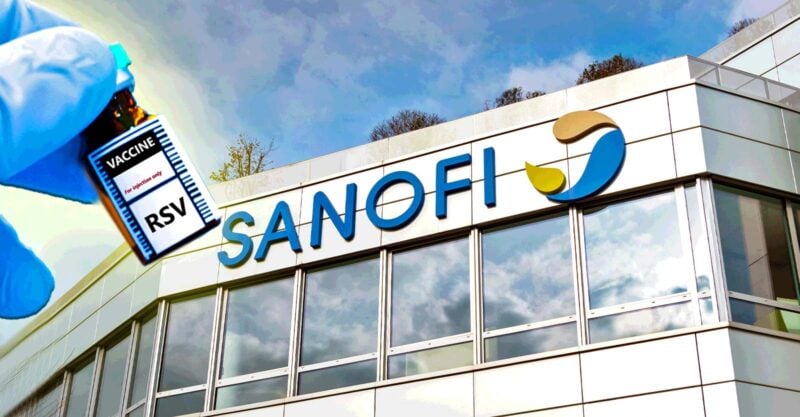


In October 2024, vaccine maker Sanofi shut down its clinical trial for a respiratory syncytial virus (RSV) vaccine for infants and toddlers. According to documents obtained via a Freedom of Information (FOI) request, one child died during the trial.
News that Sanofi shut down the trial went largely unreported, getting only a brief mention in Fierce Biotech. The company didn’t report any safety issues with the vaccine, claiming instead that it ended the trial because the vaccine wasn’t as effective as hoped.
“The safety profile was acceptable, and no signals of vaccine-associated enhanced respiratory disease were observed by the IDMC [Independent Data Monitoring Committee],” the company said.
Vaccine-associated enhanced respiratory disease, or VAERD, is a severe respiratory illness that develops when a vaccinated child who never had RSV is exposed to the virus and develops a more severe case of RSV than it would have if the child hadn’t received the vaccine.
A spokesperson for Sanofi, who confirmed the child’s death to The Defender, said the child had an underlying congenital heart disease. “Our analysis, supported by the IDMC, is that the vaccine candidate was not the underlying cause of the event.”
Research published in the Pediatric Infectious Disease Journal indicates that most children who die from RSV have comorbidities such as congenital heart or lung disease.
Congenital disorders should have excluded babies from the study, and participants should have been assessed for preexisting conditions, according to the clinical trial exclusion criteria.
The spokesperson also said that the vaccine maker will publish the results of the trial in a peer-reviewed publication, but could not say when that would be finalized and available.
In May 2026, The Defender submitted a Freedom of Information Act (FOIA) request to the U.S. Food and Drug Administration (FDA) requesting communications about the reported death — including a “Dear Investigator” letter, issued by Sanofi on Dec. 13, 2024, that referenced a pause in the trial due to a “Fatal SAE,” or serious adverse event.
Such letters are typically used to formally notify clinicians of important information that immediately affects a trial.
The letter, issued by the U.K.’s National Health Service Health Research Authority (NHSHRA), reveals that there was a report of at least one SAE: an infant death.
NHSHRA revealed the letter’s existence in its FOI response, which was shared with The Defender.
However, despite follow-up requests, NHSHRA declined to provide the letter or any details about the letter or the infant death, prompting The Defender’s FOIA request to the FDA.
The FDA should have the report because most clinical trials conducted under U.S. federal regulations require clinical trial sponsors to report any serious and unexpected adverse reactions and any unexpected fatal or life-threatening suspected adverse reactions to the agency.
The FDA hasn’t yet acknowledged or responded to The Defender’s FOIA request.
Sanofi trial documents listed VAERD as ‘very low and theoretical risk’
Sanofi sponsored the Phase 3 “PEARL” trial to test its genetically modified intranasal RSV vaccine, RSVt, in healthy children between the ages of 6 and 22 months.
The RSVt vaccine is a live attenuated virus vaccine containing a genetically modified form of RSV.
The Phase 3 trial followed a smaller Phase 2 trial that reported “promising” results with no safety concerns.
The Phase 3 trial, which enrolled 6,300 children in the U.S. and globally, tested the vaccine against a placebo. Children were given two doses of the vaccine and monitored for safety for 24 months following the shots.
Sanofi launched the study in 2023, according to the federal trials database. The trial was set to run through 2027, but Sanofi pulled the plug in 2024.
Compensation for participation in the trial varied, according to one trial website. One site testing the vaccine in Nebraska offered participants $3,750.
Informed consent documents — also obtained through FOI requests — included information on “discomforts and risks.” The list included possible signs of a cold or other mild symptoms.
The documents also reported that VAERD was a “potential risk,” but emphasized that it was “a very low and theoretical risk.”
In its statement to The Defender, Sanofi said that across its RSV toddler vaccine program “no evidence of vaccine-associated enhanced respiratory disease (VAERD) was observed in children who received the vaccine candidate and completed follow up over at least one RSV season.”
The company also said that the child who died during the trial did not die from RSV-related illness.
Infant deaths cast long shadow on quest for RSV vaccine
National Institutes of Health (NIH) researchers first developed an experimental RSV vaccine in the early 1960s. They administered the shot to over 50 children at a hospital known for its largely Black patient population.
Nearly half of the babies developed RSV, and 10 of them required hospitalization — which NIH researcher Dr. Robert Chanock, who led the study, later conceded was “possibly outside the range of normal.”
Instead of shutting down the program, the researchers then partnered with Pfizer (then Wyeth) to create a more concentrated version of the vaccine, known as Lot 100.
In the winter of 1965-66, the researchers selected 31 of the youngest children from one of the hospital’s clinics to test the Lot 100 vaccine.
The families weren’t told that the babies were being enrolled in a trial, or that there had been a previous trial that failed. They also weren’t informed about the risks associated with the vaccine.
Two of the babies, 4-month-old Victor King and 2-month-old Ross Hambrick, died when they contracted serious respiratory illnesses because of VAERD. The deaths occurred during the second RSV season following the shots.
Earlier this year, the families, who were never told what caused their babies’ deaths, sued the federal government.
Disastrous outcome of early trials stalled RSV vaccine development for decades
No RSV vaccine was brought to market until 2023, when the FDA approved two RSV vaccines, made by Pfizer and GSK, for use in older adults, and the Beyfortus monoclonal antibody shot to fight RSV in babies and toddlers.
The monoclonal shots are not vaccines — they are antibodies meant to provide temporary protection against a virus.
GSK had to halt its trials in pregnant women because of a safety signal for preterm births.
In August 2023, regulators approved Pfizer’s RSV vaccine for pregnant women in their third trimester. The vaccine is intended to protect newborns. However, post-marketing data show that Pfizer’s vaccine is also linked to preterm births.
During the clinical trial for Beyfortus, the monoclonal antibody that was eventually approved for infants, 12 babies died. However, the study investigators said the deaths appeared to be unrelated to the product.
An investigation by The Defender also found that at least two infant deaths reported to the Vaccine Adverse Event Reporting System, or VAERS, were linked to Beyfortus.
Yet, the purported success of those RSV clinical trials opened the floodgates for RSV vaccine research, including for small children, over the last five years.


This article was funded by critical thinkers like you.
The Defender is 100% reader-supported. No corporate sponsors. No paywalls. Our writers and editors rely on you to fund stories like this that mainstream media won’t write.
Moderna’s mRNA RSV vaccines for infants triggered VAERD safety signal
In 2023, the FDA gave Moderna the green light to move ahead with its clinical trial, the Rhyme Trial, to test the safety and immunogenicity of its two experimental mRNA RSV drugs in children ages 5-23 months.
The study received approval after the FDA fast-tracked Moderna’s RSV vaccines in 2021, a process that speeds up the development and approval of a drug.
Results shared in an FDA briefing document indicate that rather than protecting babies as anticipated, the vaccine likely caused higher rates of severe RSV illness among the vaccinated babies enrolled in the Phase 1 clinical trials, triggering a potential VAERD safety signal in small children.
The concerns were so serious that the FDA briefing document said enrollment was placed on hold for all investigational trials for RSV vaccines for infants and toddlers under age 2, and children ages 2 through 5, who haven’t previously had RSV illness.
In July 2024, Moderna had to halt the trial. A few months later, Sanofi’s trial was shut down.
“It’s a remarkable coincidence that Sanofi shut down this large Phase 3 trial involving 6,300 toddlers shortly after the Moderna mRNA RSV vaccine trial in babies under 2 was stopped after VAERD hospitalised some of the vaccinated babies, especially as earlier studies had shown encouraging antibody responses to the nasal live vaccine,” British general practitioner and RSV vaccine expert Dr. Peter Selley told The Defender.
“It is tragic that the FOI response suggests there had been a fatality involving one of the vaccinated babies just before the trial was halted,” he said.
Moderna recently updated the timeline for completing the halted Rhyme study, from 2026 to 2029. This will allow the company to determine whether there are future adverse events related to the shot. But it also means the results of the study won’t be available for scrutiny for years.
The FDA did not respond to The Defender’s inquiry by the time of publication about whether enrollment for RSV vaccine trials in children is still on hold.
However, the federal clinical trials website shows some studies for RSV vaccines in infants or children as active and recruiting subjects.
Related articles in The Defender
- Moderna Shuts Down mRNA RSV Vaccine Trial in Babies After Shots Linked to Severe Side Effects, FDA Document Reveals
- Secret Trial of Pfizer RSV Vaccine Killed Two Infants in the 1960s — Their Families Just Sued the U.S. Government
- Merck Unveils New RSV Shot for Babies, as Moderna Trials mRNA RSV Vaccine for Infants and Toddlers
- Infant RSV Shots May Cause RSV, Other Infections or Death in Some Babies, Study Finds
- Exclusive: Two Infants Died Within Hours of Receiving RSV Shots, CDC Internal Emails Show