Login
Login
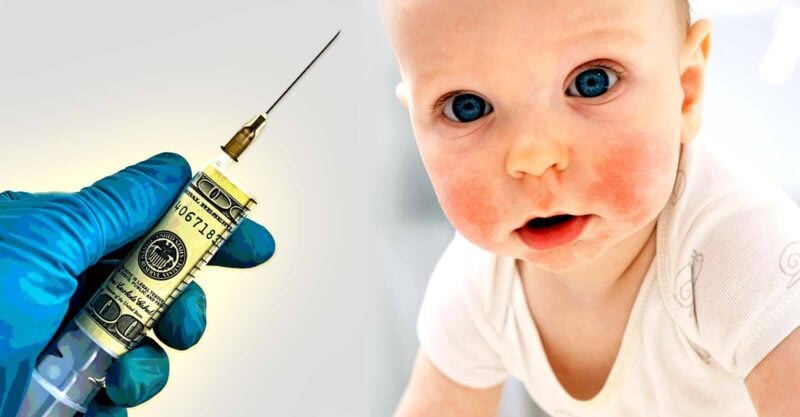


A lawsuit filed by Children’s Health Defense (CHD) against the American Academy of Pediatrics (AAP) alleges that the AAP’s aggressive promotion of childhood vaccines created a “closed-loop” business model that set up pharmaceutical companies to profit from vaccines and from drugs used to treat vaccine injuries.
The lawsuit alleges the AAP violated the Racketeer Influenced and Corrupt Organizations Act or RICO, by running a decades-long racketeering scheme to defraud American families about the safety of the childhood vaccine schedule.
A “racket” exists when a service creates its own demand, according to the complaint.
In this case, the same companies that make pediatric vaccines have also acquired companies that develop treatments for autoimmune disorders, allergies and neurodevelopmental conditions — conditions recognized in vaccine package inserts as adverse events that occurred during clinical trials or in post-marketing studies.
The complaint cites Pfizer’s 2016 acquisition of Anacor Pharmaceuticals for $5.2 billion. Anacor makes Eucrisa, a drug that treats eczema. At the time, Eucrisa was approved for 2-year-olds. It was later approved for babies as young as 3 months.
Post-marketing data have linked vaccines — including GlaxoSmithKline’s ENGERIX-B hepatitis B vaccine — to eczema, according to the complaint. Research studies have also linked the condition to the COVID-19 and measles-mumps-rubella or MMR vaccines.
In another example, Sanofi in 2020 spent $3.7 billion to acquire Principia Biopharma, developer of an experimental therapy for immune thrombocytopenia, an autoimmune blood disorder.


Immune thrombocytopenia is listed as an adverse reaction to vaccines manufactured by other companies that the lawsuit alleges are part of the same vaccine racketeering enterprise. Those vaccines include Merck’s MMRII and GlaxoSmithKline’s Pediarix.
Other examples include GlaxoSmithKline’s 2012 acquisition of Human Genome Sciences in 2012 for $3.6 billion, which brought the lupus drug Benlysta into its portfolio, and Merck’s 2021 purchase of Pandion Therapeutics for $1.85 billion, which expanded its pipeline of inflammatory bowel disease treatments.
Not included in the lawsuit, but widely discussed in 2024, was Pfizer’s acquisition of Seagen. The biotech company makes drugs that use monoclonal antibodies to deliver anti-cancer agents to tumors while limiting damage to surrounding tissue.
Pfizer spent $43 billion to acquire Seagen, which in 2023 had projected sales of $2.2 billion. Studies have linked Pfizer’s COVID-19 vaccines to sharp rises in cancer rates.
The lawsuit argues that these types of acquisitions by vaccine makers create a revenue cycle in which vaccines function as a “customer acquisition mechanism” — because treatments for chronic conditions provide long-term pharmaceutical revenue.
“The enterprise profits from the vaccines, and profits again from the treatment of the vaccine package insert documented side effects,” the complaint states.
The Defender is 100% reader-supported. No corporate sponsors. No paywalls. Our writers and editors rely on you to fund stories like this that mainstream media won’t write. 

This article was funded by critical thinkers like you.
The filing also alleges that the AAP helps maintain this system by promoting expanded vaccination schedules and discouraging research that could explore potential links between schedule changes and chronic illness.
The allegations come amid ongoing public debate over vaccine safety, corporate influence in medicine and the transparency of postmarketing surveillance systems.
Health officials have long maintained that childhood vaccination programs are “safe and effective” and that adverse event reporting alone does not establish causation.
However, public trust in those authorities is at a historic low, as more people question the long-held positions of mainstream public health.
Related articles in The Defender