

 Login
Login
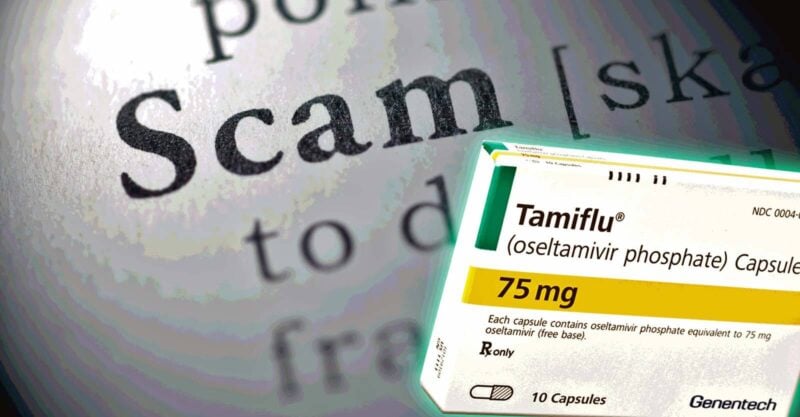


For more than two decades, Tamiflu has been a cornerstone of global pandemic planning.
Governments spent billions stockpiling it, the World Health Organization (WHO) placed it on its Essential Medicines List, and doctors routinely prescribed it to severely ill flu patients on the assumption that it could prevent complications and save lives.
But until now, no randomized trial had compared Tamiflu with no antiviral in critically ill patients.
The international REMAP-CAP trial has now put that assumption to the test — and found no benefit.
Among 442 critically ill patients with laboratory-confirmed influenza assigned to receive Tamiflu for five days, 10 days or no antiviral, the results were clear.
About 20% of patients given Tamiflu had died by 90 days, compared with about 14% of those who received no antiviral.
In other words, more patients died when they were given the drug.
The authors concluded that Tamiflu was “ineffective and highly likely to increase 90-day mortality” and should no longer routinely be administered to critically ill patients with seasonal influenza.
The new findings are the latest chapter in Tamiflu’s troubled history.
The hype of its arrival
Tamiflu arrived in the late 1990s with a compelling promise. The drug blocked neuraminidase — an enzyme the virus uses to spread from infected cells.
The logic was that if the drug could slow the virus and shorten the aches, fever and fatigue of influenza, perhaps it could also prevent serious complications, hospitalization and death.
It was an easy sell. Just as antibiotics could treat bacterial infections, antivirals promised to do the same for viral infections.
During the 2009 swine-flu pandemic, that hope became public policy. Tamiflu sales surged to over $3 billion, and governments accumulated vast emergency supplies.
By the time I investigated the drug for an Australian Broadcasting Corporation (ABC) documentary in 2015, Australia alone had spent about $380 million stockpiling antivirals.
Governments were not spending that money to shave a few hours off someone’s flu symptoms. They were buying insurance against a pandemic that could overwhelm hospitals and cost lives.
But there was a problem. Much of the evidence supporting Tamiflu remained in the hands of its manufacturer, Roche, and had never been published.
Researchers from the Cochrane Collaboration discovered the problem after they published their first analysis.
“When we did the initial analysis, it was straightforward. We just looked at published data. It showed that the drug reduces complications and the drug also reduces symptoms,” professor Chris Del Mar told me at the time.
Then they discovered there were trials they hadn’t seen.
“When we looked carefully at the data, we became anxious that there might have been some cherry-picking of the trials that had been published and the ones that hadn’t been published,” Del Mar said.
“We wondered about how many trials had never been published.”
Cochrane asked Roche for the unpublished data, but the company resisted, saying disclosure was unprecedented and citing legal and patient confidentiality concerns.
Cochrane then joined forces with The BMJ, whose editor-in-chief at the time, Dr. Fiona Godlee, helped lead a public campaign demanding access.
For Godlee, Tamiflu had become an “iconic” case.
Governments had spent billions stockpiling the drug, millions of people had taken it, and yet, the evidence needed to independently assess those decisions remained largely inaccessible.
“There are not only 15 trials of Tamiflu, but 123 trials of Tamiflu, of which 74 are entirely Roche-funded, Roche-controlled, Roche has the data,” Godlee said before a U.K. parliamentary committee in 2013.
“You begin to see the madness of the situation, that we are getting a very, very partial, incomplete, misleading picture of the effectiveness of many drugs.”
She considered the implications much broader than Tamiflu.
“I think it’s very hard to explain why this behaviour by the pharmaceutical industry in suppressing data over many years is not considered as misconduct,” she said. “In a scientific experiment, if you suppress data, that’s considered misconduct.”
“This is about patients’ health, public health, and we absolutely have to have all the trial data of trials that are performed on members of the public.”


Missing evidence emerges
After years of pressure, Roche eventually released the underlying material. When Cochrane reassessed the fuller evidence base, the picture changed significantly.
Cochrane’s updated analysis found that Tamiflu shortened symptoms by less than a day, but did not reduce hospitalizations, while the evidence for serious influenza complications was unreliable.
Del Mar put it simply.
“It could be that this drug is really just a kind of expensive aspirin. It just makes you feel better.”
By then, however, Tamiflu was deeply embedded in medicine and public health policy.
The ‘unethical’ argument
That presented another problem.
By 2015, influenza experts were arguing that it would be unethical to randomize severely ill patients to placebo because neuraminidase inhibitors had already become accepted treatment.
Godlee saw the flaw in that reasoning.
“Effectively, what you’ve got is trust in a drug that has been created based on biased, selected information,” she told me.
“And as a result of that so-called trust in the drug, we suddenly find ourselves unable to test it in the real situation against placebo.”
Her conclusion was blunt.
“That is a false faith in the drug that is preventing us from getting really good evidence about whether this drug works or not,” Godlee said.
More than a decade later, the REMAP-CAP investigators ran into the same problem.
Some participating hospitals refused to randomise patients to a “no antiviral” group because clinicians considered it unethical to withhold Tamiflu.
But when the trial was finally conducted and the comparison was made, the no-antiviral group had the lowest mortality.
That finding contradicted years of observational studies linking Tamiflu with better survival among hospitalised flu patients.
The REMAP-CAP investigators say those earlier studies may have been affected by differences between patients that the researchers could not fully account for.
Del Mar had warned about relying on such studies years earlier.
“To use observational data, particularly of such poor quality as this, is not a good way to answer a question of whether a drug works or not,” he said.
And then COVID happened
During COVID-19, antiviral drugs again arrived amid urgency, political pressure and enormous demand for treatments.
Remdesivir was hailed as a breakthrough after early results suggested hospitalized patients recovered faster.
Governments rushed to secure supplies, but WHO’s much larger SOLIDARITY trial later found little or no effect on mortality, initiation of ventilation or duration of hospital stay.
Then came molnupiravir.
In 2021, Merck announced that its new COVID-19 pill had cut hospitalization or death by 50% in an interim analysis. Australia quickly ordered 300,000 courses, and the U.S. government bought 1.7 million.
When the completed trial arrived, the apparent benefit had shrunk substantially. Later, the much larger PANORAMIC trial found no reduction in hospitalization or death among high-risk vaccinated adults.
Pfizer’s Paxlovid had stronger data initially, substantially reducing hospitalization or death in high-risk unvaccinated adults.
But demonstrating the same benefit in vaccinated populations has proved much more difficult, with two recent randomized trials finding no reduction in hospitalization or death in those populations.
Lessons from Tamiflu
The Tamiflu story is ultimately about what happens when confidence gets ahead of evidence.
The drug had a plausible mechanism. Selectively published trials were encouraging. Governments spent billions stockpiling it. Public health authorities embraced it. Doctors came to regard it as standard treatment.
But access to the unpublished evidence showed that its benefits were far more modest and uncertain than originally believed.
By that point, though, confidence in Tamiflu had become so deeply embedded that withholding it from critically ill patients was considered “unethical.”
That is perhaps the most remarkable part of the Tamiflu story. Tamiflu had never been properly tested, yet doctors had become so convinced it worked that testing it in critically ill patients was considered unethical.
Godlee called it “false faith” more than a decade ago.
Now, over 20 years after Tamiflu entered routine practice, researchers have finally done the randomized trial that should have preceded its use in critically ill influenza patients.
And not only did they find no benefit — more patients died with Tamiflu than without it. Pandemics will always create pressure to act quickly, and governments cannot wait for perfect evidence before making every decision.
But spending billions on medicines and administering them to millions of people should come with an obligation to find out whether they actually deliver the benefits being claimed.
With Tamiflu, that question was left unanswered for decades. It should not take another pandemic to learn the same lesson.
Originally published on Maryanne Demasi’s MD Reports Substack page.
