Login
Login
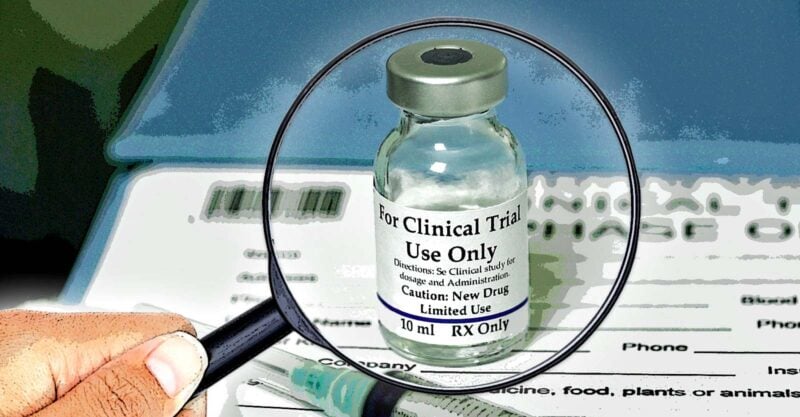


In a decision that “shocked” Moderna officials, the U.S. Food and Drug Administration (FDA) last week declined to review Moderna’s application for its new mRNA flu vaccine.
The FDA cited the company’s failure to perform an “adequate and well-controlled” clinical trial and its failure to use the “best-available standard of care” during the trial process.
The FDA informed Moderna of its decision in a Feb. 3 “refusal-to-file” letter, signed by Dr. Vinay Prasad, director of the agency’s Center for Biologics Evaluation and Research, which oversees vaccines, the company disclosed Tuesday.
The decision follows the FDA’s adoption of a stricter approach to approving vaccines, The Washington Post reported.
Prasad’s move to not even consider Moderna’s application, filed in December 2025, “signals a new aggressive phase to regulating drugs and forcing drugmakers to perform more rigorous studies,” Bloomberg reported.
According to Bloomberg, the FDA rarely issues refusal-to-file letters. Bloomberg cited a 2021 JAMA Internal Medicine study finding that only 4% of a sample of 2,475 applications the FDA received resulted in the issuance of such a letter.
Moderna’s clinical trial tested its mRNA-1010 vaccine against an existing flu vaccine instead of a placebo. Specifically, it compared the outcomes of the mRNA-1010 vaccine against a standard-dose flu shot.
In a statement released earlier today and cited by Fierce Biotech, FDA Commissioner Marty Makary said this clinical trial design put seniors at risk.
“Moderna exposed participants age 65 and over to increased risk of severe illness by giving them a substandard of care against the recommendations of FDA career scientists,” Makary said.


‘Like comparing apples to idiots’
According to STAT, Prasad overruled senior FDA vaccine reviewers, who were ready to review Moderna’s application. However, Andrew Nixon, a spokesperson for the U.S. Department of Health and Human Services (HHS), told STAT that the claim was “categorically false.”
In the company’s press release, Moderna CEO Stéphane Bancel stated that the FDA’s decision “does not further our shared goal of enhancing America’s leadership in developing innovative medicines.”
Bancel said the FDA’s decision “did not identify any safety or efficacy concerns” with the vaccine.
Karl Jablonowski, Ph.D., senior research scientist for Children’s Health Defense, disagreed. He said the clinical trial data for Moderna’s vaccine showed “worrisome” outcomes — including a statistically significant higher rate of serious adverse events compared to participants who received the conventional flu shot.
Pharmacologist Maria Gutschi said the FDA’s decision “may represent appropriate regulatory caution” due to “potentially concerning” safety signals. Gutschi noted that a trial participant died of a “possible drug interaction with the lipid nanoparticles” in the mRNA vaccine. She suggested the death “should be investigated further.”
Lipid nanoparticles deliver mRNA to human cells. However, researchers have found that lipid nanoparticles may also deliver DNA contaminants into cells.
Immunologist and biochemist Jessica Rose, Ph.D., said mRNA and non-mRNA shots can’t be directly compared. She said that comparing “mRNA-lipid nanoparticle encapsulated gene-based therapies and standard-dose influenza vaccines that rely on proteins derived from inactivated viruses is like comparing apples to idiots.”
Markets reacted negatively to news of the FDA’s rejection, with Moderna shares falling 8% in extended trading. Bloomberg reported that Moderna’s stock had risen 42% this year as of Tuesday — but is down more than 90% from its 2021 peak.
In 2024, Moderna received $750 million in private equity funding from Blackstone Life Sciences to conduct its mRNA-1010 clinical trial. If licensed in the U.S., mRNA-1010 would become the first mRNA flu shot.
The vaccine is under review in the European Union, Canada and Australia.
Trial data show low efficacy, high rate of adverse events
Experts suggested that, despite Moderna’s claims that the FDA did not identify problems with the safety or efficacy of the mRNA-1010 shot, the trial data paint a different picture.
Last year, Moderna reported that mRNA-1010 had a 26.6% relative efficacy rate. Former pharmaceutical research and development executive Sasha Latypova wrote on Substack that this is significantly lower than the 95% relative efficacy claimed for the mRNA COVID-19 vaccines during Phase 3 clinical trials.
“Given that the risks of flu and covid are identical, the absolute efficacy for mRNA-1010 must be around very negative numbers,” Latypova wrote.
Absolute vaccine effectiveness is when a trial compares vaccinated people to unvaccinated people. Relative vaccine effectiveness refers to when a trial compares people who have received different vaccine types or schedules.
Moderna’s mRNA-1010 clinical trial enrolled over 43,000 participants ages 50 and up. According to the Post:
“In one trial, more than 40,000 participants received either a dose of the experimental mRNA flu vaccine or a standard dose of an existing flu shot. In another, participants received a dose of the mRNA vaccine, a standard shot or a high-dose influenza shot recommended for adults 65 and older.”
Jablonowski said that every local and system-wide adverse reaction observed “within seven days … for all three arms of the trial and all 11 symptoms, was worse for the mRNA than the control vaccines.”
Jablonowski said the clinical trial data show that mRNA recipients had a 329% higher chance of sustaining a serious adverse event and a 278% higher chance of experiencing an unsolicited adverse event — referring to a condition that was not expected or previously known.
Internal medicine physician Dr. Clayton J. Baker said the data highlight the risks of the mRNA platform, which shows “multiple well-established and absolutely horrendous safety signals for multiple adverse effects, including clotting disorders, cancers and more ordinary adverse events far beyond those even of true vaccines.”


This article was funded by critical thinkers like you.
The Defender is 100% reader-supported. No corporate sponsors. No paywalls. Our writers and editors rely on you to fund stories like this that mainstream media won’t write.
Is FDA signaling skepticism of mRNA technology?
In a Substack post, pediatrician Dr. Joel Warsh suggested that the FDA’s rejection of Moderna’s application marks a break with such standard procedures, calling the decision “unusual” and “significant.”
“This appears to be a broader regulatory recalibration,” Warsh wrote, suggesting that the FDA may be signaling increased skepticism of mRNA technology or demanding an improved trial design or a placebo-controlled group.
Or the agency may be engaged in a “strategic slowdown” to evaluate long-term safety data before approval.
According to the Post, these actions may be part of a “stricter approach for federal vaccine approvals” on the part of the federal government.
In a November 2025 leaked memo, Prasad said the FDA planned to revise its process of reviewing the safety and efficacy of annual flu shot formulations.
In June 2025, the Centers for Disease Control and Prevention stopped recommending flu shots containing thimerosal, a mercury-based preservative linked to neurodevelopmental disorders.
Moderna has faced growing challenges as vaccine review processes have tightened.
In May 2025, the company withdrew its application for FDA approval of a combination flu and COVID-19 vaccine after the FDA requested more clinical trials.
That month, HHS withdrew federal grants of $590 million and $176 million that Moderna had received to develop a bird flu vaccine.
In August 2025, HHS cancelled nearly $500 million in funding for mRNA vaccine research. Baker noted that at least three U.S. states are considering legislation to ban the mRNA platform.
During the annual meeting of the World Economic Forum last month, Bancel said Moderna would stop investing in late-stage vaccine trials,” citing the increasingly challenging regulatory environment in the U.S.
“You cannot make a return on investment if you don’t have access to the U.S. market,” he said.
Related articles in The Defender
- Moderna Pulls Application for FDA Approval of Flu-COVID Shot After FDA Calls for New Clinical Trials
- ‘Step in the Right Direction’: RFK Jr. Cancels $500 Million in mRNA Vaccine Contracts
- CDC Vaccine Advisers Vote to Stop Recommending Flu Shots That Contain Thimerosal
- ‘Deeply Concerning’: This Year’s Flu Shots Led to 27% Higher Risk of Flu
- Breaking: HHS Makes Sweeping Changes to Childhood Vaccine Schedule
- Leaked Memo: FDA Confirms ‘At Least’ 10 Child Deaths From COVID Vaccine, Promises Sweeping Reforms