Login
Login
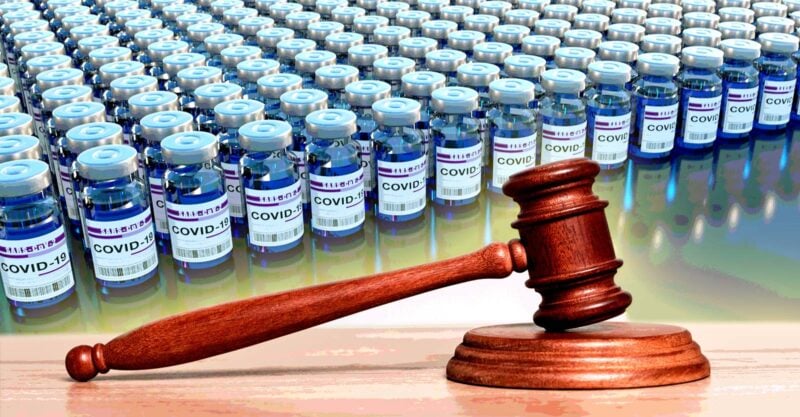


A lawsuit seeking to compel the U.S. Department of Health and Human Services (HHS) to create a COVID-19 Countermeasures Injury Table is now on hold, a federal judge ordered on Tuesday.
U.S. District Judge Dabney L. Friedrich ordered the pause after attorney Ray Flores filed a motion to stay the lawsuit for six months. Flores asked the court to stay the suit after HHS last month announced plans to propose a rule in November that will establish a formal “injury table” for all COVID-19 countermeasures, including COVID-19 vaccines.
“With the comment period ending sometime in January, we could see HHS establish the injury table while the stay is still initially in place,” Flores said.
The lawsuit, Samp v. Kennedy, asks the court to declare that U.S. Health Secretary Robert F. Kennedy Jr. and his predecessors violated their duty under the Public Readiness and Emergency Preparedness Act (PREP Act) by failing to establish a COVID-19 Countermeasures Injury Table.
The suit also asks the court to issue a declaratory judgment ordering Kennedy to establish the table.
The PREP Act requires the HHS secretary to create an “injury table” for the government to use when deciding whether to compensate those injured or killed by COVID-19 countermeasures.
However, no HHS secretary since the start of the COVID-19 pandemic has done so, Flores told The Defender. “Even though HHS officially indicated its willingness to establish the table in fall 2023, the July 1, 2026, Notice of Proposed Rulemaking actually set deadlines,” he said.

Injury table would give injured another chance at compensation
On May 19, Flores filed the suit on behalf of Erica Samp, who alleges she developed encephalopathy, vision and hearing loss and vascular injuries after receiving two doses of Moderna’s COVID-19 vaccine in 2021.
“Her medical bills have totaled hundreds of thousands of dollars,” the complaint states.
In 2024, Samp — whose employer mandated the COVID-19 shot — was denied her request for compensation through the federal Countermeasures Injury Compensation Program (CICP) for her COVID-19 vaccine injuries.
HHS’ Health Resources and Services Administration (HRSA), which administers the compensation program, concluded there wasn’t enough clear evidence that the vaccine directly triggered her injuries.
Samp alleges the government might have been more likely to compensate her if HHS had established an injury table. She also believes she may get a second chance to apply for compensation when HHS creates the table.
According to a federal regulatory agenda, the COVID-19 countermeasures injury table proposed by HHS will “list and explain injuries that, based on compelling, reliable, valid, medical, and scientific evidence, are presumed to be caused by covered COVID-19 countermeasures.”
The table will also specify the time period between when an individual was exposed to a COVID-19 countermeasure and when the injury occurred, which HSRA will use to determine whether the countermeasure likely caused the injury.
The injury table is “critically important” because it carries a “presumption that the countermeasure caused the injury,” the complaint stated.
Without an injury table, people like Samp have to try to compile their own evidence proving that their negative health experiences were caused by the COVID-19 vaccines, Flores said.
Additionally, people whose injuries are listed on the table would have another chance at applying for compensation — even if their initial bid for compensation was denied.
‘They need to be given a second chance’
COVID-19 vaccines are excluded from the National Vaccine Injury Compensation Program (VICP), the decades-old no-fault compensation system created by Congress in 1986 to protect vaccine manufacturers from excessive litigation while ensuring people with legitimate vaccine injuries get compensation.
Instead, COVID-19 vaccine injury claims must be processed through the CICP, a separate emergency program widely criticized by legal experts and patient advocates for its stricter standards, lower compensation rates and limited opportunities for appeal.
People must file a claim for compensation with CICP within a year of when they received the COVID-19 countermeasure, according to the Congressional Research Service.
However, that changes if the HHS secretary publishes a new table.
“If the Secretary publishes a new Countermeasure Injury Table, a newly eligible claimant may file within one year after the new table is established,” the Congressional Research Service states.
Flores told The Defender that HHS must create a table so that people who may have missed the one-year window or who were denied compensation can reapply.
“They need to be given a second chance. They need to know their hope is not gone,” he said.


This article was funded by critical thinkers like you.
The Defender is 100% reader-supported. No corporate sponsors. No paywalls. Our writers and editors rely on you to fund stories like this that mainstream media won’t write.
Injury table would help those injured by COVID hospital protocols, too
Although the lawsuit focuses on Samp’s injuries following COVID-19 vaccination, Flores said an injury table would also likely benefit individuals, or their surviving family, who suffered serious physical injury or death as a result of other COVID-19 countermeasures, including being put on a ventilator or given remdesivir.
Thousands of patients hospitalized for COVID-19 died because of a rush to put people on ventilators — while denying them medications like ivermectin, hydroxychloroquine and vitamin D, according to respiratory therapist Mark Bishofsky, who spoke during a September 2024 interview on CHD.TV.
PCR tests might also be considered COVID-19 countermeasures on the table, Flores said. “So the impact of this is huge,” Flores said.
HHS took no position on the motion. “Effectively, HHS isn’t fighting the suit,” pending the stay, Flores said.
HHS did not immediately respond to our request for comment.
Related articles in The Defender
- RFK Jr. to Create COVID Vaccine Injury Table — Will More People Finally Be Compensated for Injuries?
- Reported Vaccine Injuries Continue to Climb, Pfizer Seeks Full Approval for COVID Vaccine
- Committee Reviewing COVID Vaccine Injuries Meets Behind Closed Doors
- CDC Study Confirms Short-Term COVID Vaccine Reactions — But Fails to Capture Serious Delayed or Long-Term Injuries
- Federal COVID Vaccine Injury Program Pays for Another Death — But Denials Still Hover Above 98%