Login
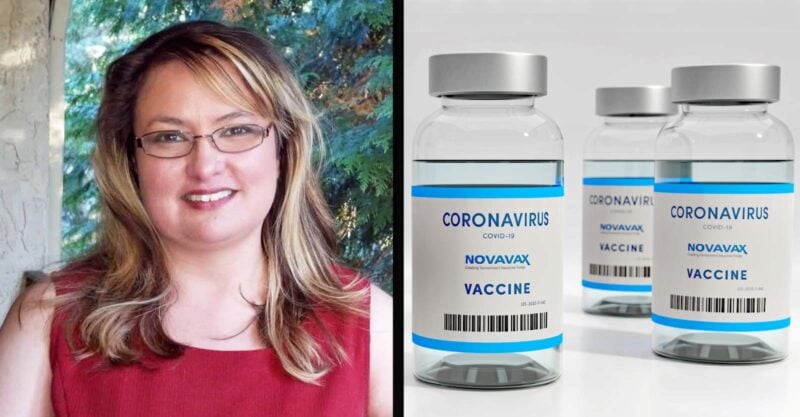


In 2022, Trina Jennings’ career was thriving. She was a licensed massage therapist in Washington state, where she planned to expand her business to help her husband — a disabled veteran — ease into retirement.
Jennings was also a martial arts practitioner who worked out regularly and was in great health.
But after Jennings received two doses of the Novavax COVID-19 vaccine — one in August 2022 and another a month later — her life came crashing down. She experienced one of the worst migraines of her life after the first dose.
Three weeks after her second dose, her legs grew progressively weaker. Within days, she could barely walk.
Jennings soon developed severe neurological symptoms. Her primary care physician diagnosed her with Guillain-Barré syndrome (GBS), a neurological disorder affecting the peripheral nerves linked to the COVID-19 vaccines.
The diagnoses did not stop there. Jennings was later diagnosed with chronic fatigue syndrome and ischiofemoral impingement syndrome, a condition she believes is congenital but whose effects became substantially more debilitating following her vaccine injury.
Prolonged impairment and lack of treatment have led to significant muscle atrophy.
Jennings also experienced dizziness, fainting and episodes resembling mini-strokes, but those conditions have subsided. Yet despite this relative improvement, Jennings today is unable to work and has shuttered her business.
Instead of retiring, her husband now financially supports her and is her primary caregiver.
“I’m just completely bedridden, spend about 80%-90% of my day in bed,” Jennings said. “My memory? Not so great anymore.”
In an interview with The Defender, Jennings said her vaccine injuries and gaslighting by physicians compounded the mental health toll of the “vitriol” she faced while waiting, on medical advice, for Novavax to become available.
She also described financial hardships stemming from the cost of her care and denial of her disability insurance claim.
Injured despite taking a ‘traditional’ protein-based COVID vaccine
As a massage therapist, Washington state’s COVID-19 policies required her to get vaccinated, as she was considered a healthcare provider. But three of her long-term physicians advised her to wait for the release of the non-mRNA Novavax COVID-19 vaccine — a “traditional” protein-based vaccine — based on prior health issues.
“I have a very strange relationship, to put it mildly, with a lot of medications, as well as supplements, and I’ve always been that way,” Jennings said. This included a history of allergies and adverse events linked to penicillin and ibuprofen.
Because of this history, physicians advised Jennings to forego the mRNA Pfizer and Moderna shots, as they were not recommended for people who have a history of allergies to medications.
Novavax wasn’t approved in the U.S. until the summer of 2022. Jennings said that while she was prone to chronic migraines, what she experienced after her first dose of Novavax was “horrible — one of the worst ones I’d ever had.”
Because of her severe migraine, Jennings’ primary care physician advised her to wait a bit longer for the second dose, so she got it after five weeks instead of three.
Three weeks after her second dose, Jennings recalled returning from a martial arts class, where she had practiced a form that she’d been working on “for about five years.” This time, though, was different. “It was the first time I’d felt the form moving through me rather than me moving through the form,” she said.
At first, Jennings recalled feeling “amazing” — but the initial euphoria soon gave way to a troubling aftermath. “The weekend came, and my legs just started getting weaker and weaker,” Jennings said. She thought she had perhaps “gone too hard” in class, but by early the following week, she could no longer move her legs.
An emergency room doctor “quietly” told Jennings that her injuries resembled GBS, but didn’t note it in her records. Her primary care doctor later confirmed a GBS diagnosis.
Jennings was diagnosed with myalgic encephalomyelitis/chronic fatigue syndrome, a debilitating condition involving severe fatigue and other symptoms that can worsen following physical or mental exertion.
Earlier in her illness, attempting to remain upright sometimes caused fainting and symptoms resembling a transient ischemic attack, commonly called a mini-stroke.
Jennings said the combined effects of her injuries have made it nearly impossible to sit or stand for more than a few minutes. Even if she regained her ability to move freely, the chronic fatigue would prevent her from returning to her former lifestyle.
Visits to specialists fraught with instances of gaslighting
Her injuries were ultimately diagnosed, but Jennings said the process of getting answers was fraught with gaslighting.
“There was an allergist that I saw, and my GBS at that point was in full swing. It was obvious that I was having a lot of trouble moving. I had a cane with me, and the assistant asked me, ‘How’s everything going?’”
When Jennings explained that she’d been injured by a vaccine, the conversation took a different turn.
“All of a sudden, I mean, you can feel it’s palpable — the wall goes up, she gets all hostile toward me.”
Jennings said she has consulted cardiologists, neurologists, a rheumatologist, a hematologist and other specialists as part of her search for answers. However, most appointments would end without meaningful treatment or explanations for her symptoms. On several occasions, she was simply told that she’s “fine.”
Eventually, Jennings became so discouraged she stopped seeking additional specialist consultations. “I just gave up. I didn’t know what else to do,” she said.


This article was funded by critical thinkers like you.
The Defender is 100% reader-supported. No corporate sponsors. No paywalls. Our writers and editors rely on you to fund stories like this that mainstream media won’t write.
‘I can’t therapy my way into being able to sit and stand again’
Jennings said her efforts to secure Social Security Disability Insurance benefits have added another layer of stress — one shared by many vaccine-injured people who have faced trouble getting insurance coverage for the treatments their injuries require.
She hired a lawyer when chronic migraines were already limiting her ability to work. But as her neurological symptoms developed and her condition worsened, she said she struggled to persuade the attorney to address the significant changes in her health.
Jennings’ initial disability application was denied, followed by another denial on appeal. She then stopped hearing from her attorney and felt too overwhelmed to continue pursuing the case. “I just froze and didn’t know what to do,” she said.
Jennings said that as part of her treatment she learned that she had a congenital deformity called ischiofemoral impingement, or IFI syndrome. Although this condition likely exacerbated her injuries, it may have also contributed to the denial of her claim.
Jennings also learned that relying on a naturopath as her primary medical provider had likely complicated her application.
She said the denial of disability benefits contributed to her financial and mental health challenges, and that a part of her “died” when she was forced to close her business.
Her husband’s health insurance through Boeing has provided her access to some treatments, including chiropractic care and acupuncture. Still, Jennings said the loss of her income, outstanding business debts and additional household needs have put the couple under considerable financial pressure.
“I’m still saddled with business debt that my husband is having to pay off,” Jennings said.
Jennings said she is fortunate that her primary physician supports her and is treating her with vaccine injury protocols. She also found another doctor who, although skeptical of the vaccine connection, listened to her concerns and agreed to help document her disabilities. However, he plans to retire, leaving her unsure where to turn next.
Her doctors’ support is little consolation for Jennings’ day-to-day challenges though, as she said is “completely bedridden” and “physically can’t go anywhere” as a result. She receives outside help from volunteers even for basic housekeeping tasks.
“I can’t therapy my way into being able to sit and stand again,” Jennings said. “This is not manageable, and this is not living.”
Related articles in The Defender
- They Were Injured by Experimental Vaccines. Insurers Refuse to Cover Their Treatments
- COVID Vaccines Triggered Psychiatric Disorders, Including Suicides
- Guillain-Barré Syndrome Associated With 17 Vaccines, Including COVID and Flu Shots
- FDA Authorizes ‘Traditional’ Novavax COVID Vaccine, But Critics Question Safety Claims
- What You Don’t Know Could Hurt You: Novavax’s ‘Loud-and-Clear’ Nanoparticle Adjuvant
- ‘Seismic Shift’: Medicare to Reimburse Doctors for Diagnosing, Treating Vaccine Injuries