

 Login
Login
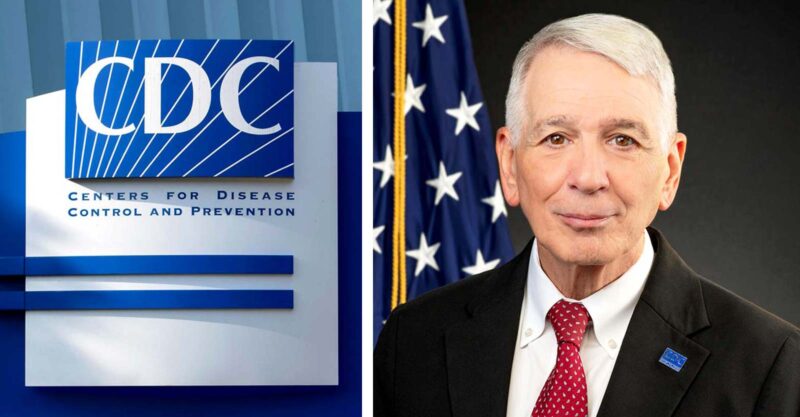


Washington does not lose the No. 2 official at the Centers for Disease Control and Prevention (CDC) without consequence.
Dr. Ralph Abraham — former Louisiana surgeon general, physician and until this week principal deputy director of the Centers for Disease Control and Prevention (CDC) — resigned effective immediately, citing “unforeseen family obligations.”
The agency’s statement was spare. There was no staff-wide farewell message. No extended transition.
For an agency that has cycled through multiple leaders in just over a year, this was not routine attrition. It was another jolt.
The measles flashpoint
Abraham’s exit follows weeks of controversy surrounding his Wall Street Journal op-ed on rising measles cases. He argued that the resurgence must be understood in a global context. That claim is accurate: several high-income countries have seen outbreaks since pandemic-era immunization disruptions.
But critics, as reported by TrialSite News, focused on one line: that losing elimination status could be a “cost of doing business” in a world of global travel and parental choice.
Supporters of medical freedom viewed the remark as an acknowledgment of political and social reality. Parents retain autonomy. Importations are constant. Public health must coexist with liberty.
Public-health leaders, however, heard something different. Measles elimination, achieved in 2000, did not depend on sealed borders. It depended on high vaccination coverage and rapid containment. In epidemiological terms, sustained transmission signals immunity gaps, not globalization alone.
The controversy was not about whether measles exists abroad. It was about whether federal leadership should normalize domestic vulnerability from this point of view.
The science debate quickly became a messaging problem. And that attracts notice from 1600 Pennsylvania Avenue NW, in Washington, D.C.
A White House consolidation
TrialSite recently reported that the White House has tightened control over HHS communications heading into midterms. National Institutes of Health (NIH) director, Dr. Jay Bhattacharya, was installed as acting CDC director in a dual role.
Leadership reshuffles followed. Messaging narrowed. How can one person cover two sprawling agencies?
This pattern suggests centralization. When administrations double-hat agency heads and reassign senior figures, the goal is often coherence — and containment. TrialSite has multiple receipts from our network within Washington that this is exactly what’s going on.
Abraham was physically present in Atlanta, engaging staff and emphasizing coordination. Yet strategic authority appears increasingly concentrated in Washington, and particularly in the White House.
Multiple observers describe a director’s office dominated by political appointees rather than career public-health veterans.
In such an environment, even nuanced commentary can become combustible.


Family reasons — or political timing?
Could Abraham genuinely have family obligations? Certainly. Public officials do step aside for personal reasons.
But timing matters.
Days before resigning, Abraham publicly welcomed Bhattacharya’s appointment and emphasized stronger NIH-CDC alignment. He appeared embedded, not transitional.
Then came an immediate departure. No internal memo. Staff learned through media reports.
In Washington, sudden exits often reflect structural recalibration rather than spontaneous personal crisis. And this is possibly what is unfolding.
The midterm equation
The administration faces competing pressures. It rode into office on backlash against pandemic mandates and institutional overreach, President Donald Trump’s return and Robert F. Kennedy Jr.’s Make America Healthy Again (MAHA) movement. That skepticism remains core to its base, but coalitions become more tenuous by the week.
At the same time, measles outbreaks, advisory committee shakeups and shifting vaccine guidance risk unsettling moderate voters who equate stability with competence.
A growing number of centrists, not to mention working and middle class voters continuing to struggle and become highly uneasy with the Trump administration generally — tariffs, continued escalation of costs, overreach of the U.S. Immigration and Customs Enforcement (ICE) and the like.
Consolidating messaging before a volatile election cycle is not unusual. Removing variables is standard political risk management.
Abraham’s exit aligns with that logic.
What it signals
The CDC is more than a science agency. It is a credibility engine. Frequent leadership turnover communicates instability to states, global partners and markets.
Abraham’s op-ed sought nuance in a polarized moment. But nuance, in election season, is easily weaponized and will be targeted by the White House.
This episode is not solely about measles. It is about who controls the narrative of public health — and how tightly that narrative is managed.
Volatility at the CDC is no longer episodic. It appears structural.
And in Washington, structural shifts rarely happen by accident.
Originally published by TrialSite News.
