Login
Login
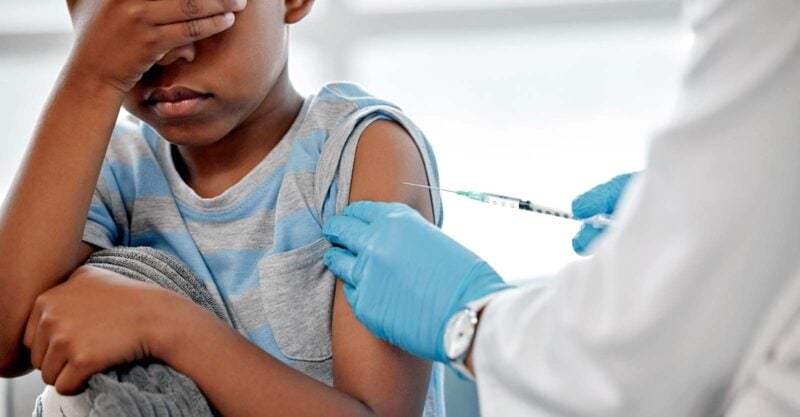


State health departments can now purchase this season’s COVID-19 vaccines for low-income children through the Centers for Disease Control and Prevention’s (CDC) Vaccines for Children (VFC) Program.
Grace Davis Jamison, press secretary for the U.S. Department of Health and Human Services (HHS), on Monday confirmed in a statement shared with The Defender that COVID-19 vaccines are “available for states to order” through the VFC.
The Washington Post first reported last week that the process for states to obtain COVID-19 vaccines through the VFC Program had finally opened that week — but only after the program “had been in limbo for nearly a month.”
Vaccine advocates worried that the vaccines wouldn’t be available to the VFC Program in time for the new cold and flu season, according to The Wall Street Journal (WSJ) and other news reports.
Approximately half of U.S. children receive their vaccinations through the VFC, according to a 2024 CDC statement. The vaccines are administered at no cost to low-income children age 18 or younger, including those enrolled in or eligible for Medicaid.
In June, the CDC finalized two COVID-19 vaccine contracts with Pfizer, valued at over $1.24 billion, for fiscal years 2026 and 2027, including $735.7 million for pediatric vaccines.
U.S. Health Secretary Robert F. Kennedy Jr. wrote at the time that the “claim that CDC has already spent $1.24 billion on COVID-19 vaccines” was “simply wrong.” He said the agreements were Indefinite Delivery/Indefinite Quantity contracts, a federal contracting framework for future purchases without requiring immediate expenditures.
As of today, both CDC-Pfizer contracts are still listed as “inactive” on SAM.gov, the federal government’s website for federal contracts, grants and awards.
News that states can now purchase the vaccines through the VFC Program follows last week’s news that the CDC had quietly reinstated its recommendations for “off-label” use of the COVID-19 vaccines for infants and children who are moderately to severely immunocompromised.
For children not at high risk — including males ages 12-24, who have the highest risk for vaccine-associated myocarditis — the CDC recommends the vaccine based on shared clinical decision-making.


Legal wranglings may be behind delays and changes in recommendations
An unnamed federal health official told the Post the delay in making this season’s COVID-19 shots available through the VFC Program was likely linked “in part to a slowdown in approving CDC’s clinical guidance” for administering the vaccine.
In May 2025, Kennedy announced the CDC would no longer recommend COVID-19 vaccines for healthy children 6 months and older and healthy pregnant women. The changes became official in September 2025, after the CDC approved a vote by its Advisory Committee on Immunization Practices (ACIP).
ACIP voted to base COVID-19 vaccine recommendations on “individual-based decision-making.”
The American Academy of Pediatrics (AAP) and other medical organizations challenged the new policy, suing HHS, Kennedy and other federal health agencies and officials.
In March 2026, a related court-ordered stay froze the new recommendations. An appeal is pending, with oral arguments scheduled for Oct. 6 in a Boston federal court.
Meanwhile, the legal challenge may have been behind the CDC’s decision earlier this month to quietly reinstate its July 2025 COVID-19 vaccination recommendations, including recommending the vaccine for “off-label” use among infants and children.
However, Jamison said HHS policy is that “COVID-19 vaccination for children should be based on shared clinical decision-making between a health care provider and the child’s parent or guardian, taking into account the child’s individual health needs and risk factors.”
“COVID-19 vaccines are only indicated for children with at least one underlying condition that puts them at high risk for severe outcomes from COVID-19,” she said.
Pediatrician Dr. Michelle Perro said HHS and CDC “appear to be hedging” as they navigate conflicting policies and court rulings. This “places responsibility on the clinician and parent” to evaluate what’s best for children, where this decision-making “actually belongs,” she said.
For health freedom advocate Leland Lehrman, Kennedy is similarly attempting to navigate institutional pressures, legal challenges and his own vaccine policies.
“Most of his work remains on the publicity side, where it is having the visible effect of changing Americans’ understanding of their rights and options. That is a good thing. The battle within the administration, and with the lawyers and the courts in D.C., is not going as well, but that’s a call to action for the citizens,” Lehrman said.
Vaccine advocates claim delay in providing VFC with COVID shots harms kids
Vaccine advocates argue that low-income children should have already had access to free COVID-19 vaccines.
According to the WSJ, state health departments typically order COVID-19 shots within two weeks of the vaccines becoming available for commercially insured programs. The government’s “delay” in launching the VFC platform could “prevent millions of children” from “getting Covid shots during the early fall season,” the WSJ reported.
In a statement, the AAP suggested availability of COVID-19 shots through the VFC Program will continue to be “highly variable” across states, “dependent in part on how long states take to implement ordering systems, whether initial supplies are limited and how quickly states are able to distribute the vaccines to clinicians.”
Dr. Michelle Fiscus, chief medical officer for the Association of Immunization Managers, told the Tennessee Outlook it is “not unusual” for the program to procure vaccines with a delay compared to when they are first available commercially. But she claimed that “what we’re seeing this year is unusual.”
According to the Post, this puts low-income kids and “those without adequate insurance” at a disadvantage in terms of vaccine access. Brian Haile, CEO of Neighborhood Health, told the Tennessee Outlook there are concerns that “we’re going to have much lower COVID vaccination rates than we could otherwise achieve.”
According to the Post, some states, including New York, have told VFC providers they can redirect COVID-19 vaccine doses originally ordered for privately insured patients to the VFC Program, replacing those with VFC doses later.
The Defender is 100% reader-supported. No corporate sponsors. No paywalls. Our writers and editors rely on you to fund stories like this that mainstream media won’t write. 

This article was funded by critical thinkers like you.
Pediatricians suggest VFC coerces low-income families to get COVID shots
Some pediatricians and advocates view the VFC program as coercive because it requires participating physicians to administer the vaccines to their Medicaid and other low-income patients, or risk losing their Medicaid contracts.
Retired pediatrician Dr. Paul Thomas told The Defender that “some VFC families in my practice were there specifically because they had done their research and didn’t want vaccines or wanted to go slowly.”
However, most VFC families are “very compliant” with doctors’ recommendations, Thomas said — which “may disproportionately harm the poor and most needy in our society.”
In an interview with The Defender last year, pediatrician Dr. Samara Cardenas said she was forced to close her practice after safety concerns drove to withhold the COVID-19 shots.
In 2023, the VFC Program kicked out Cardenas after a review of her vaccine records showed she wasn’t administering COVID-19 vaccines to her young patients. Her Medicaid contract was revoked — and with it, 1,900 patients.
Safety concerns about COVID-19 vaccines are widespread. According to the CDC, fewer than 1 in 10 children — 9.7% — between 6 months and 17 years were up to date on their COVID-19 shots by May 2026. Only 3% of parents said they planned to vaccinate their kids.
According to CDC data for the 2025-26 season, kids in the highest income brackets — with a household income of $75,000 or more — were most likely to have received a COVID-19 shot (12.3%), compared to 6.8% of kids “below poverty.”
However, a separate category, “poverty status unknown,” is also listed in the CDC’s data. Publicly available records don’t indicate how many children fall into this group, compared to those whose household income status was known.
CDC data also show a higher COVID-19 vaccination rate for kids in urban areas (12.8%) compared to suburban areas (9.3%), and a higher rate of vaccination (8.0%) for kids whose mothers had not completed high school, compared to those whose mothers completed high school or “some college.”
Perro said that rather than looking at vaccination rates along demographic variables, physicians and parents should assess children regarding “their own metabolic, immunologic, microbiome, genetic and environmental well-being.”
“The days of just injecting everyone without considering the individual landscape of each child’s biologic terrain should come to a final curtain,” Perro said.
Related articles in The Defender
- In Shadow of Pending Lawsuit, CDC Again Recommends COVID Vaccines for Infants and Young Kids
- HHS Says No Decision on COVID Vaccine Deal With Pfizer, But Questions Persist About $1.24 Billion Contracts
- ‘I Will Not Do Harm’: Pediatrician Suing CDC Explains Decision Not to Give COVID Vaccines to Kids
- Are Routine Childhood Vaccines Deadlier Than the Diseases they Target?
- Trump Signs Executive Order Backing HHS on Childhood Vaccine Reform — Will It Matter?
- Breaking: Federal Court Blocks ACIP Meeting, Changes to Childhood Vaccine Schedule