Login
Login
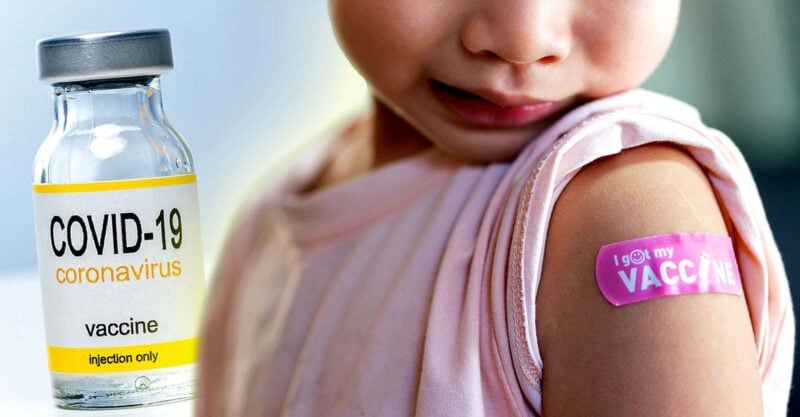


The Centers for Disease Control and Prevention (CDC) quietly reinstated its July 2025 COVID-19 vaccination recommendations, including recommending the vaccine for “off-label” use among infants and children, Maryanne Demasi, Ph.D., reported.
According to the CDC’s updated webpage, the agency now recommends the COVID-19 shot for all adults ages 18 and older and for children ages 6 months to 17 years who are moderately to severely immunocompromised.
For children not at high risk — including males ages 12-24, who have the highest risk for vaccine-associated myocarditis — the CDC recommends the vaccine based on shared clinical decision-making.
The updated recommendations conflict with U.S. Food and Drug Administration (FDA) approvals for the vaccines.
There are currently no FDA-approved COVID-19 vaccines for healthy children and adults younger than 64. For those younger than 65, the vaccines are only FDA-approved for those at high risk of COVID-19 illness, at various ages depending on the vaccine.
The CDC acknowledges that use of the vaccine in that age group would be an “off-label” use.
Latest changes may be tied to court order in ongoing lawsuit
In May 2025, the U.S. Health Secretary Robert F. Kennedy Jr. announced that the CDC would no longer recommend COVID-19 vaccines for healthy children 6 months and older and healthy pregnant women.
In September 2025, the CDC Advisory Committee on Immunization Practices (ACIP) made the changes official when members voted that for people ages 6 months to 64 years, COVID-19 vaccination should be based on “individual-based decision-making.”
However, a court-ordered stay in March 2026 froze those recommendations. To comply with that order, the CDC is now reverting to its early 2025 recommendations.
The court-ordered stay, issued by U.S. District Judge Brian E. Murphy, stemmed from an ongoing lawsuit filed in July 2025 by the American Academy of Pediatrics (AAP) and several other medical groups.
The groups sued Kennedy and the U.S. Department of Health and Human Services (HHS) over changes to COVID-19 vaccine recommendations for children and pregnant women. They amended their lawsuit several times in response to new HHS and CDC policies and recommendations.
The U.S. Department of Justice is appealing Murphy’s ruling on behalf of Kennedy and HHS. Oral arguments are scheduled for Oct. 6 before the U.S. Court of Appeals for the 1st Circuit.


‘These vaccines should be off the market’
Children’s Health Defense (CHD) also moved to intervene in the case to halt the enforcement of the stay.
“CHD’s position is that these vaccines should be off the market,” CHD CEO Mary Holland said today.
Attorney Rick Jaffe, who represents CHD in its challenge to the stay, said the changes effectively reinstate the COVID-19 vaccine recommendations that existed before President Donald Trump took office.
“It seems pretty clear to me that the infectious disease mafioso both inside and outside of the government want to de facto make the COVID shot an ongoing routine shot for all Americans.”
He said the latest update “has no operative legal effect in the short term,” because Murphy already stayed changes to the old schedule pending the end of the AAP litigation.
When oral arguments are heard in October, Jaffe said, “I think there is a very good chance that the case will be dismissed on standing — in other words, the AAP has no legal right to sue. If that happens, then the current but suspended ACIP committee members can meet, and they can get back to work.”
However, he added, if the case is dismissed, now that the CDC has formally reverted to the former recommendations, recovering the 2026 changes Kennedy made, “might be the next battle between the Secretary Kennedy and the new CDC director.”
Risks of COVID vaccines for kids backed by multiple studies
In a July 2025 memo approving some uses of Spikevax, the FDA’s Center for Biologics Evaluation and Research (CBER) Office of the Center Director (OCD) said:
“Is there substantial certainty of a net clinical benefit (benefits outweigh harms) to vaccinating healthy children with this mRNA vaccine? CBER OCDs answer is, at the present time, with best available information, no.”
That means Murphy’s order and CDC’s current recommendations directly contradict FDA’s conclusions on at least one of the mRNA vaccines.
CBER Director Vinay Prasad, who wrote the memo, noted that COVID-19 severe disease, hospitalization and death are “extremely low” among children and even lower among healthy children.
He also noted that no randomized controlled study showed that the mRNA vaccine could produce a reduction in severe COVID-19, hospitalization, ICU stays, or death in children. Observational studies making that claim have methodological limitations, he noted.
Multiple studies have backed these claims since the start of the COVID-19 pandemic.
The Defender is 100% reader-supported. No corporate sponsors. No paywalls. Our writers and editors rely on you to fund stories like this that mainstream media won’t write. 

This article was funded by critical thinkers like you.
As early as 2020, a Johns Hopkins study of 48,000 children diagnosed with COVID-19 showed a zero mortality rate in children younger than 18 without comorbidities. A comparable study published a year later in Nature made a similar finding.
In September 2025, the FDA reported child deaths that were linked to the COVID-19 vaccines.
Multiple studies have linked COVID-19 vaccines to health risks in children. Here are just a few:
- According to a study published in the journal Pediatric Rheumatology in May 2025, children and adolescents who received at least one COVID-19 vaccine had a 23% higher risk of developing autoimmune disease compared to unvaccinated children.
- An FDA-funded study published in the journal eClinicalMedicine in September 2024 showed that 60% of young people who were hospitalized with myocarditis after receiving an mRNA COVID-19 vaccine still showed signs of myocardial injury roughly six months after getting the shot.
- A preprint study published in May 2024 of 1.7 million children in England found cases of myocarditis or pericarditis only in those children who received the COVID-19 shots. No cases were identified in children who didn’t receive the vaccine.
- A 2023 study published in the journal Circulation found that young males who had myocarditis lacked neutralizing antibodies to the spike protein.
- In 2023, the CDC identified myocarditis and pericarditis as adverse events related to the mRNA COVID-19 vaccines produced by Pfizer and Moderna, based on evidence of “a causal association between mRNA COVID-19 vaccines” and these conditions.
- A study published in the journal Molecular Systems Biology in March 2025 linked mRNA COVID-19 vaccines to long-term changes in genetic structures that can provoke an inflammatory response and lead to the onset of cancer and autoimmune disorders.
- A study published in 2024 in The Pediatric Infectious Disease Journal found that children who received mRNA COVID-19 vaccines showed signs of an altered immune system response one year after vaccination.
Related articles in The Defender
- Children’s Health Defense Will Appeal Rulings in High-Profile Vaccine Lawsuit
- Breaking: Federal Court Blocks ACIP Meeting, Changes to Childhood Vaccine Schedule
- ‘Striking Evidence’ COVID Shots May Increase Kids’ Risk of Asthma
- ‘Concerning and Bewildering’: FDA Grants Full Approval of Moderna COVID Vaccine for ‘At-Risk’ Infants and Children
- FDA to Report on 25 Child Deaths Linked to COVID Vaccine, Washington Post Reports